
'Young IFS officers today would take it for granted that they represent a major country with strengths and capabilities.' 'They will be aware that India is seen as one of the 10 significant countries in the world and therefore their voice will be heard whether on climate change or regime change,' says Ambassador B S Prakash.

He said India needs huge amounts of energy for development but will do whatever it can to deal with the problem of climate change as it sees the world as one family.

'The Naga Hills region, Nagaland and Manipur, have had the most uncaring and corrupt state governments with little to show on the ground despite the nation's highest per capita development expenditure,' says Mohan Guruswamy.

ACN Nambiar's life was extraordinary and intricately linked to momentous turns in history. Having lived in Europe for five decades, he was witness to and entangled with what we today -- with the benefit of hindsight -- call recent history.
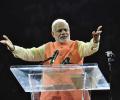
By addressing the Indo-American audience with such visionary jargons, Modi has created an inclusive environment for people who are living outside India to contribute back home, says Sriram Balasubramanian

The question we must ask is how do politicians get that wealth disclosed in the affidavits, says Mahesh Vijapurkar.

According to Finance Minister Arun Jaitley, who spent 19 months in prison during the 1975 Emergency imposed by the then prime minister Indira Gandhi, it is not possible for anybody to convert a democratic India into a "dictatorship" in this day and age.
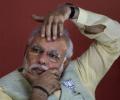
'Will Modi at least visit the victims of the Gujarat genocide, apologise for the massacre, wipe their tears which may never dry, extend State help to rehabilitate them, and give them the dignity they deserve?' asks Najid Hussain.
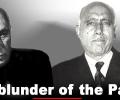
Nehru's sentimental attachment to the Mountbattens deeply vitiated the Kashmir issue. It was certainly the most important factor for the failure to find a solution in the first years of the conflict.

The West Bengal government wants to replace hand-pulled rickshaws with battery-operated ones. But the rickshaw pullers are apprehensive that they will lose their livelihood

Noted writer Nayantara Sahgal, who recently returned her 'Sahitya Akademi' Award over the Dadri lynching case, has said secularism is under threat like never before and that individual freedom and rights have to be protected even these are guaranteed in the Constitution.

'Make in India' could suffer the same fate as did privatisation and the command economy, says Ajit Balakrishnan.

There are conflicting signs on India's investment cycle.

By deeming October 31, Sardar Vallabhai Patel's birthday as Rashtriya Ekta Diwas, the BJP has rightly made amends for the short shrift that the great leader received at the hands of the Congress. By the same token, the BJP cannot be seen as being petty towards Indira, a leader who despite her flaws, did render yeoman service to the nation, says Vivek Gumaste.

'If the dimensions of the strategic partnership worked out by India and the US seem like a grand alliance targeted at you-know-who, China had better realise that it has fathered it,' says B S Raghavan, a long time observer of China.
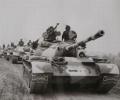
The 1965 war teaches us that war by escalation is a real possibility. Despite clear threats, Pakistan never believed that India will ever cross the international border. In the age of nuclear deterrence, this failure to deter Pakistan is the central lesson of 1965, says Colonel Anil Athale (retd).
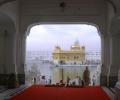
Recently declassified documents reveal that the Indian government wanted to invade the sacred precincts of the Golden Temple even if it hurt national interest, says senior Bharatiya Janata Party leader Arun Jaitley.

'I can tell you, Mr Chairman, from personal experience that there is nothing sadder than witnessing a close one, a loved one with mental illness at close quarters.' 'I have lived with a victim of mental illness. Like many in that condition, very often such people are in a state of denial.'

The capital's ever-shifting power class remains unsettled and unnerved seeing the power, favour, nepotistic and quid pro quo pillared superstructure gradually crumble under Narendra Modi's watch -- the only mantra that seems to be taking centre stage is that of performance, implementation and delivery, says Dr Anirban Ganguly.

Narendra Modi's pay-off from relaxing labour laws would be huge.

Lloyd and Sussane Rudolph -- two University of Chicago professors who started studying Indian politics in the 1950s, have been named the winners of the Padma Bhushan Award.

'Nowhere in the country, except perhaps Jammu and Kashmir, do extremist groups enjoy political patronage as they do in Kerala. Terrorists are exported from Kerala to Afghanistan, Syria.'

The Maoist-infested state needs a visionary leader and Hemant Soren is definitely not one, opines Aditi Phadnis

'Our policy seems to be to give away part of J&K, even though we are entitled to the entire state.' 'The Congress has done so, and the BJP is following the same policy.' 'No one is applying their mind to the legal position.' 'Kashmir is not a part of Pakistan under its own constitution.'
If the high security notes introduced in 2015 were kept in the system, the pain due to demonetisation can be ameliorated to a certain extent. But unfortunately, such thought process have no place in the hasty demonetisation decision.

Arvind Kejriwal's brand of decentralised decision-making and committed bureaucracy means that civil servants are in for a rough ride, says A K Bhattacharya

India's secular democracy remains mortgaged to rabid communal politics. Quite clearly, the bloodshed by the religious communities is absolutely political. Even non-BJP political formations have their own Narendra Modis, says Mohammad Sajjad.
At present there is virtually no dialog between votaries of different various versions of economic democracy.

From the economy to foreign policy issues, to addressing the serious challenge posed by communal forces which are out to viciously polarise and divide Indian society, the UPA II government has shown a certain pronounced weakness and lack of vision and commitment that could seriously harm India in the long run, notes Sanjay Kapoor.

Eight years ago Subhashini's husband Colonel Vasanth was martyred fighting militants in Kashmir. Today, she offers hope to widows of army jawans who lost their lives in the line of duty.
The successful effort to combat Cyclone Phailin threatens to put disaster mitigation, and a fundamental overhaul of how disaster management in India is structured, on the back-burner, says Anand Sarkar.

Pranab Mukherjee's book The Dramatic Decade: The Indira Gandhi Years takes the readers through the economic and social unrest of the period leading up to the emergency, rise and fall of leaders, many splits within the Congress, while promising to offer more in the next two volumes of the trilogy, says Nivedita Mookerji.

In a frontal attack on the Narendra Modi government, Congress President Sonia Gandhi on Wednesday said there has been an "alarming increase" in communal incidents since it came to power and asked party men to resist its "authoritarian and sectarian" tendencies.
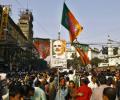
It has been said that by 2025, India could become among the top five economies in the world. If India does become a $5 trillion economy but gets all its rivers polluted, food chain poisoned and genetic pool depleted and biometric database of Indians sold or stolen at the behest of commercial czars, will it not be a pyrrhic economic victory, asks Gopal Krishna.

Economist S Janakarajan, in an interview to Shobha Warrier/Rediff.com warns that without proper infrastructure, India will never be able to build a market economy.

'You have to respect nature. You won't respect nature unless you see nature's fury.'
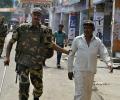
Sharat Pradhan secures exclusive access to the Justice Vishnu Sahai report and discovers it blames two BJP MLAs, a former BSP MP and his cohorts, local intelligence officials and the media for the horrific Muzaffarnagar riots of 2013, but attributes no blame to the Samajwadi Party government in the state.

'He represented the warmth, gentleness and goodness that existed in Hindi cinema before Bollywood became a loud commodity.' Aseem Chhabra on the legendary actor he admired for over 40 years.

'Asked which Dilip Kumar films were among her favourites, she said she had seen not a single movie of his until that time. This became a sensational issue. She did not mean to offend Dilip Kumar. There was not a bone of diplomacy in her and she never acquired that calculating attitude even at the cost of some of the roles that she would eventually lose.'

Accusing Congress of "trying to hide in the bunker of secularism", Narendra Modi on Sunday said that it was fighting for its survival with even a 100-seat mark in the new Lok Sabha appearing "an uphill task for it".
 © 2026 Rediff.com - Investor Information - Advertise with us - Disclaimer - Privacy Policy - Sitemap - Feedback - About us - Terms of use - Grievances