
Dubey launched a broadside against the Supreme Court on Saturday, saying Parliament and state assemblies should be shut if the apex court has to make laws.
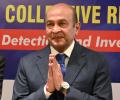
The Supreme Court on Wednesday refused to hear a plea seeking a first information report (FIR) against high court judge Yashwant Varma in connection with the discovery of cash from this official residence in the capital.

"The power of listening to others is important in every sphere of life. It is enormously liberating to yield that space to others. The problem with our society is that we are not listening to others...we are listening only to ourselves," he said.
Justice Yashwant Varma, embroiled in the cash discovery row following a fire at his residence, has been excluded from all administrative committees of the Delhi High Court. The committees were recently reconstituted, with all other judges, including the Chief Justice, included. Justice Varma was previously a member of several committees. His work was withdrawn following a directive from the Chief Justice of India, who has also ordered an in-house inquiry into the allegations.
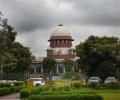
Three judges, including two high court chief justices, were appointed to the Supreme Court on Thursday.

Chief Justice of India Dr Dhananjay Yeshwant Chandrachud took time from his packed schedule to visit Block D, Additional Building Complex at the Supreme Court, to inspect the work in progress on the public canteen on Tuesday, August 8, 2023.
The Supreme Court of India granted bail to an accused in a cheating case being investigated by the Central Bureau of Investigation (CBI), criticizing the Allahabad High Court for adjourning the bail hearing 27 times. The Supreme Court deemed the repeated adjournments in a matter related to personal liberty unacceptable and issued a notice to the CBI.
The Supreme Court of India has reserved its interim orders on three key issues related to the Waqf (Amendment) Act, 2025, including the power to denotify waqf properties, the composition of waqf boards, and the provision regarding government land. The court heard arguments from both the petitioners, who challenged the validity of the amended law, and the Centre, which defended the Act as a secular concept. The petitioners sought interim orders to prevent the implementation of certain provisions while the court considers the legal challenges.
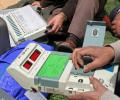
The Supreme Court of India dismissed a plea seeking a directive for 100% manual counting of Voter Verified Paper Audit Trail (VVPAT) slips in addition to electronic counting. The court cited its previous rulings on the safety and security of Electronic Voting Machines (EVMs) and stated that the issue was not open for reconsideration. The plea argued for a modified VVPAT system where voters could verify printed ballots before leaving the polling station, and for 100% manual counting of VVPAT slips. The court upheld the Delhi High Court's decision dismissing the plea, referring to previous Supreme Court judgments on the matter.

On Thursday, MMRDA strongly defended its decision to disqualify L&T from the two infrastructure projects in Mumbai, citing "substantial grounds" for the rejection of its technical bids.

The Centre on Thursday assured the Supreme Court that it will neither denotify Waqf properties, including "Waqf by user", nor make any appointments to the central Waqf council and boards till May 5.
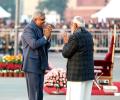
The BJP had no option but to get Jagdeep Dhankhar out of its way for the sake of the Modi government's stability, reveals Sheela Bhatt, the legendary political journalist.
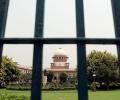
A group of lawyers, including senior advocate Harish Salve and Bar Council of India chairperson Manan Kumar Mishra, has written to the Chief Justice of India, alleging that a "vested interest group" is trying to put pressure on the judiciary and defame courts "on the basis of frivolous logic and stale political agendas".
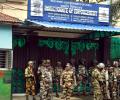
The Supreme Court of India has repeatedly criticized the Enforcement Directorate (ED) for exceeding its authority and misusing its powers. The latest rebuke came on Thursday, when the court accused the agency of 'crossing all limits' in a money laundering probe against a Tamil Nadu state-run liquor retailer. This follows a string of similar observations by the Supreme Court and high courts across India, raising concerns about the ED's investigative practices and the potential for misuse of its powers.
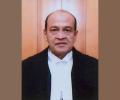
The Supreme Court will hear a plea on Friday seeking a direction to Delhi Police to lodge an FIR over the alleged discovery of semi-burnt stash of cash from the official residence of High Court judge Yashwant Varma. The plea was filed by lawyer Mathews J Nedumpara and three others on Sunday. It challenges the 1991 judgement in the K Veeraswami case, in which the top court ruled that no criminal proceedings could be initiated against a judge of the high court or the top court without the prior nod of the Chief Justice of India. The alleged cash discovery happened following a fire at Varma's Lutyens Delhi residence on March 14, prompting the fire officers to rush to the spot. A Supreme Court-appointed in-house committee visited the residence of Justice Varma on Tuesday to commence its inquiry in the matter. Justice Varma denounced any insinuation and said no cash was ever placed in the storeroom either by him or any of his family members.
Issuing notice to the ED on the plea filed by the Tamil Nadu government and Tamil Nadu State Marketing Corporation (TASMAC), a bench comprising Chief Justice B R Gavai and Justice Augustine George Masih told Additional Solicitor General S V Raju, appearing for the anti-money laundering probe agency, that "Your ED is crossing all the limits."

When the Constitution is viewed from the context in which it emerged, it is nothing short of remarkable, he asserted.
The Supreme Court of India has sought responses from the Centre and others on a petition challenging the constitutional validity of certain provisions of the Waqf Act, 1995. The petition argues that the Act gives undue favor to waqf properties and deprives non-Muslims of their property rights. The court has tagged the petition with pending petitions that raise similar issues.
A video and inquiry report have raised questions about the Delhi Fire Services' claim that no cash was found at the official residence of Delhi High Court judge Justice Yashwant Varma during a fire incident on March 14. The video, which has gone viral on social media, shows fire fighters dousing flames on articles that appear to include half-burnt Indian currency notes. The Delhi High Court Chief Justice has initiated an in-house inquiry against Justice Varma and the Supreme Court has proposed his transfer to the Allahabad High Court.
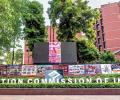
The Supreme Court will hear on February 19 pleas challenging the appointments of the Chief Election Commissioner and Election Commissioners under the 2023 law. The court will take up the matter on a priority basis, after some urgent listed matters. The government has appointed a new CEC and ECs under the new law, which excludes the Chief Justice of India from the selection panel, despite a 2023 Supreme Court verdict directing the inclusion of the CJI in the panel. The petitioners argue that the exclusion of the CJI undermines the independence of the election commission.

The Supreme Court of India has sharply criticized the Uttar Pradesh police for filing FIRs in civil cases, stating there is a "complete breakdown of rule of law" in the state. The court expressed its displeasure after discovering FIRs filed by the UP police in civil disputes, questioning the use of criminal law in such matters. The Chief Justice highlighted the absurdity of converting civil disputes into criminal cases, emphasizing that non-payment of money cannot be considered a criminal offense. The bench has summoned the investigating officer to justify the registration of an FIR in a specific case, and has stayed criminal proceedings against the accused while allowing the cheque bounce case to continue.

On October 17, a five-judge Constitution bench headed by the CJI unanimously refused to accord legal recognition to same-sex marriage, saying there was "no unqualified right" to marriage.

The matter would be heard by Chief Justice B R Gavai and Justice Augustine George Masih.
A plea in the Supreme Court of India seeks a direction to Delhi Police to lodge an FIR over the alleged discovery of semi-burnt stash of cash from the official residence of Delhi High Court judge Yashwant Varma. The plea challenges a 1991 judgement that prohibits criminal proceedings against judges without prior consent from the Chief Justice of India, arguing it violates the principle of equality before the law. It also seeks to declare the collegium's 3-member committee investigating the incident as having no jurisdiction and calls for action against corruption within the judiciary.

Justice Chandrachud also dealt with questions about criticism by eminent lawyers on the allocation of cases to particular judges and 'bench hunting', and said the allocation of cases is not "lawyer-driven" and vowed to maintain the credibility of the institution of the Supreme Court.
The Supreme Court on Friday refused to entertain a fresh plea challenging constitutional validity of the Waqf (Amendment) Act, 2025.
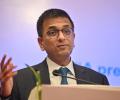
Besides launching initiatives for technological, administrative and infrastructural improvement, Chandrachud, like his illustrious father Y V Chandrachud, who was the Chief Justice of India for the longest time from February 22, 1978 to July 11, 1985, kept delivering significant verdicts in the last one year.

A Supreme Court lawyer has written to the Attorney General seeking consent to initiate contempt proceedings against BJP MP Nishikant Dubey for his "grossly scandalous" remarks against the court. Dubey had criticized the Supreme Court and Chief Justice of India Sanjiv Khanna following the Centre's assurance that it would not implement some of the contentious provisions of the Waqf (Amendment) Act. The BJP has distanced itself from Dubey's comments, calling them his personal views.
It will be court's opinion versus the legislative power to enact law, the Supreme Court on Wednesday said as it posted the pleas challenging the appointment of the chief election commissioner and election commissioners under the 2023 law on February 4.
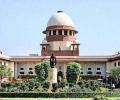
The Supreme Court of India has scheduled a hearing on February 19 for pleas challenging the appointment of the Chief Election Commissioner and Election Commissioners under the 2023 law. The court emphasized the potential consequences if any action is taken before the hearing. The pleas argue that the 2023 law, which excludes the Chief Justice of India from the selection panel, undermines the independence of the Election Commission and allows for undue influence from the executive branch. The court's earlier verdict in March 2023 called for an independent selection panel comprising the Prime Minister, Leader of the Opposition, and the Chief Justice of India to ensure the integrity of the Election Commission. The case highlights concerns about the independence of India's electoral process and the potential for political influence in the appointment of key election officials.
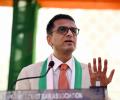
Chief Justice of India (CJI) D Y Chandrachud on Tuesday said the greatest challenge before the Indian judiciary is to eliminate barriers to accessing justice and make sure that the judiciary is inclusive and accessible to the last person in the line.
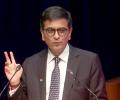
"It is very easy to fling allegations and letters," an anguished Chief Justice of India D Y Chandrachud said on Thursday while clarifying that the bail plea of Aam Aadmi Party leader Satyendar Kumar Jain in a money laundering case was listed before a bench headed by Justice Bela M Trivedi as Justice A S Bopanna was unavailable due to illness.
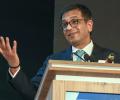
Chief Justice of India D Y Chandrachud on Friday said that as a judge, he is a 'servant' of the law and the Constitution and has to follow the position that has been laid down.
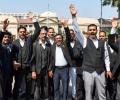
The Allahabad High Court Bar Association (HCBA) has condemned the "clandestine" manner in which Justice Yashwant Varma, who was transferred from the Delhi High Court amid cash-at-home allegations, was administered the oath of office. The HCBA, which had opposed the judge's repatriation, questioned why the oath was not notified to the Bar and alleged that the move has further eroded public trust in the judicial system. The HCBA has urged the Chief Justice of the Allahabad High Court not to assign any administrative or judicial work to Justice Varma. The incident of cash recovery has reignited debate over the issue of judicial accountability, with calls for stringent action to restore faith in the judiciary.
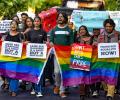
A five-judge bench of the Supreme Court will consider review pleas challenging the October 2023 verdict that declined legal sanction to same-sex marriage. The review pleas will be heard in chambers on January 9, with Justice P S Narasimha being the only member of the original bench that delivered the verdict.

The Centre on Wednesday told the Supreme Court that nobody can claim right over government land and it is legally empowered to reclaim properties which are declared waqf by using the waqf by user principle.

The Supreme Court has adjourned pleas challenging the appointments of the chief election commissioner (CEC) and election commissioners (ECs) under the 2023 law. The court indicated the matter would be listed after the Holi festival break due to a paucity of time. Petitioners, including the NGO Association for Democratic Reforms, argued for an urgent hearing, emphasizing the importance of the issue and the potential impact on democratic processes. The appointment of the new CEC and ECs under the 2023 law, which excludes the Chief Justice of India from the selection panel, has been a point of contention, with petitioners alleging it undermines the independence of the election commission.
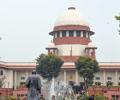
The Supreme Court on Thursday dismissed a batch of pleas seeking to review its October 2023 verdict declining legal sanction to same-sex marriage.
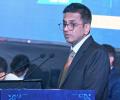
Writing a 247-page separate judgement, Chief Justice of India DY Chandrachud struck down Regulation 5(3) of the CARA, saying it is violative of the rights of the queer community and that the CARA has exceeded its authority in barring unmarried couples from adopting children.
The Supreme Court collegium has confirmed the transfer of Delhi High Court Justice Yashwant Varma to his parent Allahabad High Court. This decision comes after an inquiry was initiated against Justice Varma regarding the alleged discovery of a large amount of cash at his official residence. The transfer recommendation was made public in a resolution uploaded on the Supreme Court's website. The alleged cash discovery occurred following a fire at Varma's residence in Delhi on March 14, 2025. The apex court collegium, headed by Chief Justice Sanjiv Khanna, has also constituted a three-member inquiry committee to further investigate the matter.
 © 2026 Rediff.com - Advertise with us - Disclaimer - Privacy Policy - Sitemap - Feedback - About us - Terms of use - Grievances