
China plans to divert about 200 billion cubic metres of water annually from the Brahmaputra at its highest point, namely the Great Bend, where it turns into India. China's Brahmaputra dam will severely impact India, warns former senior RA&W officer and China expert Jayadeva Ranade.

While studying the remarks of the Chinese leaders during the NPC session, one could detect an under-current of concern that the conservative anti-reform elements in the party and the government might try to exploit the current difficulties by blaming them not on the US mismanagement of its banking sector, but on the Chinese policy of economic reforms and globalisation itself.

Statesmanship requires that the prime minister himself reaches out to those amassed at the Singhu and Ghazipur borders. Modi should be able to win over this domestic front with sheer compassion, observes Virendra Kapoor.
The crisis is the best thing to happen to the Chinese government in a long, long time.

We can expect to see more Chinese wolf warrior diplomats on the prowl, in India's neighbourhood, though its mailed fist is not so visible while dealing with India, observes Colonel R Hariharan (retd).

In the test, a space rocket boosted a hypersonic glide vehicle, one capable of carrying a nuclear device, which circled the globe before impacting.
Congress President Sonia Gandhi arrived in Beijing on Thursday to meet and exchange views with the newly-elected Chinese Communist Party leadership on a range of bilateral issues. She is accompanied by her son Rahul Gandhi on the five-day visit which is expected to boost bilateral relations that are already on the upswing. Gandhi is scheduled to meet Chinese President and General Secretary of the Communist Party of China Hu Jintao on Friday.
Sino-Indian strategic relations are expected to get further fillip during the second innings of Chinese Communist Party chief Hu Jintao, who is all set to offer a red carpet welcome to Congress president Sonia Gandhi in Beijing this week.

'Clarifying that modernisation of national defence and armed forces should be completed by 2035, Xi Jinping asserted the goal is to make the People's Liberation Army a "world class force" that "can fight and win" by 2050,' points out former RAW officer Jayadeva Ranade.

'Information about the Dalai Lama's heath is normally not shared with the public. Its release on this occasion implicitly underscores the message that the window of opportunity for Beijing to recommence the dialogue with the Dalai Lama -- an advocate of non-violence -- to resolve the contentious Tibetan issue is limited.' says Jayadeva Ranade.
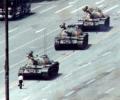
Why omit the Tiananmen massacre from the history of China's Communist party, asks Claude Arpi.

'COVID-19 will not stop the expansion of China's 'infrastructure power'.'

'The numbers of troops on both sides are enormous.' 'They are about 50,000-60,000 soldiers facing each other in that sector -- that's about the total number of troops that both sides had in the 1962 War in all sectors.'
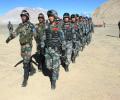
Esper also highlighted the 'increased' military cooperation with India and called it as 'one of the most important defence relationships of the 21th century'.

'If one puts the context of what Xi Jinping said at the UN about not wanting a 'hot or cold war with any country', one realises that his speech was quite bizarre.' 'The world does not expect such statements from China, a nation aspiring to be a superpower.

Not all change is good, but this one is, applauds Shekhar Gupta.

'Why did your generals try to grab a few square kilometres of Indian territory in Ladakh?' 'And what happened to the hard work that you and Prime Minister Modi put into the Wuhan and Mamallapuram meets?' Claude Arpi writes a letter to Xi Jinping, China's self-styled supreme leader, who turns 68 today, June 15.

With tensions between China and Taiwan rapidly increasing, the tone of China's official media has also become progressively more strident, observes former senior RA&W officer and China expert Jayadeva Ranade.

'India imports 70 per cent of its bulk drugs from China. Are we going to live without antibiotics?' asks Debashis Basu.

By jettisoning the vision of multilateral world in favour of a Han Empire, China has posed a major long term challenge to India. India must stand firm against Chinese expansionism but also keep a door open for future detente by making a clear distinction between Chinese people and the current Chinese leadership, observe Lieutenant General Ashok Joshi (Retd) and Colonel Anil Athale (Retd).
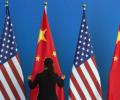
A top United States senator has unveiled an 18-point plan, including enhancing military ties with India, to hold the Chinese government accountable for its "lies, deception, and cover-ups" that ultimately led to the global COVID-19 pandemic.

Some US prominent lawmakers have urged the American government to follow suit as it is believed that the short video-sharing app is a major security risk to the country.
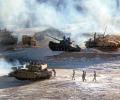
'We must be careful because China has not given its design in Eastern Ladakh.'
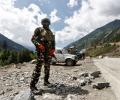
'How Xi Jinping will withdraw the aggression and justify it to his Communist party in case of a negotiated settlement might be his biggest headache.' 'Unless he is ready to gamble on an armed conflict, whose outcome given India's battle-readiness and determination is always uncertain,' observes Virendra Kapoor.

'The missile mounted near Kailash-Mansarovar is called DF-21. It is a medium-range, 2,200 kilometres ballistic missile. Its advantage is that it can cover all cities of north India, including New Delhi'
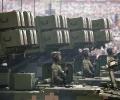
The first priority for the new Tibetan administration in Dharamsala should be to look at Tibetan recruitment in the PLA, suggests Claude Arpi.
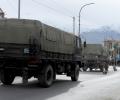
China is in no hurry to disengage at the border and the region and international community is moving on. The spectre of a long haul in Ladakh haunts India, points out Ambassador M K Bhadrakumar.

All that India must aim for is to match China's military prowess adjusted to equal Beijing's India-specific military capability, argues Vivek Gumaste.

China has chosen to keep New Delhi guessing, while retaining for itself the option of constantly changing facts on the ground and shifting the LAC westwards -- the strategy called 'salami slicing', notes Ajai Shukla.
Wang Huaizhong was found guilty of taking more than five million Yuan (US$600,000) in bribes and possessing 4.8 million Yuan that he could not account for.
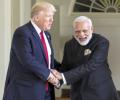
India must be aware that there is no question of the US fighting the Chinese on land. We have to fight our own battles, points out Virendra Kapoor.

General Zhao Zongqi is well known in India for having commanded the Chinese troops during the Dokalam episode. Zhao knows every inch and corner of the Indian border, at least the Eastern and Central sectors, including the Naku La area which witnessed fist-fights between Indian and Chinese troops in April/May. Claude Arpi introduces us to the PLA generals masterminding the Chinese aggression in Ladakh.
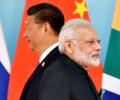
'Doklam was almost like a trailer to what is happening in Ladakh today.' 'Modi failed to take note and failed to act,' observes Harishchandra Dighe.

It will not be to India's advantage to create misperceptions that it is bandwagoning with some Anglo-American project for regime change in Myanmar, argues Ambassador M K Bhadrakumar.
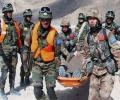
'For the moment in Eastern Ladakh, it is unlikely there will be any more escalation of this conflict,' observes Colonel S Dinny (retd) who served as Commanding Officer of an infantry battalion deployed in the Pangong Tso area.

Trump can afford to say that COVID-19 is a 'China virus', but we can't expect Modi to say that aloud while his actions may speak louder, says Rup Narayan Das.

'He is psychologically preparing the PLA and the Chinese public to avoid a loss of face.'
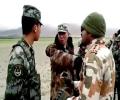
'During disengagement, you don't find violence.' 'And that, too, the killing of a commanding officer.' 'This indicates that this is more serious than previous incidents.'

Narrowing of differences on competing territorial claims along the un-demarcated LAC might take weeks, if not months, of hard-nosed negotiations. Without some give and take on both sides, the impasse will be hard to resolve, observes Virendra Kapoor.

The entire gamut of China's activities is aimed at keeping India on tenterhooks, cause fatigue to its troops and keeping its security system unstable, so that it cannot play a meaningful role in international geopolitics as an effective partner of the US and Japan, observes Lieutenant General Syed Ata Hasnain (retd).
 © 2026 Rediff.com - Investor Information - Advertise with us - Disclaimer - Privacy Policy - Sitemap - Feedback - About us - Terms of use - Grievances