
The law prohibits conversion of any place of worship and provides for the maintenance of the religious character of any place of worship as it existed on August 15, 1947.

Karnataka has commenced a survey for the sub-classification of Scheduled Castes (SCs) in the state, which will continue until May 17. The exercise, led by a one-man commission headed by retired High Court Judge Justice H N Nagamohan Das, aims to gather empirical data on 101 castes within the SC list and provide clear recommendations on sub-quotas. The survey will be conducted in three phases, with designated camps for those who miss the first phase and online registration for those residing outside their towns. The Supreme Court's August 1, 2024, verdict upholding the constitutionality of sub-classification within SCs provided the legal basis for this initiative. The commission aims to address discrepancies in the status of certain SC castes and provide a comprehensive report within 60 days.
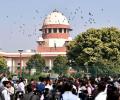
"The prejudice against Urdu stems from the misconception that Urdu is alien to India. This opinion, we are afraid, is incorrect as Urdu, like Marathi and Hindi, is an Indo-Aryan language. It is a language which was born in this land," the judges said.

The Supreme Court of India has directed the tree authority of the Brihanmumbai Municipal Corporation to halt any further tree felling in Mumbai's Aarey colony without its permission. The order comes after the Mumbai Metro Rail Corporation Limited (MMRCL) informed the court that there were no pending proposals to cut more trees in the area. The court has previously permitted the felling of a limited number of trees for a metro rail project, but has also imposed penalties on the MMRCL for exceeding its permitted limits.

The Bombay High Court expressed its dismay over the Maharashtra government's failure to register an FIR against five policemen involved in the custodial death of Akshay Shinde, despite an explicit court order. The court, alleging a deliberate attempt to disregard its directives, threatened contempt proceedings against senior CID officers for non-compliance. The case pertains to Shinde's death while in police custody, accused of sexually assaulting two kindergarten girls in Badlapur. An inquiry report by a magistrate indicted the five policemen, suggesting a possible fake encounter. The court emphasized the importance of following the rule of law and stated that the government's inaction would send a detrimental message to society.

West Bengal Chief Minister Mamata Banerjee on Monday pledged to protect the rights of 'eligible candidates' who lost their jobs after a recent Supreme Court verdict, evoking mixed responses from the affected teachers, thousands of whom turned up to hear the leader speak but remained dangling between hope and despair after she finished.
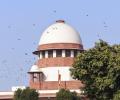
The Supreme Court of India has reprimanded the Rajasthan government over the alarming rise in student suicides in Kota. The court expressed its deep concern over the situation, questioning the state's efforts to address the crisis. The court also ordered an FIR to be filed in the case of a 22-year-old IIT Kharagpur student who died by suicide in his hostel room, citing a delay in reporting the incident to the police.

The Supreme Court has directed the Indian Air Force not to release Wing Commander Nikita Pandey from service. Pandey, who participated in Operation Balakot and Operation Sindoor, was denied a permanent commission despite being an expert fighter controller. The court raised concerns about the uncertainty faced by Short Service Commission (SSC) officers who are denied permanent commissions after years of service. The court emphasized the need for a system to accommodate all suitable SSC officers in permanent commissions, highlighting the excellent performance of women officers. The court has ordered the IAF to consider Pandey's case in a second selection board and has postponed the hearing to August 6.

The plea claimed the blocking was effected by the intermediary pursuant to an undisclosed direction allegedly issued by the Centre citing vague grounds of "national security" and "public order".

A Supreme Court lawyer has written to the Attorney General seeking consent to initiate contempt proceedings against BJP MP Nishikant Dubey for his "grossly scandalous" remarks against the court. Dubey had criticized the Supreme Court and Chief Justice of India Sanjiv Khanna following the Centre's assurance that it would not implement some of the contentious provisions of the Waqf (Amendment) Act. The BJP has distanced itself from Dubey's comments, calling them his personal views.

In a landmark verdict, the Supreme court fixed a timeline for Governor to act on bills passed by the state legislature as it pulled up Tamil Nadu Governor R N Ravi for reserving 10 bills for President's consideration, saying it was against the constitutional provisions.

Four days after the top court cleared 10 bills, which were stalled and reserved by Tamil Nadu Governor R N Ravi for the president's consideration, and set a timeline for all governors to act on the bills passed by the state assemblies, the judgement running into 415 pages was uploaded on the apex court's website at 10.54 pm on Friday.
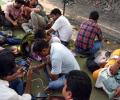
The West Bengal School Service Commission (WBSSC) on Friday said it would abide by the Supreme Court directive and soon initiate the process of conducting fresh exams for all teaching and non-teaching candidates, who took part in the now-invalidated 2016 job recruitment exercise.

Congress MP Mohammad Jawed and AIMIM president Asaduddin Owaisi have challenged the validity of the Waqf (Amendment) Bill, 2025 in the Supreme Court, arguing that it violates constitutional provisions. The petitions claim the bill imposes arbitrary restrictions on Waqf properties and their management, undermining the religious autonomy of the Muslim community. They also allege that the bill discriminates against Muslims by imposing restrictions not present in the governance of other religious endowments. The bill was passed in the Rajya Sabha and Lok Sabha, with the petitioners arguing that it introduces limitations on the creation of Waqfs based on the duration of one's religious practice, mandates inclusion of non-Muslim members in Waqf administrative bodies, and shifts key administrative functions to government officials, thereby diluting the autonomy of Waqf management.
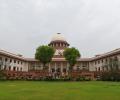
The Supreme Court on Thursday said the executive and the legislature would decide whether persons, who had availed quota benefits and were in a position to compete with others, were to be excluded from reservation.

The Solicitor General said, "Leadership develops at the grassroots level and it remains in the state association. By the time, his time comes for being elevated to the BCCI; he has to go for a mandatory three-year cooling-off period. One cannot become a member of the BCCI if he is not an active member of the state association".

The Supreme Court on Friday declared JSW Steel Limited's resolution plan for Bhushan Power & Steel Limited (BPSL) "illegal" and ordered the latter's liquidation, four years after the company was acquired by JSW Steel under the Insolvency and Bankruptcy Code (IBC). Following the ruling, JSW Steel shares fell sharply.
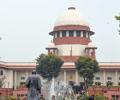
Swamy Shraddananda, jailed for 30 years for killing his wife, has moved the Supreme Court seeking authorities to decide his mercy plea before the President in December, 2023.
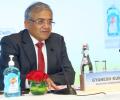
Congress general secretary K C Venugopal said in a hasty midnight move, the government has notified the appointment of the new CEC.
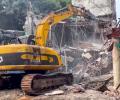
The Supreme Court of India has criticized the Uttar Pradesh government and Prayagraj Development Authority for the demolition of homes in the city, calling the actions "inhuman and illegal." The court ordered the authority to pay Rs 10 lakh compensation each to the homeowners, stating that the demolitions were carried out in a "high-handed" manner without following due legal process. The petitioners, whose homes were demolished, argued that the state government wrongly believed the land belonged to gangster-politician Atiq Ahmed. The Allahabad High Court had previously rejected their plea challenging the demolition.
The Supreme Court of India has ruled that it is mandatory to consider the twin conditions laid out in the Prevention of Money Laundering Act (PMLA) when deciding bail applications in money laundering cases. The court emphasized the seriousness of the crime and the need to comply with the rigorous requirements of Section 45 of the PMLA, which includes giving the prosecutor an opportunity to oppose bail and ensuring that the court is satisfied that there are reasonable grounds to believe the accused is not guilty and unlikely to commit another offense on bail. The ruling was made in response to an appeal filed by the Enforcement Directorate against a Patna High Court order granting bail to an accused in a money laundering case. The Supreme Court found that the High Court had granted bail without properly considering the requirements of Section 45 and remanded the case back for a fresh review.

The verdict will have far-reaching implications for judicial service aspirants.
The Supreme Court of India has directed Uttar Pradesh authorities to respond to contempt proceedings for allegedly razing a portion of a mosque in Kushinagar, defying a previous court order. The court has also ordered a halt to any further demolition of the structure. The demolition was carried out despite a November 2024 Supreme Court ruling that barred demolition without a prior show cause notice and a 15-day response period. The petitioners allege the demolition was carried out in violation of legal process and the Supreme Court's guidelines, as well as without providing an opportunity for a hearing.
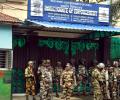
The Supreme Court of India has repeatedly criticized the Enforcement Directorate (ED) for exceeding its authority and misusing its powers. The latest rebuke came on Thursday, when the court accused the agency of 'crossing all limits' in a money laundering probe against a Tamil Nadu state-run liquor retailer. This follows a string of similar observations by the Supreme Court and high courts across India, raising concerns about the ED's investigative practices and the potential for misuse of its powers.
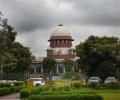
The Supreme Court of India has formed a National Task Force (NTF) to address the growing concern of student suicides in higher educational institutions. The court took note of the recurring cases and directed Delhi Police to register FIRs on the complaints of families of two students who died by suicide at IIT Delhi in 2023. The NTF, chaired by former apex court judge Justice S Ravindra Bhat, will prepare a comprehensive report, including the identification of causes leading to suicides, analysis of existing regulations, and recommendations for strengthening protections. The NTF will also have the authority to conduct surprise inspections of higher educational institutions and make further recommendations to ensure a holistic approach to addressing mental health concerns and eliminating suicides.

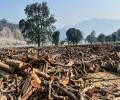
A bench of Justices Abhay S Oka and Ujjal Bhuyan made the observation while rejecting the plea of a man who had chopped down 454 trees in the protected Taj Trapezium Zone.
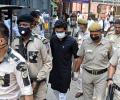
The Supreme Court of India questioned whether former JNU student Sharjeel Imam can be prosecuted in multiple states for sedition based on a single speech. The court is considering a plea to club multiple FIRs filed against Imam in Uttar Pradesh, Assam, Manipur, and Arunachal Pradesh for his alleged inflammatory remarks during protests against the Citizenship Amendment Act (CAA). The court is concerned about the potential for double jeopardy and has indicated that it may transfer the cases to Delhi.

The Supreme Court of India will examine the jurisdiction of the Lokpal, India's anti-corruption ombudsman, in entertaining complaints against sitting high court judges. The court is considering a suo motu proceeding initiated over the Lokpal's January 27 order on the issue. The case involves two complaints filed against a sitting additional judge of a high court, alleging that he influenced a judge of the subordinate judiciary and a judge of the same high court set to deal with a suit filed against the complainant by a private company.
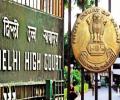
The Supreme Court collegium has initiated an initial inquiry against Delhi High Court judge Justice Yashwant Varma following the alleged discovery of a large stash of cash at his official residence during a fire incident. The collegium has also reportedly recommended Justice Varma's transfer to his parent high court, the Allahabad High Court. The inquiry will involve seeking a report from the Chief Justice of the Delhi High Court on the incident. The controversy surrounding the alleged discovery of cash was first reported by The Times of India. Justice Varma's proposed transfer is subject to the Centre's approval. The amount of cash found is not yet known. Justice Varma, currently heading a division bench dealing with sales tax, GST, company appeals and other appeals, did not hold court on Friday. Delhi High Court Chief Justice D K Upadhyaya expressed shock over the incident. The collegium reportedly received information about the cash discovery from government officials. Some collegium members have called for stricter action against Justice Varma, including seeking his resignation or launching an in-house inquiry. The Supreme Court has an in-house inquiry mechanism to deal with allegations against judges, which involves forming a committee to investigate and, based on the report, take further action. A judge of a constitutional court can only be removed through impeachment by Parliament.

Issuing notice to the ED on the plea filed by the Tamil Nadu government and Tamil Nadu State Marketing Corporation (TASMAC), a bench comprising Chief Justice B R Gavai and Justice Augustine George Masih told Additional Solicitor General S V Raju, appearing for the anti-money laundering probe agency, that "Your ED is crossing all the limits."

The Centre on Thursday assured the Supreme Court that it will neither denotify Waqf properties, including "Waqf by user", nor make any appointments to the central Waqf council and boards till May 5.

The Act prohibits conversion of any place of worship and provides for the maintenance of the religious character of any place of worship as it existed on August 15, 1947.

The Indian government has claimed a significant increase in waqf land following the 2013 amendment to the Waqf Act, asserting that the addition of 20 lakh acres raises concerns about potential "misuse" of the provisions. In an affidavit to the Supreme Court, the Centre highlighted a 116% rise in auqaf area after the amendment and urged the dismissal of petitions challenging the Act's validity.
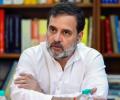
The Supreme Court of India reprimanded Congress leader Rahul Gandhi for his remarks about Vinayak Damodar Savarkar, calling them "irresponsible." The court stayed criminal proceedings against Gandhi in a case filed in Uttar Pradesh for his comments but warned him against making such statements in the future. The court also asked Gandhi's lawyer if he was aware that even Mahatma Gandhi used terms like "your faithful servant" in his communications with the British.
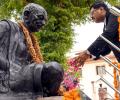
Justice Bhushan Ramkrishna Gavai, India's 52nd chief justice and its first Buddhist one, has played a key role in shaping the judicial landscape, penning about 300 verdicts, including landmark rulings on constitutional issues, liberty, and perhaps most important against the executive's 'bulldozer justice'.
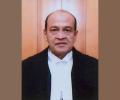
The Supreme Court will hear a plea on Friday seeking a direction to Delhi Police to lodge an FIR over the alleged discovery of semi-burnt stash of cash from the official residence of High Court judge Yashwant Varma. The plea was filed by lawyer Mathews J Nedumpara and three others on Sunday. It challenges the 1991 judgement in the K Veeraswami case, in which the top court ruled that no criminal proceedings could be initiated against a judge of the high court or the top court without the prior nod of the Chief Justice of India. The alleged cash discovery happened following a fire at Varma's Lutyens Delhi residence on March 14, prompting the fire officers to rush to the spot. A Supreme Court-appointed in-house committee visited the residence of Justice Varma on Tuesday to commence its inquiry in the matter. Justice Varma denounced any insinuation and said no cash was ever placed in the storeroom either by him or any of his family members.

'...in the minds of the youth of Assam.' 'Now, no protests happen in Assam because of fear of police encounters.'

The Enforcement Directorate (ED) arrested former Haryana Congress MLA Dharam Singh Chhoker from a five-star hotel in Delhi following a brief scuffle. Chhoker, along with his sons, is accused of defrauding over 1,500 homebuyers and siphoning off over Rs 500 crore through their real-estate companies. The ED had been seeking Chhoker's presence in the investigation since May 2022. The politician was caught at the Grappa Bar of the Shangri-La hotel on Ashoka Road. He is currently in ED custody for six days.
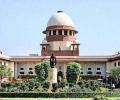
The Supreme Court of India has scheduled a hearing on February 19 for pleas challenging the appointment of the Chief Election Commissioner and Election Commissioners under the 2023 law. The court emphasized the potential consequences if any action is taken before the hearing. The pleas argue that the 2023 law, which excludes the Chief Justice of India from the selection panel, undermines the independence of the Election Commission and allows for undue influence from the executive branch. The court's earlier verdict in March 2023 called for an independent selection panel comprising the Prime Minister, Leader of the Opposition, and the Chief Justice of India to ensure the integrity of the Election Commission. The case highlights concerns about the independence of India's electoral process and the potential for political influence in the appointment of key election officials.
 © 2026 Rediff.com - Investor Information - Advertise with us - Disclaimer - Privacy Policy - Sitemap - Feedback - About us - Terms of use - Grievances