
The protests brought home the fact that the Sri Lankan public is in no mood for halfway measures, as voices against Rajapaksa 'family rule' and 'securitisation' of the civilian administration began sidestepping the more critical economic crisis, affecting the nation and afflicting the individual, observes Sri Lanka watcher N Sathiya Moorthy.

The bosses of SBI, Union Bank and Central Bank have been driving down to their offices everyday to take stock of the biggest loan drive ever undertaken for MSMEs, discovers Tamal Bandyopadhyay.

'In our country, there is a lot of checks and balances, the figures cannot go wrong.' 'Because they are being checked by not only the governments, but by doctors themselves.'

We present our alphabet of 2020, pulling in everything you'll remember about this year we'd rather forget.

Speaking about the COVID-19 pandemic in Parliament on Tuesday, Oli said it has become very difficult for Nepal to contain the spread of the deadly virus due to the flow of people from outside.

'Agri reforms need to go beyond the limited concerns of these three laws in improving agriculture productivity in cereal and crop diversification and production patterns.'

After a stellar run in 2021 that saw the S&P BSE Sensex and the Nifty50 clock gains of 20 per cent and 22 per cent respectively, global equity markets, including India, are gearing up to welcome 2022 on a cautious note. For one, new variants of the Covid -19 infection that make current vaccines less effective is one of the key risks worth flagging, analysts said. Inflation was also a risk for this asset class in 2021, although most market participants expect that the current elevated inflation levels will be transitory.

Serum Institute is investing $200 million to create capacities for the COVID-19 vaccine. Sohini Das profiles its 39-year-old CEO.

We will find it difficult to exceed an average of 5 per cent growth in the medium term, warns Shankar Acharya, the former chief economic adviser.

Equities in India saw record FPI inflows of $16.8 billion in November and December, taking the benchmark indices to new highs.

While JioMart is doing 250,000 orders per day, BigBasket and Amazon pantry are doing 220,000 and 150,000 orders, respectively.

Co-founders of India's latest unicorn expected Covid-19 to be a speed breaker; instead it accelerated sales. Cars24 now enjoys more than 90 per cent market share among all other similar online transaction platforms. Dhruv Munjal traces the birth of this used-cars platform.

The company now offers seven different models of SUVs in India compared to two models a decade ago and contributes around 40 percent of sales up from 30 percent a couple years ago.

'Large-caps are better placed to withstand the impact of higher input cost inflation, rising rates and withdrawal of excess global liquidity.'

The dividends for the economy from such a rapid rise in capital expenditure would be huge, observes A K Bhattacharya.

A closer look at the data reveals that a lot of the items are not part of this calculation. The notable ones include buffalo meat, marine exports, raw cotton, and plantation crops such as tea, coffee, rubber, etc.

In this weekly self-help series, mental health and life coach Anu Krishna tells you how to take control of your life.

After healthcare and frontline workers, priority will be given to those above 50 years of age and the under-50 population groups with co-morbidities numbering around 27 crore, it added.

A combination of demonetisation, a poorly and hurriedly implemented GST, and more recently the "botched up" lockdown of the economy to control the spread of Covid has brought the economy to its knees.

In an order, Union Home Secretary Ajay Bhalla said buses shall be used for transport of such groups of stranded people and these vehicles will be sanitised and will have to follow safe social distancing norms in seating.

The prime minister appealed to citizens for making a renewed commitment to adherence to norms and regulations governing the lockdown restrictions

The Dabangg star, who has been providing assistance to those in need amid the ongoing pandemic through his charitable trust, on Monday posted a statement on his social media handles.

Reserve Bank of India (RBI) Governor Shaktikanta Das on Thursday said the country's economy has recovered stronger than expected from the initial impact of the COVID-19 pandemic, but there is a need to be watchful of demand sustainability after the end of festivities. Speaking at the annual day event of Foreign Exchange Dealers' Association of India (FEDAI), Das said there are downside risks to growth across the world and also in India. It can be noted that the Indian economy contracted by 23.9 per cent in the first quarter of the fiscal year, and the RBI expects the economy to shrink by 9.5 per cent in FY21.

'When the virus, in a way, tires itself out, because it is not finding any more people to attack or keep itself viable, that is when the peak actually has been reached and you are on the downward limb (of the curve).'

There has been a stellar rise for the Indian markets this far in calendar year 2021 (CY21) with the S&P BSE Sensex surging over 19 per cent. The gain in mid-and small-cap indices on the BSE has been sharper with both these indexes surging around 38 per cent and 54 per cent, respectively during this period. Rampant spread of Covid pandemic's Delta variant and the ensuing lockdown and mobility curbs across India, rising prices key commodities, including crude oil and its impact on inflation, possibility of tightening of policy stance by major global central banks, especially the US Federal Reserve (US Fed) have been some of the key headwinds that the markets successfully negotiated during this period.

Input shortages and low inventories, according to Nomura, will likely lead to production cuts and delayed shipments in the September 2021 quarter.

Niyo is also offering bonuses and ESOPs, taking the total stock grants to over Rs 100 crore for all eligible employees.

FIDE president Arkady Dvorkovich said the chess world was moving online which would help the sport reach its full potential.

Not to say that India couldn't have handled the situation better, but on average, it didn't do anywhere near as badly as the naysayers make it out argues Rajeev Srinivasan.

While companies have not launched too many products in rural areas of late, easy financing has helped push up demand.

Anu Krishna along with Rediff.com want you to talk and seek help to prioritise mental health and wellness.
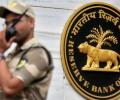
The Reserve Bank of India on Wednesday retained the economic growth projection for the current financial year at 10.5 per cent, while cautioning that the recent surge in COVID-19 infections has created uncertainty over the economic growth recovery. In its last policy review, the RBI had projected a GDP growth rate of 10.5 pc for FY'22. Taking various factors into consideration, it said, "the projection of real GDP growth for 2021-22 is retained at 10.5 per cent consisting of 26.2 per cent in Q1, 8.3 per cent in Q2, 5.4 per cent in Q3 and 6.2 per cent in Q4."

'Fitness is such a game of trial and error and it's an absolute rollercoaster ride with many ups and downs.'

Dhoni says no to brand endorsements amid pandemic, keeps busy with organic farming

Many experts feel the concept of a national peak is nebulous, given that the growth in case numbers is dominated by a handful of states.

Ashish Kurme, an MBBS student studying at a university near Wuhan, tells the grim story of ground zero of the coronavirus outbreak.

Referring to various media reports showing the 'unfortunate and miserable conditions' of migrant labourers walking on foot and cycling long distances after the lockdown, the top court issued notices to the Centre, the states and union territories and sought their replies by May 28.

Uttarakhand Chief Minister Tirath Singh Rawat on Sunday again created a controversy with his remark over the amount of ration distributed during the COVID-19 lockdown: A family with two children got less ration and they would have got more if they had 20 children.

There's no place like home, but even for the affluent buying one in India is difficult. On top of that, the coronavirus pandemic-now in its eighteenth month-has made life uncertain. A hopeful thing is buying a house looks alluring as loan interest rates fall below 7 per cent, their multi-decadal lows. The slow decline in GDP growth after demonetisation, followed by the economic shock caused by Covid-19 waves, has hurt us unevenly.

Despite near-term headwinds of rising input costs and the possibility of lower demand for products as Covid dented rural & urban India, and impacts both production & consumption, analysts remain bullish on stocks of fast moving consumer goods (FMCG) companies and expect the index to relatively outperform its peers in the second half of fiscal 2021-22 (FY22). In the past one year, prices of key commodities such as groundnut oil, mustard oil, Vanaspati, soya oil, sunflower oil and palm oil have shot up in the range of 20 per cent to 60 per cent, data show. The FMCG sector macros in this backdrop, according to analysts, have further deteriorated because of weakness in consumer demand and likely margin pressure due to elevated crude oil, palm oil and global food prices.
 © 2026 Rediff.com - Investor Information - Advertise with us - Disclaimer - Privacy Policy - Sitemap - Feedback - About us - Terms of use - Grievances