
'India can replicate what Pakistan did to Kulbhushan Jadhav should the need arise.' 'Hopefully, Pakistan will see reason before that transpires,' says Ambassador G Parthasarathy, former high commissioner to Pakistan.

'Modi wants to be pragmatic -- acknowledge the problem of Pakistan and that full reconciliation is essentially a non-starter, but at the same time grab the low-hanging fruits (such as trade) to put things on a more even keel, to engender enough stability in the relationship to allow him to focus on other priorities.'

'Modi's decision to hold out an olive branch to Sharif within 48 hours of the 'surgical strikes' has been a timely move as it helps tensions to 'de-escalate',' says Ambassador M K Bhadrakumar.

'Here in Delhi, the Modi government is supposedly looking at 'options' to hit back at Pakistan in any whichever way it can, while in Washington, the Obama administration is looking for ways to strengthen US military cooperation with Pakistan,' says Ambassador M K Bhadrakumar.

How long can Pakistan remain neutral in the Saudi Arabia-led Yemen conflict?

'They bluff and lie repeatedly and we swallow their lies.' 'Because we are soft and polite, we get into a mess of our own making.'

Indian High Commissioner in Islamabad Gautam Bambawale met Pakistan Foreign Secretary Tehmina Janjua in connection with the case of Jadhav, who has been given death sentence by a Pakistani military court for alleged spying.
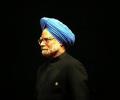
Composite dialogue likely to be formally revived; PM visit might also be marked with grant of trade MFN status. Nayanima Basu reports
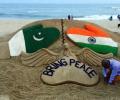
He underlined that India stands for dialogue and cordial relationship with Pakistan.

'Will Pakistan allow R&AW and Indian armed force officers access to roam around their strategic bases?' 'Is there any precedent anywhere in the world of such permissions being granted?'

Stepping up its attempts to internationalise the Kashmir issue, Pakistan has written to the UN chief on the security situation along the LoC and the International Border with India and sought the world body's intervention in resolving the issue.

Afghan President Hamid Karzai is in Pakistan on a day-long visit to mend frayed ties with Pakistan and to seek the release of high-profile Taliban prisoners, including Mullah Barader, to give a fresh impetus to the reconciliation process in his war-torn country.

The prime minister said there was a need to demonstrate strong and collective will to defeat terror networks that cause bloodshed and spread fear.

It is time to forge a credible New Delhi-Srinagar axis, says Ajai Shukla.
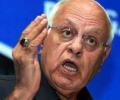
National Conference leader and former Jammu and Kashmir chief minister Farooq Abdullah has rejected the notion that the threat of a nuclear war would solve the Kashmir issue, asserting that the region would never be a part of Pakistan and dialogue is the best way to "move forward".

'Pakistan has responded with appropriate contempt -- hrowing our national dignity into the waste paper basket.'

'If India is already involved in helping the insurgents in Baluchistan and Karachi, as Pakistan says, it is but one step for New Delhi to bring Dawood or Hafiz Saeed into its sights,' says Amulya Ganguli.

Pakistan NSA Sartaj Aziz says he is ready to travel to India but without any pre-conditions

In a turnaround, Pakistan asked for "more evidence and information" from India on the Mumbai attack case and asserted that talks cannot take place without Kashmir being on the agenda, barely three days after the two countries agreed to re-engage.
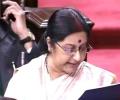
The external affairs minister said PM Modi had discussed with his Pakistani counterpart of re-engaging with each other."

While Prime Minister Modi may pursue the laudable aim of building a cooperative relationship with Pakistan, he and his advisers should never think that concessions (and dialogue is a concession in itself) will change the Pakistan army's approach to India, says Vivek Katju.

What India has failed to acknowledge is that sub-conventional war is the name of the game and irregular forces have emerged with greater strategic value over conventional and even nuclear forces, and reliance purely on conventional force and diplomacy is grossly inadequate, says Lt Gen Prakash Katoch (retired).
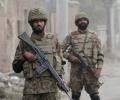
India must watch for signs after Peshawar that Pakistan is waking up to the dangers of Islamism, muses Ajai Shukla

'A close look at the time-lines tells you that exactly as the back-channel negotiations were in their most crucial stage, "somebody" was planning the 26/11 attacks in Mumbai,' says Shekhar Gupta questioning Khurshid Mahmud Kasuri's account of a peace deal with India.
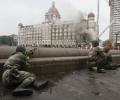
Through its early days to the 1980s, Pakistan sought to expand its sphere of Islamic influence through Afghanistan to Central Asia and got Pakistani citizens recruited in the Afghan government institutions in the 1990s when the Taliban were power. Now, it is looking eastward through India to Bangladesh and Myanmar to establish an imaginary caliphate.

'Clearly, the Modi government is proving to be far more willing than any previous government in Delhi to hitch India's wagons with the US' regional strategies.'

'When it comes to India-Pakistan relations, seminal moments of progress invariably bring out saboteurs of peace -- whether we're talking about fresh provocations along the LoC, or even a terror attack in India.'

'The Modi regime, after experimenting with its own versions of neighbourhood policy for 18 months, has now reached the exact stage where the Manmohan Singh government had left it in so far as our Pakistan policy is concerned,' says former senior RA&W officer Vappala Balachandran.

'The ISI has given a stunning display of its capacity to do with impunity what it likes within Kabul. Incensed over the triumphalism of the hardliners in Kabul, the ISI has hit out; it is a typical ISI reflex action that Indians are familiar with,' says Ambassador M K Bhadrakumar.
'India has to judge what Pakistan says to us, not what they say to a domestic audience,' a source tells Sheela Bhatt/Rediff.com, explaining why India-Pakistan talks remain on track despite discordant noises from across the border.

Sushma Swaraj's suave moves helped Narendra Modi pull off a diplomatic coup, helping regain her standing.
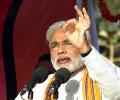
'Both reflect prejudice and short-sightedness peculiar to Mr Modi's way of thinking.'

Pakistan has made it clear that there can be no talks with India unless Kashmir is on the agenda.

Rediff.com reproduces this 2014 interview with Tim Kaine where in he discusses the new opportunities to foster Indo-US trade and the improvement in ties.

'The Senators were playing safe, not angering either the pro-India lobby or the pro-Pakistan lobby, but perhaps more importantly, the military-industrial complex -- the most powerful lobby of all -- which the majority of Senators are beholden to in terms of largesse to their campaign coffers.'

'There cannot be any compromise on that. After all, all instrumentalities of the State have been made to serve it. Why was the Constitution made? It was made to serve the cause of India.'

'Diplomatic engagement will continue even as India keeps all its options open with respect to discretely targeting the Pakistani military and its terrorist proxies.'
 © 2026 Rediff.com - Advertise with us - Disclaimer - Privacy Policy - Sitemap - Feedback - About us - Terms of use - Grievances