
American-born economists Robert E. Hall and Michael Woodford have been awarded the Nobel memorial prize in economics for their groundbreaking work on the microeconomic foundations of macroeconomic stabilisation, demonstrating how individual household and business actions influence the broader economy.

Researchers at IIT Indore have developed HGAST, an AI tool designed to correct gender-specific errors in translations from English to Hindi, Marathi, and Gujarati. The tool acts as a correction layer, identifying and rectifying masculine verb forms often used by AI systems when translating female speech, significantly improving accuracy for female speakers without retraining existing models.

IIIT Hyderabad and measurement technologies firm Hexagon R&D India have collaborated to establish the Hexagon Digital Twin Centre of Excellence (CoE) at the IIIT Hyderabad campus. This CoE will focus on applied research, education, and industry collaboration in computer vision, spatial computing, and AI-powered digital twins, providing access to advanced imaging technology.

India's largest bank, SBI, is investigating the suspected exposure of 3,897 customer records containing personally identifiable information on the dark web. The bank received alerts on October 16 and has initiated cyber incident response protocols, engaging an independent cybersecurity agency. While a detailed assessment is underway, SBI states the incident has not materially impacted its core business operations. This comes as CERT-In also warned last week about autonomous AI agents accessing confidential data and reported a compromise of eMudhra's private keys.

A laboratory technician in Siberia died from 'pneumonia of unknown aetiology' at an Anti-Plague Research Institute, sparking fears of pneumonic plague, with the US now monitoring the situation and urging Russia for transparency.

Indian IT stocks have experienced their most significant weekly surge in 18 years, with the Nifty IT index climbing 11.72 per cent, as a global sell-off in AI-linked equities redirected investor attention towards India's IT services sector. This shift aligns with a JP Morgan report identifying India as a 'natural AI hedge' due to its large, liquid market and strong domestic institutional investor base.

The National Testing Agency (NTA) is conducting Joint CSIR-UGC NET, a national-level examination to determine the eligibility of Indian candidates for various academic and research opportunities at Indian universities and colleges through the computer based test (CBT) mode. These include the junior research fellowship (JRF), appointment as an assistant professor, eligibility for both assistant professor positions and PhD admission and admission to PhD programmes.

A study suggests that targeting the brain's default mode network (DMN), which becomes active during self-reflection, could be a more effective approach to managing chronic low back pain. Researchers found that DMN activates during chronic pain flares, unlike its deactivation during acute pain, indicating chronic pain is deeply linked to one's sense of self. This finding explains why traditional symptom-based treatments often fail and points towards mind-body and psychedelic therapies.

'This is a never-before-seen phenomenon.' 'Instead of violence relating to extortion, contract killings, settlements etc for the first time ever, they seem to be wanting to kill for vanity and pride.'

The proposal caught auto makers by surprise.
Researchers from IIIT-Delhi and MS Swaminathan Research Foundation have developed SICKLE, a multi-satellite dataset designed to enhance AI systems' ability to monitor crops, identify growth, and estimate yields across vast agricultural areas. This dataset combines satellite imagery with field-level information, enabling machine learning models to understand various aspects of crop cultivation and predict key parameters like phenology and productivity.

New Zealand captain Mitchell Santner discussed India's young batting sensation Vaibhav Sooryavanshi and veteran pacer Bhuvneshwar Kumar ahead of the five-match T20 International series.
A collaborative study by Indian and South Korean scientists has provided new genetic, anatomical, and ecological insights into the wide-ridged Indo-Pacific finless porpoise. The research, based on a stranded specimen in Kerala, revealed distinct genetic differences from Pacific populations and highlighted significant conservation challenges, including limited protected habitats and anthropogenic pressures.
Technopark-based space-tech startup HEX20 has been selected by the UAE Space Agency to develop a spacecraft for an asteroid probe, marking the first time an Indian private company has been chosen for a deep-space mission by the Gulf nation. HEX20 is contributing its expertise in developing the spacecraft bus and software for the Emirates Mission to the Asteroid Belt, which is scheduled for launch in March 2028 to study asteroid 269 Justitia.
Researchers at the University of Cincinnati have discovered that insects, including fruit flies and mosquitoes, respond predictably to humidity cycles, suggesting humidity acts as a 'zeitgeber' or time giver for their biological clocks. This finding has broad implications for understanding circadian rhythms across animal systems, as insects' survival is closely tied to hydration levels.

The Gauhati court ruled that Rajive Mohan Pant did not meet the minimum experience requirement and ordered a fresh selection process within four months.
Botanists have discovered a new plant species, Didymocarpus nautiyalii, in Arunachal Pradesh's Shi-Yomi district. This small herb, found in subtropical evergreen forests, features leathery leaves and bluish-purple flowers. Named after Prof Sunil Nautiyal, the species is currently assessed as Data Deficient by IUCN, prompting calls for further research and conservation efforts.

More patients can now afford semaglutide, but the early excitement around the drug is fading.

Tata Trusts, India's largest philanthropic group, disbursed Rs 1,556.31 crore in the year to March 2026 and announced plans to establish a network of 40 to 50 not-for-profit general hospitals, with funding from paying patients supporting care for those who cannot afford it.
Researchers at IIT Kharagpur, in collaboration with the University of Illinois Urbana-Champaign, have developed a highly sensitive sensor technology. This innovation allows ordinary smartphone cameras to detect extremely tiny, invisible objects, potentially leading to low-cost, portable medical testing and other applications requiring the detection of minute substances.

New Zealand Prime Minister Christopher Luxon stated that the historic Free Trade Agreement with India, now in effect, will help grow both economies, allowing Kiwi businesses to reach over a billion more customers with significantly reduced tariffs, leading to 'more jobs and higher wages for Kiwis'.

Equity mutual fund schemes recorded a net inflow of Rs 38,306 crore in September, a 31 per cent increase from the previous month, driven by strong investor interest in mid-cap and small-cap funds despite stock market volatility and foreign portfolio investor (FPI) sell-offs.

Former Supreme Court Justice Abhay Oka warned that major cities might be forced to adopt mandatory face mask usage within 20-25 years due to environmental degradation. He stressed that protecting the environment is a fundamental constitutional duty, countering the misconception that humans own the Earth. Justice Oka also encouraged students to study law and use AI responsibly.

An IIT Madras study reveals that financial cybercrime victims in India are often highly educated professionals, challenging the notion that only careless or financially unaware individuals are targeted. The research highlights that digital literacy doesn't guarantee protection, as fraudsters exploit stress and emotional vulnerabilities.
A University of Delhi study has found significant heavy metal contamination in agricultural soil and vegetables grown along the Yamuna river in the capital. The research highlights potential non-carcinogenic and carcinogenic health risks to consumers due to crops irrigated with polluted wastewater, with specific vegetables showing dangerously high levels of metals like nickel, chromium, and molybdenum.

Indian benchmark stock indices, Sensex and Nifty, experienced a significant drop on Monday, with the Sensex falling by nearly 548 points, primarily due to a fresh spike in crude oil prices, persistent foreign fund outflows, and rising bond yields.

The 200-DMA is a closely watched indicator of a stock's long-term trend and can serve as an early warning of trouble.

A recent study indicates that dogs possess the ability to segment human speech into individual words, a skill previously thought to be unique to humans. This "consonant bias" in speech processing appears to develop through regular exposure to human language, suggesting that efficient speech processing is not solely dependent on complex human linguistic capabilities. The findings, published in Science, highlight how brain function can be reshaped by speech exposure even in evolutionarily distant species.

'... but runs with the rigour and discipline of a large enterprise.'
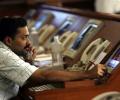
Indian benchmark stock indices, Sensex and Nifty, closed lower due to profit-taking, a spike in wholesale price-based inflation, and firm crude oil prices, despite some support from easing intraday crude oil prices and rupee appreciation.

IIT Madras has inaugurated a new state-of-the-art robotics laboratory, established with CSR support from Bechtel India. This collaboration aims to accelerate research, innovation, and industry applications in robotics and automation, specifically for the construction and infrastructure sectors, fostering advanced technological solutions and workforce development.
Scientists at IIT Mandi have identified the cellular signature of anaesthesia in plants, a discovery that challenges conventional understanding of consciousness. Their research shows plants respond to anaesthetics in a synchronised manner, reorganising cellular nuclei despite lacking a brain or nervous system, suggesting a more sentient nature than previously believed and resonating with ancient Indian philosophical thought.
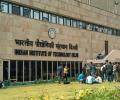
Researchers at IIT Delhi have successfully designed India's first working indigenous micro Graphics Processing Unit (GPU). This significant development aims to reduce the country's reliance on imported GPUs, which are crucial for AI, Machine Learning, and various embedded applications, and could help bridge the digital divide.
Hindustan Copper Limited CMD Anupam Misra spoke at the 85th CSIR Foundation Day, advocating for workplace safety, employee welfare, and scientific excellence. He stressed the importance of continuous learning, innovation, and bridging research with industrial applications to support Viksit Bharat 2047. CSIR-NML Director Dr. Sandip Ghosh Chowdhury also highlighted CSIR's legacy and its role in India's technological self-reliance.

Indian benchmark stock indices, Sensex and Nifty, rallied significantly, with Sensex jumping over 1,500 points and Nifty reaching a nearly three-week high, driven by strong buying in banking, IT, and Reliance Industries stocks, alongside easing crude oil prices.

This week's OTT releases offer a diverse selection across various streaming platforms.
Ministry of Information and Broadcasting Secretary Chanchal Kumar outlined the critical factors for the media and entertainment sector's next growth phase, including robust intellectual property, sustainable revenue models, and disciplined investments. Speaking at the CII Big Picture Summit, he emphasised the government's role in fostering an environment for creative enterprises and addressing challenges posed by digital platforms and AI. The CII White Paper also projected a USD 100 billion Indian M&E sector, advocating for stronger IP and regulatory reforms.
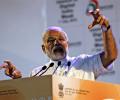
Prime Minister Narendra Modi, at the India Mobile Congress (IMC) 2026, articulated a vision for India's communications sector, emphasizing a global framework to combat cyber frauds and deepfakes. He called for India to become a hub for innovation and product development for the world. Industry leaders lauded his vision, highlighting India's robust digital infrastructure and its journey towards becoming a global technology leader, with a focus on trust, security, and responsible innovation.
Researchers have developed a new atomic clock using the element lutetium, which they claim is the most stable and accurate in the world. This clock can measure a trillionth of a second precisely and is highly resilient to environmental changes like temperature and magnetic fields, making it a significant advancement in timekeeping technology.
