
I had found spending one night at 14,500 feet inside a cottage difficult to get by -- struggling to breathe in the cold, thin, mountain air. Here, our soldiers had fought a ferocious battle at much greater heights in bone-chilling weather, worse than I had encountered. 114 men were killed in action in a 16-hour epic battle against China in Rezang La, the farthest outpost along India's border with China.

China has voiced strong opposition to India's recent decision to standardise names for 28 strategic locations and geographical features in Ladakh.

The Indian Army maintains a strict vigil in the Pangong Tso theatre, ever attentive for sneaky Chinese intrusions.

The soil mingled with the blood of 114 soldiers, gathered from the battlefield, has been preserved in a glass bottle in Rezang La. When the frozen bodies of the were recovered, they had their rifles in hand, fingers on the trigger, pointed towards the enemy. The mountains they defended will never forget them. Neither should we.

'Eastern Ladakh set the relationship back by about 10 steps. So far, especially since Galwan, we may have taken just 4 steps forward.'
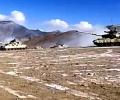
The sources said withdrawal of armoured elements from the south bank of Pangong Tso is almost complete and temporary structures erected by both sides will be demolished in the next few days.

The Chinese military has already completed moving back its troops from the face-off sites in Galwan Valley, Gogra and Hot Springs in line with the first phase of the disengagement process from the friction points on the LAC in eastern Ladakh, sources said. The main focus now shifts to Pangong Tso. India has been insisting that China must withdraw its forces from areas between Finger Four and Eight.
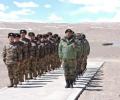
The sources said the ongoing engagement and dialogue at military and diplomatic levels have resulted in complete disengagement of troops at patrolling point 14, 15 and 17 A in eastern Ladakh.
Senior Congress leader and former defence minister A K Antony on Sunday alleged that disengagement in both the Galwan Valley and Pangong Tso Lake areas and the creation of a buffer zone was a 'surrender' of India's rights.

Official sources said withdrawal of tanks and other armoured elements from certain friction points is nearing completion while pulling back of troops from the North bank areas is being undertaken.

The 30-member committee, chaired by senior Bharatiya Janata Party leader and former Union minister Jual Oram and of which Rahul Gandhi is also a member,wishes to visit the eastern Ladakh region in the last week of May or in June.
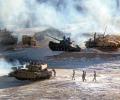
While tensions have eased at several friction points and mechanisms for managing the boundary have been reactivated, underlying differences persist. Disputes over naming practices in Arunachal Pradesh, continued infrastructure development on both sides, and unresolved questions regarding patrolling rights indicate that the structural gap remains, notes Dr Kumar.
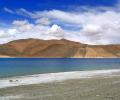
Ladakh's picturesque Pangong Tso lake is under threat from tourists who care less for the fragile environment and the Ladakhi culture
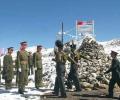
At the talks, the Indian side insisted on complete disengagement of Chinese troops at the earliest and immediate restoration of status quo ante in all areas of eastern Ladakh prior to May 5 when the standoff began following a clash between the two armies in Pangong Tso, they said.

As per the agreement reached by the two sides, India and China will withdraw the forward deployment in a phased and coordinated manner, the defence minister said.
'We won not (only) because we were able to carry out long-range precision strikes.' 'That is, of course, one of the reasons but we had better situational awareness about what's happening than Pakistan.'

'All those photographs I had seen before about Ladakh were not photoshopped.' 'Ladakh, truly, was nature's masterpiece.'

The Chinese and Indian armies continued with the disengagement process in the North and South banks of Pangong lake in eastern Ladakh as per plan and the entire pullback exercise is expected to take another six-seven days, sources in the defence and security establishment said on Monday.

'After the Galwan clash, the rules of engagement changed with the army commanders allowed to use any means at their disposal as they deem fit for tactical operations.'
'China's basic purpose of taking the Shaksgam Valley was access to the Indian Ocean.'
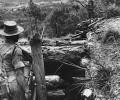
On November 18, 1962, 114 soldiers of the 13th Kumaon fought till the last man, and last bullet, in sub-zero temperatures, to beat back the huge Chinese army. We salute the Heroes of Rezang La.

The Congress party has accused the Modi government of a 'deny, distract, lie, and justify' (DDLJ) policy regarding China, alleging territorial setbacks and misplaced economic priorities.

Gandhi also raised questions over the Union territory status given to Ladakh after the bifurcation of Jammu and Kashmir into two Union Territories following the abrogation of Article 370.

China on Wednesday said the Chinese and Indian militaries are implementing the resolutions concerning the disengagement in eastern Ladakh along the Line of Actual Control (LAC) in an 'orderly' manner.

Rijiju complimented Rahul for promoting the excellent roads built in the Himalayan region under Modi's leadership.

'If Washington has to balance Chinese power, she will have to turn to the third biggest power in the world which is India.' 'The United States and India will have to work together in order to keep Chinese ambitions in check.'

At a media briefing, External Affairs Ministry Spokesperson Arindam Bagchi said India monitors such developments.
'It is flabbergasting to think that this heavenly region has, for decades, been coveted by India's aggressive neighbours,' says Claude Arpi after a recent visit to Ladakh. 'Wanting to use the newly created infrastructure to defend the borders after the clash of 2020 with China and the resulting standoffs, the home ministry is keen to boost border tourism to show that these areas are controlled by India.'
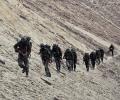
The government needs to answer the critical question of whether it has accepted any restrictions on its infrastructure creation activities, asserts Ajai Shukla.

Xu, 60, is expected to travel to New Delhi soon to take over his new posting.

"The Modi government's approach to the entire crisis could be described as DDLJ: Deny, Distract, Lie and Justify," Ramesh said.
It has been argued that India should have held back on disengagement from the Kailash Range, using that as a trump card to force Chinese concessions in areas such as Depsang, where they hold the advantage.
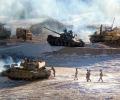
The army shared pictures of tanks and convoys of light armored vehicles moving with soldiers and equipment towards the rear areas as part of the disengagement process. Large number of Chinese tanks can be seen moving away from the south bank of the Pangong Tso.
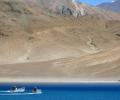
The people familiar with the development said the new bridge is being built in an area that is over 20 km from the Line of Actual Control (LAC).

"The contents of video being circulated are not authenticated. Attempt to link it with the situation on the Northern borders is mala fide," the army said in a statement. It said differences between the two sides are being addressed through interaction between military commanders following established protocols on management of border between the two countries.

The country's 75th Independence Day was celebrated across country on Sunday with usual fervour.

Sources said the Indian delegation was warmly greeted by senior officials of the Chinese Army before the talks began.
The two sides have already held at least 12 rounds of talks between local commanders and three rounds of talks between major general-rank officials but no positive outcome came out from the discussions, they said.
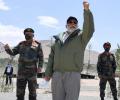
In a fresh incident in eastern Ladakh, the Chinese PLA carried out "provocative military movements" to "unilaterally" change the status quo on the southern bank of Pangong Tso lake but the attempt was thwarted by the Indian troops, the Army said here.

India on Friday said that a second bridge being constructed by China on Pangong lake is in an area that has been under illegal occupation of that country since 1960.
