
"Both India and China are victims of terrorism and the region was suffering from the menace. The prime minister said no country is immune from terrorism and on this issue, we cannot afford to have any differences," MEA spokesperson Vikas Swarup told reporters after the meeting.

Chinese foreign ministry spokesperson, Hua Chunying said China-Pakistan cooperation is in accordance with the 48-member nuclear club, which supervises global nuclear commerce.

A new draft proposal circulated among Nuclear Suppliers Group member states early this month could pave the way for India to become a member of the elite club, but this is unlikely to happen before the end of the Barack Obama presidency next month.
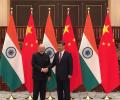
Modi said both India and China need to be "sensitive" to each other's strategic interests and called for specific actions to "prevent growth of negative perception".
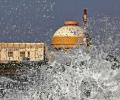
This would make India the world's second-biggest nuclear energy market after China
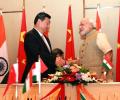
'China's actions at the NSG will certainly taint India-China bilateral relations and enhance suspicion of China's intentions. A fresh clear-eyed and objective evaluation of the India-China relationship is necessary, especially as India tries to correct adversely balanced bilateral economic ties and the two countries engage over the long-term,' says Jayadeva Ranade.

India on Thursday secured Mexico's backing in its bid to become member of the Nuclear Suppliers Group as it aggressively scouted for support ahead of a crucial meeting of the 48-nation nuclear trading bloc in Vienna.

China on Monday said India's membership bid in the NSG has become "more complicated" under the "new circumstances" as it again ruled out backing New Delhi's entry in the grouping, saying there should be non-discriminatory solution applicable to all non-NPT signatory countries.

China continues to hold out on fingering Pakistan as the 'mothership of terror,' declaring Masood Azhar a terrorist at the UN, and India's membership of the NSG, says China expert Srikanth Kondapalli.
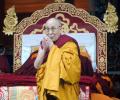
The papers said India is using the Dalai Lama as a "diplomatic tool" against China for its "vice like veto" against India's membership in the Nuclear Suppliers Group and United Nations ban on Jaish-e-Mohammed chief Masood Azhar.

Sanctions against North Korea following its H-bomb test could have serious repercussions and may prove disastrous for all the players involved, says Debalina Ghoshal.

There are many reasons for Japan to turn a deaf ear to its anti-nuclear lobby and concentrate on its geo-strategic imperatives to sign the nuclear deal with India, says Debalina Ghoshal.

The Indo-Japanese nuclear deal may not come easy considering India's Civil Nuclear Liability Act provisions which had earlier put off suppliers like General Electric, says Debalina Ghoshal.

'This was undoubtedly a premeditated strategy to thwart India's entry into the NSG.' 'If India hopes to be a major player, it must use its rising clout on the world stage to influence amenable members of the group to alter such discriminatory practices and ensure fair rules of engagement,' says Vivek Gumaste.
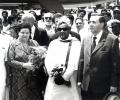
'I was present at a meeting where he decided to permit the IAF to strike at Pakistan positions in Kargil, with the caveat that they should not cross the LoC.' 'Confident that the Indian Army would succeed, Mr Vajpayee was positioning himself to tell the world after the Kargil conflict was won that India did not violate the 'sanctity' of the LoC,' recalls Ambassador G Parthasarathy, who served as India's envoy in Islamabad in that eventful year, 1999.

'We rarely choose to fight when the threat is still a nascent threat. When we do fight, we fight when the invaders reach Panipat and are preparing to knock on the gates of Delhi.'

The expulsion is likely to cloud India-China ties as Narendra Modi visits China for the G-20 Leaders Summit on September 4-5 and Xi Jinping is scheduled to be in Goa for the BRICS meeting on October 15-16.

China's state media on Tuesday defended Pakistan's nuclear record, saying it was A Q Khan who was responsible for atomic proliferation which was not backed by the government and argued that any exemption to India for Nuclear Suppliers Group entry should also be given to Pakistan.
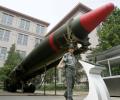
Despite four disarmament section talks and six strategic dialogues between the two foreign ministries, China's intransigence on recognising Indian nuclear status resulted in no confidence building measures in the nuclear field between the two, says Srikanth Kondapalli.

'Trump forgets that Kim is not one who likes to be treated publicly as a pauper; he wants to come to the table as an equal, and from a position of perceived strength, not as a suppliant,' says Dr Rajaram Panda.
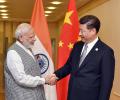
Chinese chief negotiator Ambassador Wang Qun told ANI on Friday, "NSG will not take up India's case as of now. There are differences on admitting non-Nuclear Non-Proliferation Treaty members. Signing the NPT first is one of five criteria (for membership). These have not been set by China, but by group as a whole."

Describing India as an "emerging democratic superpower", Australian Prime Minister Tony Abbott on Thursday kicked off his two-day India visit during which the two countries are likely to clinch an elusive civil nuclear deal.

'While economic ties are making incremental progress, it is in the security and strategic domains that the India-Japan synergy is more compelling,' says Dr Rajaram Panda.

'We had to convince our people that we were doing nothing that would erode our strategic programme. We were all the time arguing that we are not doing anything, which will remotely impact on our strategic programme.'
At no other time has a single meeting of the leaders of two democracies been so critical and hazardous.

'Building on the potential for closer ties is the changing narrative in each country about the other. The Chinese narrative on India has become significantly more positive over the past few years,' says Walter Andersen and Zhong Zhenming.

'If the Iran nuke deal holds, Iran becomes a gateway to Afghanistan, and a better one than Pakistan because the route is not so mountainous. Correspondingly, I imagine Pakistan's value to the US will fall,' says Rajeev Srinivasan.

The Geneva agreement is a signal, which at least Saudi Arabia and Israel are so reading, that normalisation of relations between US and Iran is not merely about the nuclear fuel cycle, says K C Singh.

President Obama's coming visit to India has created quite a buzz, here is a look at all past visits of American Presidents to the country

Immediate NSG membership will not help India realise its nuclear ambitions any faster. It could have easily left the process take its own course, instead of running a high-stakes campaign to get in, says B S Raghavan.

Pope Francis on Friday called upon the world community to put aside their "partisan interests and sincerely strive to serve the common good".

It is unconscionable to choose between Sardar Patel, who united India physically, and Indira Gandhi, who gave meaning, content and pride to the unity of the nation and became a martyr at the altar of national unity, says Ambassador T P Sreenivasan.

20 years ago this day, May 11, 1998, India conducted its second nuclear test at Pokharan in Rajasthan. In a fascinating interview on Rediff.com, K Subrahmanyam revealed how Indian PMs reacted to nuclear ambitions.
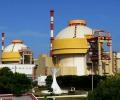
'Decisions on nuclear power have so far been taken by a small select group, primarily interested in profiteering from their actions, stating 'secrecy' as necessary from the national security point.' 'This argument is false, because we are dealing with the 'civilian' nuclear power sector, which is open even to the IAEA,' says Dr A Gopalakrishnan, former chairman of the Atomic Energy Regulatory Board.

It is time the new government, unencumbered with the burden of past, initiates a wide ranging review and open debate on the security issues to rectify our short term and long term shortcomings. It has taken some wise steps but has to go beyond this to identify the structural weakness and create systems, says Colonel (retd) Anil Athale.

It is easy to foretell that negotiating a comprehensive and final agreement on the Iran nuclear issue is by no means an easy task. It involves hard negotiations, but the hardest step has been taken, says Ambassador M K Bhadrakumar, who was among the first group of foreigners to visit the the top-secret Arak plant hidden behind barren mountains south of Tehran.
 © 2026 Rediff.com - Investor Information - Advertise with us - Disclaimer - Privacy Policy - Sitemap - Feedback - About us - Terms of use - Grievances