
'Embedded with the divisive regime, they administer heavy doses of the opium of religion and nationalism day in and day out,' observes Mohammad Sajjad.

'The Congress shall have to take some brave-tough decisions to give a new social face to the party and its leadership composition,' says Mohammad Sajjad.
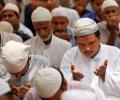
Rahul Gandhi has not erred by not engaging with Muslim conservatives. After all, they had misled his father in 1986 to legislate a misogynistic law after the Supreme Court verdict in the Shah Bano case, which helped the BJP rise at the cost of the Congress, says Mohammad Sajjad.
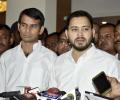
'The poor manner in which the RJD stitched its alliance and mismanaged its electioneering, now reveals that Tejashwi was more interested in enhancing his political stature by cutting down many senior leaders, by downsizing and shrinking RJD allies, by displaying arrogance and inaccessibility and by committing silly mistakes in candidate selection,' points out Mohammad Sajjad.
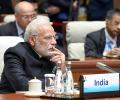
'The BJP has sent out a message that its allies are at its mercy.' 'The allies cannot pressurise or bargain with the BJP any more,' says Mohammad Sajjad.

Using the Jinnah portrait as an issue, and by demonising AMU and consequently Indian Muslims, the politics of communal polarisation is sought to be played out ahead of the Kairana Lok Sabha by-poll and to sustain it till the next Lok Sabha election, says Mohammad Sajjad.
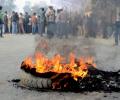
Cracks in the Mahagathbandhan in Bihar is frittering away the ground gained in social justice and contributing to increasing polarisation in the state, says Mohammad Sajjad.

India's majoritarian regime is now making a dangerously fast-paced move towards theocracy, like its western counterpart did a few decades ago, warns Mohammad Sajjad.

India's Muslims need to assert their educational and economic upliftment and political empowerment rather than be provoked by communal remarks, says Mohammad Sajjad, reflecting on the Malda riot.
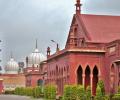
'The brazen politics, in this series of bullying of AMU by functionaries of the Union and provincial governments, utterly disregarding the fact that the matter is sub judice, is quite obvious.' 'One needs to see through the desperate politics of the BJP which governs both Uttar Pradesh and the Centre, especially its woes over its Dalit support base,' says AMU Professor Mohammad Sajjad.
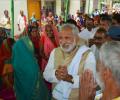
'It is the RJD, otherwise known for misgovernance, which has offered a candidate of clean and performing credentials, rather than the NDA,' points out Mohammad Sajjad.

'... That they should emerge as role-models to be emulated by the fellow countrymen; and that the middle classes should not stick only to hate-filled and scornful criticism and condemnation against the state of affairs,' remembers Mohammad Sajjad.
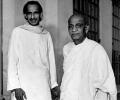
In an era when the misguided youth of today are trying to build political careers by subscribing to divisive ideologies, they need to look to independent thinking icons such as Acharya Kripalani, says Mohammad Sajjad.

'This is basically aimed at vilifying Nehruvian ideals.' 'Why?' 'Because, Nehruvian leadership is seen by Hindutva forces as the one which did not let them have their Hindu Raj.' 'The Hindutva proponents have always assumed that had Sardar become the first prime minister, India could never have become a secular State,' says Mohammad Sajjad.
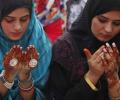
Over two dozen Muslims have been elected to the Lok Sabha. This shows that all is not lost for India's Muslims, suggests Mohammad Sajjad.
'The prime minister has merely paid lip service condemning these crimes instead of launching a massive crackdown against such brutalities,' argues Professor Mohammad Sajjad.
'The top-most functionaries and destiny-makers of the nation have thrown away the pretensions of statesmanship.' 'They seem to have made a categorical announcement that the next general election will be fought on the solo plank of Hindutva, rather than on good governance, economic development, and employment to youth', says Mohammad Sajjad.

India's secular democracy remains mortgaged to rabid communal politics. Quite clearly, the bloodshed by the religious communities is absolutely political. Even non-BJP political formations have their own Narendra Modis, says Mohammad Sajjad.

'Did the government learn any lesson from the disasters of 2008, 1987, 1975?' 'Certainly not!' 'They are making people believe that the 2017 flood was unexpected, so no preventive effort towards reducing the loss of human lives was to be expected from the government,' says Mohammad Sajjad.

The man behind Aligarh Muslim University 200 years on.

Nitish Kumar has lost his credibility. He is now only a weak ally of the BJP. And he may no longer have a shot at a national role.
Muslims need to get out of their Isolation Syndrome, argues Mohammad Sajjad.
'Besides electoral opportunism, a sustained vilification of AMU on one or the other pretext helps them sustain their 'everyday communalism', the new strategy of the BJP of the Narendra Damodardas Modi-Amit Anilchandra Shah era,' says Mohammad Sajjad.

The Deen Bachao, Desh Bachao conference in Patna on April 15 was attended by lakhs of Muslims. Will the electoral dividends from this rally be reaped by Nitish Kumar, the BJP (through Hindu consolidation), by both Nitish and the BJP or will it be reaped more by the anti-BJP forces, asks Mohammad Sajjad.

Many anticipate that by the 2021 assembly elections in West Bengal, the BJP may come to power, says Mohammad Sajjad.
Articulate segments of Muzaffarpur have been at the the forefront of all anti-establishment mobilisation, which makes their silence over the atrocities in a shelter home in the town puzzling. Could it be that if those accused of horrific crimes belong to dominant castes and if the victims belong to the vulnerable groups, then the middle classes become mute, asks Mohammad Sajjad.
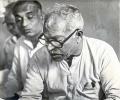
'Karpoori Thakur must be remembered by people today who are tired of witnessing fractious politics where corruption, bigotry, hatred and violence seems to have become distressingly recurrent,' says Mohammad Sajjad.
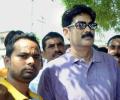
'At least 6,000 people attended a meal at Shahabuddin's residence in a feast to celebrate his bail. As if the community has no other priorities of channelising such funds for better purposes!,' says Mohammad Sajjad.

The Hindutva brigade's silence on the rape may possibly be explained that this incident is an intra-Hindu affair for them. What is even more intriguing is that vocal gender activists have preferred to almost ignore the incident. Why? Is it because homosexual rape does not involve the woman either as victim or as aggressor, asks Mohammad Sajjad.

'The spread of barbarity in Muzaffarnagar's villages makes administrative complicity so very evident that your government is rightly alleged to be imitating what the Modi-led administration did in Gujarat in 2002,' Mohammad Sajjad tells UP Minister Azam Khan.

Hamid Anasari's was not talking of reservation for the whole religious community to which he too happens to belong. Yet, sections of media chose to put words into his mouth and then subject him to the criticism he never deserved. This does not augur well for our media or democracy, says Mohammad Sajjad.

'They must take the bull of conservatism within their own ranks by its horns as much as they need to speak out against the fallacies of the non-Hindutva (or 'Muslim-friendly') political forces as well,' argues Mohammad Sajjad.

'A fierce crusader against communalism, George joined hands with majoritarian forces, never to revisit or re-assess his saffron association.' 'He was a Union minister in 1998-2004, a time when people like Graham Staines were lynched in Orissa.' 'On the Gujarat pogrom of 2002, George went on to kind of justify the slashing of pregnant women, by saying in the Lok Sabha that this was nothing new for India.' 'Thus, he was in sharp contrast to what he had himself stood for in the heyday of his political career in the 1970s and 1980s, says Mohammad Sajjad.
Nitish Kumar has failed to curb communal forces and hoodlums across communities. And that is ominous for Bihar's present and future, warns Mohammad Sajjad.

Why are far right Hindu organisations growing in strength? Why is there a rising subscription to Neo-Wahabism, the Saudi Arabian version of contemporary Islam?

Mohammad Sajjad profiles Professor Riazur Rahman Sherwani, 94, versatile mind, intrepid intellectual.

Mohammad Sajjad raises important questions about the response to lynchings.

'The mobilisation is nothing but a political ploy -- a sort of a fixed match between Hindu and Muslim communal forces, towards polarisation, in a run-up to the next election,' argues Mohammad Sajjad.
Why are the 'secular' parties silent about the lynchings on our streets? Are they so busy forging political alliances that they ignore the numerous distortions of Constitutional values?

In the light of the efforts being made to forge electoral unity between scheduled castes and Muslims, Mohammad Sajjad examines what the architect of our Constitution, B R Ambedkar, had to say about the Muslim community.
 © 2026 Rediff.com - Investor Information - Advertise with us - Disclaimer - Privacy Policy - Sitemap - Feedback - About us - Terms of use - Grievances