
In which countries are trust levels in the government highest? The results of the Edelman Trust Barometer, based on a survey done in 2024, might surprise you.

With both the Indian and Chinese governments agreeing to a full fifth freedom last month, the doors have opened for Indian carriers to tap the lucrative United States west coast market through the Middle Kingdom as well as tap China's growing tourism market. This will give Indian carriers the ballast to challenge established foreign carriers like Singapore Airlines and Cathay, which have picked most of the India-US traffic.
Fund management and a refocused strategy in 2003 boosted SMG's performance
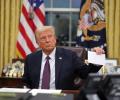
It would be a challenge to India's policy makers how to deal with Trump so that mutual economic growth remains sustained and mutual understanding on global issues are not hampered, observes Dr Rajaram Panda.

Kissinger's approach of balance of power, secret diplomacy and moderating ideology are the need of the hour. That is the greatest tribute to an intellectual who had a major impact on the world in his lifetime, notes Colonel Anil A Athale.

'Don't be too much after legacy that it should be solved in my lifetime.' 'It is not going to be solved, because you are not dealing with just any other country, you are dealing with a civilisation, a cultural nation.'

If you are serious about countering the Chinese threat, then the best weapon is investing in real freedom, plurality, elections and democracy. Unfortunately, it isn't an approach all Indians currently seem to agree on, asserts Shyam G Menon.

We have our own problems for sure and they are not trivial, but for now, our economy is in not too bad a shape, our politics is as personality-driven and authoritarian as that of most countries in the world. We must make the best of what we have and not be excessively unhappy looking at the grass on the other side of the septic tank which may not be greener after all!, observes Shreekant Sambrani.

We must see New Delhi's position as a signal of competition to the Chinese grand design for the 21st century world, says Nitin Pai.
He was once tipped to be one of China's NextGen leaders, someone who would guide the Middle Kingdom's future for the next decade, once the present leadership retired. In a dramatic saga, unparalleled in contemporary China, Bo Xilai suddenly fell from grace these past weeks, his wife now accused of murder. Nikhil Lakshman, who met Bo a few times, recounts those encounters with a Chinese politician like none other.
There has been discussion and debate recently that India will have to be prepared for a collusive threat from China and Pakistan and measures have been suggested to face such an eventuality.
A recent event in Delhi witnessed an interesting debate among strategic gurus about whether India could still stick to the policy of non-alignment. Sheela Bhatt and Priyanka listen in.

'What needs to be watched is that the border incidents at Dokalam in 2017 and Galwan in 2020 are triggering nascent Chinese nationalism against India,' asserts Srikanth Kondapalli, the leading China expert.
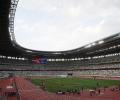
Will India finally reach the elusive double-digit mark? Raj Kishore Mishra, former joint secretary at the sports ministry, for one, is willing to stick his neck out on the possibility.

Chinese hubris and the slippery slope it finds itself on have important lessons for authoritarian leaders elsewhere, including in India, observes Colonel Anil A Athale (retd).

Why is China's supreme leader promoting Han Chauvinism so aggressively, asks Claude Arpi.

;The world paid a heavy price for the megalomania of the Third Reich's fuehrer.' 'Will it pay a similar price for the ambitions of China's leader-for-life?' asks Amulya Ganguli.
Many in India still believe that the priority No 1 of India's foreign policy should be to make friends with China. Once again, there is nothing wrong to be China's 'friend' or even 'brother', but it should not be at the cost of India's interests or by bending backward over each whim and fancy of a single-party regime in Beijing.

Thirty years after the massacre at Tiananmen Square, coerced collective amnesia envelops the Chinese nation about that horrific event. Claude Arpi glances back at how the student uprising could have changed the Middle Kingdom forever had the Chinese Communist party not traveled on the route of martial law.

If India wants to become a globally competitive manufacturing hub, it will have to rethink the notion that the traditional SMEs will form the manufacturing backbone, argues Prosenjit Datta.
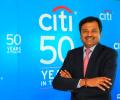
A career Citibanker, 'Selva' came into the spotlight as the person who rewired the financial behemoth's Indian retail operations.

Commercial tensions came to a head on many issues between China and other major western countries.

The uptick in prices ranging from steel to wheat could benefit lots of commodity-based companies -- from State-owned SAIL to the agro exporters.

China's reigning party killed thousands of its own children on Tiananmen Square at dawn on June 4, 1989. Today, the regime in Beijing is not ready to admit to any wrong doing or consider changes in its policies.

China will flood direct flights to India with wholesale takeaways of the authentic stuff; Indian businessmen will fight for the commission and the consumers for the cuisine, predicts Sunanda K Datta-Ray.
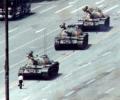
Why omit the Tiananmen massacre from the history of China's Communist party, asks Claude Arpi.

'Does it mean that we are witnessing the end of an era?' 'Probably not, but the post-Trump trade war has certainly brought a lot of instability in China,' notes Claude Arpi.
Claude Arpi looks at the issues that challenge Sino-Indian relations.

Chushul and Depsang are not vital in this game of Chinese checkers, the Indian Ocean Region is. Keeping our maritime prowess restricted has to be a key Chinese strategic interest and it would appear that the LAC affair has helped China achieve its aim, points out Vice Admiral Premvir Das (retd).

Chances are any such disruption will not occur on the major shipping lanes but on some edge of the ocean between India and China. Even if there is no actual disruption, the costs of averting one can be punitive. The setting for this is provided by the energy shortage both countries face, says Subhomoy Bhattacharjee.

Important for India was Xi's meeting with representatives of PLA officers and soldiers stationed in Tibet. The video of the encounter was interesting to watch, especially the large number of lieutenant generals and major generals, observes Claude Arpi.

'China wants to change the status quo of India's Northern Border and proves that it can do whatever it wants in what it perceives as its own territory,' states Claude Arpi.

'It will be a repeated folly to ever think that China will not attack us.'

'The logical step is to challenge the very legitimacy of the Chinese claim over Tibet,' recommends Inspector General Gurdip Singh Uban (retd).
India has experienced hands and will emerge with flying colours, declares Inspector General Gurdip Singh Uban (retd).
Today, the Ladakhis and Tibetans have been joined by the Sikhs, the Madrassis, the Garhwalis, the Rajputs, who are well trained psychologically and otherwise, to defend the nation, observes Claude Arpi.
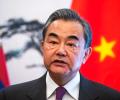
Was Wang Yi'S visit intended to remind India of 1962, asks Claude Arpi?

The lingering boundary issue will also feature in his talks with his Chinese counterpart Xi Jinping, Premier Li Keqiang and other leaders, says R Rajagopalan, who will travel to Beijing with the President.

'Unlike the Chinese army that has been largely a peace time force, the Indian Army is a battle hardened force,' explains Colonel Anil A Athale (retd).
 © 2026 Rediff.com - Investor Information - Advertise with us - Disclaimer - Privacy Policy - Sitemap - Feedback - About us - Terms of use - Grievances