
With lower GST rates taking effect, fast-moving consumer goods players face challenges in setting reduced prices for their products in round figures, but expect the magical price points to be restored within two months.

While there was a 6 to 7 per cent increase in volume compared to last year in the first few days of the month which coincided with festivals, a large part of the demand is yet to hit the market.

The Budget proposals are expected to boost the fortunes of consumer goods and fast-moving consumer goods companies, which have been struggling with poor consumer demand for more than a year. The Budget announcements, such as the increase in standard deduction by Rs 25,000 for income-tax payers and slab revisions, will put more money in their hands, boosting consumer demand. Private consumption is also likely to benefit from a new scheme to offer internships to 10 million youths in the country's top 500 companies.

Lower income groups earning less than Rs 100,000 a year are yet to recover as are those earning between Rs 100,000 and Rs 200,000.

Consumer goods firms and auto companies are witnessing an upturn in rural demand, which had been lagging for most of FY24. Expectations of a bumper rabi crop harvest have helped turn the tide. The Reserve Bank of India's (RBI's) Monetary Policy Committee kept the repo rate unchanged last week, noting that as rural demand catches up, consumption is expected to support economic growth in 2024-25.

Rediff readers tell us how they are celebrating Ganeshotsav this year.

Demand for fast-moving consumer goods (FMCG) fell in April owing to lower stocking by kiranas, according to the data from Bizom. Kiranas stocked lower quantities in April as they resorted to heavy stocking in March. Sales in value terms were down 8.4 per cent in the month as against the same period last year while on a month-on-month basis, they declined 17 per cent.

Higher inflation has again become a matter of concern for fast-moving consumer goods (FMCG) companies. After prices of commodities like sugar and wheat moved higher and stabilised at those levels, the crude oil too surged, adding to FMCG firms' worries. Besides, a dry spell in August in the ongoing monsoon season impacted rural demand.

With Onam and Raksha Bandhan just around the corner, the festival season is ready to kick off in full swing. As people embrace the celebratory spirit, companies anticipate a surge in sales this year. Consumer durables firms are expecting strong growth of 40-50 per cent in the premium segment during the upcoming season. Appliance makers also foresee increased demand for cooling appliances - refrigerators and air conditioners - which were impacted by unseasonal rainfall.
Demand for fast-moving consumer goods (FMCGs) went up last month across India, as kirana stores stocked up their shelves in anticipation of a sizzling summer, according to data by retail intelligence firm Bizom. There was a spike in beverages sales across the country despite inflation inching up in February after moderating downward previously, Bizom noted.
Fast-moving consumer goods (FMCG) sales in rural areas witnessed a sequential recovery in the latter half of December, according to data by retail intelligence firm Bizom. Also, demand witnessed in the previous month compared to November was higher from tier-3 cities than mega cities. Overall demand from rural areas declined 0.2 per cent on a month-on-month basis in December while it was down 17 per cent in November, according to Bizom's data.
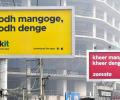
'The focus on easier access and faster delivery is creating a new consumption pattern that allows consumers to satisfy their last-minute cravings and restock essentials at the click of a button.'

Fast-moving consumer goods (FMCG) sales continued to be lower in June compared to May with urban sales witnessing a steeper decline than rural. Sales of goods from shampoos to biscuits stayed lower due to inflationary pressures on commodities. This pushed consumer companies to continue taking price hikes, thus impacting demand, according to data by Bizom.

Even as raw material prices start cooling off from their peaks, fast-moving consumer goods (FMCG) companies' margins are expected to remain under pressure at least in the next quarter. This is because commodity prices continue to remain high year-on-year (YoY). Consumer companies will also continue to increase rates as they have been taking price hikes in a staggered manner. They have not yet passed the entire price increase of raw materials to consumers.

The festival season has already begun in the west and south of India with Ganesh Chaturthi and Onam, respectively, and consumer companies are witnessing a pick-up in sales compared to pre-Covid levels. Retailers, fast-moving consumer goods (FMCG) and consumer durables companies expect their sales to grow in double digits this festival season compared to pre-pandemic times, as there are no curbs on movement now. Adani Wilmar expects sales volume to be higher by 15-20 per cent as rural India has largely witnessed good monsoon rains, and employment has picked up in urban areas.
Expect fast-moving consumer goods makers (FMCG) to raise prices again next month owing to raw materials, transport, labour and packaging material costs remaining high or becoming even costlier. Whether it is packaged wheat flour and basmati rice or biscuits and shampoos, these products will become 2-10 per cent more expensive. Adani Wilmar will hike the price of its packaged wheat flour by 5-8 per cent and of its basmati rice by 8-10 per cent next month.
Consumer companies have started taking orders via phone calls and are also pushing retailers to order through their B2B applications.
Besides, the ongoing war between Russia and Ukraine has also added another blow to FMCG makers as they expect a rise in the prices of wheat, edible oil and crude. Companies such as Dabur and Parle are watching the situation and will undertake calibrated price increases to mitigate the inflationary pressures.

In May, Satpal Singh, who runs a dairy business with three buffaloes in Jewar, near Noida, was worried about the steep spike in input costs. Singh said dry fodder rates, which cost Rs 1,500-2000 per tractor trolley last year, were quoting at Rs 4,500-5,000. The price of other cattle feed ingredients (that include mustard meal and similar mixes) had also gone up from Rs 2,000 per quintal to Rs 3,100-3,200 per quintal.
However, the government's draft policy on e-commerce companies has forced consumer companies to also adapt to the changes. For Dabur India, e-commerce channel continues to be a key driver of growth in urban India. The contribution of online sales to its entire portfolio is at six per cent compared to 1.5 per cent before the pandemic.

As the second wave of the pandemic ebbs and the daily caseload falls, the struggles of the urban poor have come into focus. Many have suffered income and job losses after two successive waves. The second wave, in particular, has seen the poor being hit hard on account of lack of medical and financial help. For the fast-moving consumer goods (FMCG) companies this has meant that an important segment is under severe distress.
Sanjiv Mehta, chairman of the country's largest consumer goods company, HUL, believes that the second wave of the Covid-19 pandemic between April and June this year has been a mere pause in India's consumption story, and that it will not change the country's overall growth trajectory. India is poised for growth, especially in the fast-moving consumer goods (FMCG) sector, Mehta told shareholders at the company's annual general meeting on Tuesday. The signs of recovery are becoming evident with many states lifting lockdown restrictions in recent weeks.

With theatres remaining shut, new releases are making a beeline for OTT platforms, and companies are forging tie-ups to reach out to the target audience.
FMCG firms such as ITC, Parle Products, Marico, Emami, PepsiCo India and CG Corp Global on Wednesday assured uninterrupted supply of their products based on the learnings from the last year's lockdown, even as surge in COVID-19 cases in India forced Maharashtra to declare a 15-day curfew while other states also imposing various restrictions.

It is Mumbai's favourite festival and is celebrated each year with fervour and frenzy. But when the city welcomes "Ganpati Bappa" this Friday, the celebrations will be low key. With a cap on the size of idols, ban on processions and restrictions on devotees visiting pandals, celebrations are toned down for the second year in a row. Festival budgets have shrunk and as a result, corporate sponsorships have dried out.

'While most companies were bullish before the second wave of double-digit sales growth in FY22, that may not be the case now.'
While FMCG companies were not barred from carrying out their operations during the 21-day lockdown, since most manufacture staples and essential products, capacity utilisation remained poor, owing to the restricted movement of raw materials, finished goods, and labour.
Most of the labourers in manufacturing plant are migrant workers. With them moving back to native places, there is going to be a huge challenge.

From paints to apparel and lifestyle majors, brewers, distillers and fragrance makers have stepped into the market, even as the frontline companies including FMCG players, pharma and healthcare majors were the first to seize the opportunity created by Covid-19.
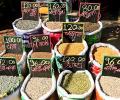
Parle is taking one step at a time as it moves ahead in the pulse biz. Carpet bombing will not work. The company goes slow with Fresh Harvest dal rollout.

Top companies reported that despite most of them making staples and essential products, movement of raw material, goods and labour remained restricted, impacting sales.

Chief executives in the real estate, consumer products, automobiles, construction, and textile sectors said they were all expecting workers to re-join in the next 45-60 days, which would help them ramp-up production from July.

As Covid-19 cases surge in India, companies have realised it's a tightrope walk between maintaining production and ensuring employee safety.

In the past month, wheat prices have increased 6.3% as production is expected to be 1.5% lower, in terms of crop acreage, than the earlier estimate

As many as 80 brands are riding the digital and television broadcast this year.

There were 52 launches during January-June 2015, compared with 29 in the year-ago period and 32 in 2013.

The home-grown biscuit brand looks to get inside the customer's mind as it steps outside the boundaries of its mass-market identity
 © 2026 Rediff.com - Investor Information - Advertise with us - Disclaimer - Privacy Policy - Sitemap - Feedback - About us - Terms of use - Grievances