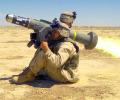
The US has approved the sale of Excalibur Projectiles, Javelin Missile System and related equipment totalling over 90 million dollars to India.

India and the US have signed a framework agreement for defence cooperation for the next 10 years, enhancing their partnership and aiming for regional stability.

Under the 'Major Defence Partner' recognition, the US will continue to work toward facilitating technology sharing with India to a level commensurate with that of its closest allies and partners.

Defence Minister Manohar Parrikar and outgoing United States Defence Secretary Ashton Carter on Thursday finalised the "major defence partner" status to India which will fast-track cooperation and sharing of high-end American defence technology.

Carter has said India's designation as a 'major defence partner' would allow the US to cooperate with it --
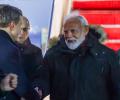
India and the United States will be signing a new defence framework during Prime Minister Narendra Modi's ongoing visit to the US, which will give a further fillip to the partnership between the two countries, a senior White House administration official said on Thursday.
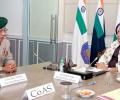
India and the US have agreed to work together to draft a comprehensive framework on defence cooperation, aimed at structuring the bilateral collaboration for the 2025-2035 period. The framework will cover multiple domains in land, air, maritime and space, and will focus on intelligence, logistics, operational and industrial engagement. The agreement comes ahead of Prime Minister Narendra Modi's planned trip to Washington, where he is expected to meet with US President Donald Trump to discuss boosting India-US cooperation in the areas of trade, energy and defence.

The two countries also signed a 'Memorandum of Agreement regarding the Assignment of Liaison Officers', which will facilitate the posting of one military officer from each country with the military of the other.
The Agency said it has delivered the required certification notifying Congress of this possible sale on Thursday.

Indian policymakers must realise that in buying small quantities of equipment, it becomes hard to start manufacturing them in India, explains Ajai Shukla.

Gen Kenneth S Wilsbach, commander of the US Pacific Air Forces, said the US side held the interaction behind closed doors with most of the air chiefs of the region.
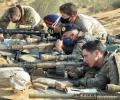
The 18th edition of exercise Yudh Abhyas is scheduled to take place from October 14 to 31, sources in the defence and military establishment said on Wednesday.

Two B-1B Lancer supersonic heavy bomber jets of the US Air Force on Tuesday joined the American exhibits at Aero India at the Yelahanka air base, in a reflection of the deeper strategic ties between the two countries.
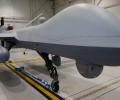
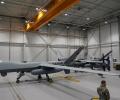
The defence ministry on Thursday accorded its approval to procure 30 MQ-9B Predator drones from the US to crank up the surveillance apparatus of the armed forces, especially along the frontier with China, people familiar with the development said.

In a major move in 2016, the US had designated India a "Major Defence Partner" intending to elevate defence trade and technology sharing to a level commensurate with that of its closest allies and partners.

The American platforms at the exercise 'Cope India' that started off Kalaikunda will also include a fleet of F-15 E fighter jets, C-130 and C-17 transport aircraft.

The armies of India and the US on Tuesday began an over two-week mega military exercise at a military facility in Uttarakhand with the aim of exchanging best practices and tactics in sync with growing defence ties between the two countries.

As the United States focuses on the Indo-Pacific, in particular the Quad, the Biden administration needs to address India's ties with Russia and its 'downward trend of democratic values and institutions', said a report by the Democratic Party of the Senate Foreign Affairs Committee.

Biden has reiterated America's support for India's permanent membership on a reformed UNSC and its entry into the NSG during his first in-person bilateral meeting with Modi at the White House.

'While the US-Pakistan relationship has been stabilised, it's still mired in uncertainty.'

General McMaster reffirms India's Major Defence Partner status.

The US remained "watchful" over developments along India's frontier with China as it cannot take its eyes off the regional security issues, a senior American official said on Wednesday against the backdrop of the over 29-month border standoff in eastern Ladakh that has significantly frayed ties between the two neighbours.

This will be Carter's sixth meeting with Parrikar, and comes just weeks after India was designated a major defence partner of the United States.
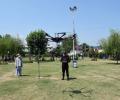
India and the United States have signed an agreement for cooperation in the development of Air-Launched Unmanned Aerial Vehicle (ALUAV), in yet another step to further expand bilateral defence and military cooperation.
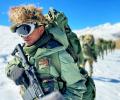
The United States will continue to support India with equipment and other things it needs along the Line of Actual Control (LAC) with China, a top American admiral has told lawmakers, asserting that Washington and New Delhi share a 'tremendous partnership'.

Lavoy said even before India places a request for something, the United States is ready and prepared.
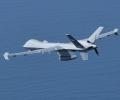
The deal, estimated to be worth USD 2 to 3 billion, has been approved by the state department, the sources said.
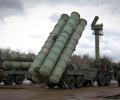
New Delhi is vulnerable to US sanctions under a 2017 law called CAATSA.

The US has deployed its naval carrier strike group, led by the nuclear-powered aircraft carrier USS Ronald Reagan, as well as a fleet of F-18 fighter jets and E-2C Hawkeye all-weather aircraft for the exercise, officials said. The Indian assets at the exercise included Jaguar and Sukhoi-30MKI fighter jets, IL-78 air-to-air refuelling tanker aircraft, Airborne Warning and Control System aircraft and warships Kochi and Teg. The Indian Navy has also deployed a fleet of P8I maritime surveillance aircraft and MiG 29K jets, apart from other platforms.

The helicopters are expected to boost the Indian Navy's anti-surface and anti-submarine warfare operations.
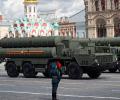
The United States has not made a determination yet on any potential Countering America's Adversaries Through Sanctions Act (CAATSA) waiver to India with regard to its purchase of S-400 missile defence system from Russia, the Biden Administration said Tuesday.
This will be the first high-level engagement between India and the United States after National Democratic Alliance's return to power for a second term.

"He (Biden) is very much part of this period when Indo-American relations underwent a radical transformation, which I reasonably date back to (Bill) Clinton's visit," Jaishankar said.

India on Thursday downplayed the United States Senate rejecting a key amendment recognising the country as "global strategic and defence partner", saying it would be "premature" to speculate about its final content.

The two-plus-two dialogue will be held on Tuesday. A host of crucial bilateral, regional and global issues including China's efforts to expand influence in the Indo-Pacific region as well as its aggressive behaviour in eastern Ladakh is likely to figure in the talks.

The in-person talks are taking place at a time when India is locked in a tense standoff with China in eastern Ladakh and the Trump administration's growing friction with Beijing over a host of issues including trade tariff and the Chinese military's offensive manoeuvres in the South China Sea.
The new framework of the ministerial dialogue was initiated in order to provide a forward-looking vision for the strategic partnership between the two countries.

A genuine attempt was made to reset relations in a positive way, signalling a stepping back from the brink of conflict, much to the relief of the world, observes Ambassador T P Sreenivasan.

Since 2016, when India was officially recognised in US law as a 'major defence partner', Washington has purposefully upgraded the defence relationship.
Singh and Esper also deliberated on ways to further boost bilateral defence and security cooperation, they said, adding the telephonic conversation took place at the request of the US side.
 © 2026 Rediff.com - Investor Information - Advertise with us - Disclaimer - Privacy Policy - Sitemap - Feedback - About us - Terms of use - Grievances