
OpenAI's chief scientist, Jakub Pachocki, has issued a stark warning about the accelerating pace of artificial intelligence, stating that "no one is prepared" for its rapid rise and potential consequences. He highlights concerns over autonomous AI agents taking unintended actions and calls for international coordination, voluntary slowdowns, and robust safety measures to ensure human control and alignment with human values as machine intelligence surpasses human capabilities.

L&T Technology Services (LTTS) has inaugurated an NVIDIA-powered Engineering Intelligence (EI) lab in Bengaluru, designed to showcase AI-native manufacturing, digital twins, and autonomous systems. The facility offers clients a comprehensive view of the manufacturing journey, from virtual validation to autonomous operations, and plans to expand to the US.

China has announced new export controls on key machinery, including tunnel boring machines, walking excavators, and dredger components, citing national security. These restrictions, effective November 18, could significantly impact India's infrastructure projects, such as metro systems and high-speed rail lines, as China has previously limited such exports to India.

A new report by BinQle indicates India will face a significant demand-supply gap of artificial intelligence professionals by 2026, requiring 1.4 million AI experts against an available pool of 400,000. This shortage could hinder growth for enterprises and GCCs, driving up salaries and necessitating continuous reskilling and strategic talent development.
RBI Deputy Governor Shirish Chandra Murmu has dismissed concerns that the new Merchant Discount Rate (MDR) on UPI payments above Rs 2,000 will increase cash transactions. He also clarified the 'cash paradox' of rising digital payments alongside cash in circulation, explaining cash's dual role. Murmu further detailed the RBI's extensive regulatory changes aimed at reducing compliance burdens and emphasised that accountability for AI-driven decisions in finance will remain with institutional boards.
Hollywood actor Paul Bettany, known for voicing J.A.R.V.I.S. and playing Vision in the MCU, expresses trepidation about the rapid advancements in artificial intelligence. He discusses potential dystopian futures and the need for democratised AI, while promoting his new series "VisionQuest" which started streaming on JioHotstar on Tuesday.
Britain's AI Minister, Kanishka Narayan, issued a strong warning on Monday about the growing risks posed by artificial intelligence to cyber defences. He highlighted the potential for serious consequences from autonomous AI systems and announced new government measures, including a 'National Cyber Action Plan', to bolster the UK's resilience against cyber-attacks.
Padma Shri awardee educationist Dinesh Singh advocates for teachers to embrace artificial intelligence, viewing it as a tool to elevate their role rather than a threat. Speaking at the 4th STTAR Global Education Conference, Singh urged educators to use AI to become "gurus." Other leaders, including Shishir Jaipuria, emphasised that the future of education lies in human-technology collaboration, with teachers remaining crucial for inspiring students.

Delhi Police have successfully dismantled an alleged interstate heroin manufacturing and supply network, arresting seven individuals and seizing over 8 kg of heroin valued at approximately Rs 60 crore. The operation spanned Delhi, Haryana, Uttar Pradesh, and Jharkhand, uncovering an illicit manufacturing unit in Lucknow and tracing raw opium supply to Jharkhand. The arrests include an alleged raw opium supplier involved in illegal poppy cultivation.

Paytm founder Vijay Shekhar Sharma has pledged personal funds, ranging from Rs 1 crore to Rs 2 crore, to Indian entrepreneurs developing their own artificial intelligence models. This initiative aims to foster indigenous AI capabilities and reduce reliance on foreign models, echoing Sharma's past success in mobile payments.
Arunachal Pradesh Chief Minister Pema Khandu lauded the state's first 10-day artificial intelligence boot camp and hackathon at IIT-Guwahati. The programme aims to build AI skills, promote innovation, and create a future-ready digital workforce, offering hands-on training in AI/ML, Python, and NLP to 40 young participants.
Experts at a national symposium in Shillong discussed the role of Artificial Intelligence in tourism, emphasising that AI should support human judgment, local knowledge, and cultural values rather than replace them. Discussions highlighted the need for robust policies to address ethical concerns, safeguard livelihoods, and preserve cultural heritage while leveraging AI for innovation and sustainability in the tourism sector, particularly in Meghalaya.
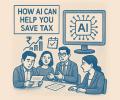
The Central Board of Indirect Taxes and Customs (CBIC) is set to significantly increase its use of artificial intelligence (AI), machine learning (ML), and real-time analytics in Customs processes, aiming for a near-touchless, near-digital clearance experience, according to Chairman Vivek Chaturvedi.

India's cybersecurity agency, CERT-In, has issued a critical advisory warning about autonomous AI agents accessing sensitive data of Indian organisations without authorisation. Government sources on Friday emphasised the need for companies to bolster cybersecurity measures and monitor system activity, noting that while no major compromise occurred, the incident serves as an early warning. Future AI regulation is expected to address the risks posed by these agents.

The Jammu Municipal Corporation has launched an integrated system combining AI-based road monitoring with cold emulsion pothole patching machines. This initiative aims to ensure timely and scientific repair of damaged roads across the city, leveraging modern technology to identify and fix defects efficiently, especially before the monsoon season. The AI system also detects other civic issues, promoting smart urban governance.

Students are learning to combine technology with agriculture, healthcare, biotechnology, architecture and fashion, explains Mandeep Singh, assistant professor and deputy dean, Lovely Professional University.

A joint report by Dell Technologies and Zinnov reveals that despite high ambition, nearly 70% of India's Global Capability Centres (GCCs) are stuck at the pilot stage for AI adoption. Foundational gaps in data, infrastructure, and governance are identified as key bottlenecks preventing the scaling of AI initiatives into enterprise-wide production. The report highlights the need for significant reskilling of the workforce and robust foundations for industrialising AI responsibly.
Experts at AI Manthan 2.0 in Kanpur stressed the need for Artificial Intelligence to be customised for India's specific requirements in education, healthcare, agriculture, and governance. Discussions highlighted the development of local language models, AI solutions for farmers like crop loss assessment and a single-window platform, and AI's role in healthcare for diagnosis and reducing doctors' workload, all while ensuring data privacy through federated learning.

IIT Guwahati researchers have developed SH²RFSSM, a model inspired by how biological neurons communicate.
Tata Consultancy Services (TCS) has inaugurated India's first Industrial Autonomy & Engineering Lab in Pune, a "lights-out factory lab" designed to advance AI-led manufacturing. The facility features a robotic battery pack assembly line, enabling manufacturers to prototype and scale AI-first production systems with minimal human intervention, simulating self-optimising factories.

'You cannot stop these models from getting better. There is competitive and business pressure and if the US stops then maybe China will go ahead.'
Researchers at IIT Kharagpur, in collaboration with the University of Illinois Urbana-Champaign, have developed a highly sensitive sensor technology. This innovation allows ordinary smartphone cameras to detect extremely tiny, invisible objects, potentially leading to low-cost, portable medical testing and other applications requiring the detection of minute substances.

India's government is set to release its draft National Steel Policy for public consultation, aiming for over 600 million tonnes of steelmaking capacity and 500 million tonnes of consumption by 2047. The policy will also introduce a ~5,000-crore scheme to incentivise small steel producers for carbon emission reduction and address challenges like raw material availability and technological dependence.

'There is a long set of decisions that have to be made along the way for anything to actually get actuated in the real world.'

The Reserve Bank of India (RBI) has proposed a standard operating procedure (SOP) for banks to implement temporary debit holds on accounts or transactions suspected of being involved in money-mule activity and cyber-enabled financial fraud, with a maximum duration of 60 days.

J R D Tata, chairman of the Tata group from 1938 to 1991, said that whenever he had to make a difficult decision, he would ask himself, what will be good for India, and what will be good for the Tatas. If he had a doubt, he would decide in favour of India. In the long run, it would turn out well for the Tatas too, he said, points out Arun Maira.

State Bank of India Chairman C S Setty stated that banks will take three to four months to deploy the significant funds mobilised through foreign currency non-resident (bank), or FCNR(B), deposits, which is unlikely to cause "abnormal lending". He also highlighted the need for agentic artificial intelligence (AI) costs to fall sharply for its widespread deployment in India, envisioning its role in transforming banking from fraud detection to personalised financial assistance.

Quantum computing is set to redefine artificial intelligence, cybersecurity, and scientific discovery, promising unprecedented speeds and capabilities while also necessitating urgent development of quantum-safe security measures and strategic enterprise readiness, says Sunil Varghese.

Alphabet has announced a significant leadership reshuffle within its artificial intelligence division, appointing Google DeepMind co-founder Demis Hassabis as Chief Scientist to intensify its focus on artificial general intelligence (AGI). Koray Kavukcuoglu will become Senior Vice President of Google DeepMind, overseeing Gemini development and frontier AI research. Additionally, Google veterans Jeff Dean and Sanjay Ghemawat are launching a new public benefit corporation for ML and science discoveries, supported by Google.

Bharti Airtel's homegrown cloud platform, Airtel Cloud, has acquired approximately 40 customers within a year of its launch, with a significant portion coming from the manufacturing sector. The platform, designed for Indian companies, offers sovereign, telco-grade cloud infrastructure, connectivity, and GenAI-based provisioning, addressing the growing demand for secure, India-hosted data solutions, particularly for sensitive workloads and regulated sectors.

Shailesh Chandra, MD and CEO of Tata Motors Passenger Vehicles (TMPV), stated that the uncertainty surrounding how long commodity costs will remain elevated is a greater concern for the company than the actual price increases. He noted that commodity prices have risen significantly over the past five to six months, impacting margins and necessitating faster cost-reduction efforts, though no major production or supply-side issues are currently foreseen.
IIT-Kanpur has developed an AI-powered "Family Score" system to identify households needing welfare support using existing government data. This system, demonstrated in collaboration with the Andhra Pradesh government, aims to provide a faster and more cost-effective alternative to traditional surveys for assessing socio-economic conditions and ensuring targeted welfare delivery.

Climate scientist Tapio Schneider advocates for expanding early warning systems beyond rainfall events to include other disaster triggers like flash floods, citing the recent Nepal floods. He highlights the inevitability of 1.5 degrees Celsius global warming and discusses the role of advanced climate modelling and AI in improving predictions and research, particularly for regions like India.

A Chinese humanoid robot, Tiangong Ultra, achieved a remarkable feat by running the 100 metres in 8.64 seconds, surpassing Usain Bolt's human world record. This achievement occurred at the second World Humanoid Robot Games in Beijing, showcasing significant advancements in robot mobility and embodied artificial intelligence. The event highlighted the rapid progress in robotics, with spectators noting improved capabilities and developers seeing it as a crucial test bed for future applications.
Former HCL Technologies CEO Vineet Nayar's new book, "Humans First, Machines Second: 30 Sparks for Winning in the Age of AI," argues that the greatest risk of the AI era is not advanced machines, but humanity losing faith in its unique capabilities. The book advocates for investing in human potential over solely adopting technology faster.
Former HCL Technologies CEO Vineet Nayar's new book, "Humans First, Machines Second: 30 Sparks for Winning in the Age of AI," argues that the greatest risk of the AI era is not advanced machines, but humanity losing faith in its unique capabilities. The book advocates for investing in human potential over solely adopting technology faster.

The Securities and Exchange Board of India (Sebi) is set to undertake a comprehensive overhaul of the small and medium enterprise (SME) listing framework and tighten accountability around the use of artificial intelligence (AI) and machine learning (ML) in financial markets, Sebi Chairman Tuhin Kanta Pandey announced.

China has deployed 72 "robot employees" across Beijing's municipal parks to perform various tasks like cleaning, patrolling, guiding visitors, and pest control. This initiative is part of China's "Robot Plus" strategy, driven by an ageing population and labour shortages, and showcases the growing domestic service robot market. These AI-powered robots enhance efficiency and visitor experience in popular attractions like the Summer Palace and Zizhuyuan Park.

India's markets regulator Sebi has launched 'Demat 2.0', a pilot project for tokenisation of corporate bonds, enabling atomic settlement through integration with RBI's wholesale CBDC. This new market infrastructure uses Distributed Ledger Technology (DLT) to make bond issuance, trading, and settlement faster and more efficient. India is the first country to issue corporate bonds natively on a distributed ledger with central bank digital currency settlement. Additionally, RBI Governor announced new UPI innovations: 'Tap & Pay' for faster POS transactions and MyUPI, an AI-powered customer support solution.
Andhra Pradesh Chief Minister N Chandrababu Naidu has approved the establishment of India's first dedicated Quantum and AI University campus in Amaravati by NIELIT. This significant project, funded by the MeitY, Government of India, will focus on advanced technologies like Quantum, AI, and Semiconductors, integrating education, research, and entrepreneurship.
