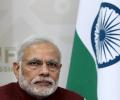
'There is nothing that Pakistan has done which deserves a resumption of dialogue. The assurances made in Ufa contain no commitment except a whole range of talks, which could take place without the paraphernalia associated with a joint statement of prime ministers.'

It was almost 10 years ago that the idea of a Yoga Day was mooted by some NGOs, but it had no takers till Prime Minister Narendra Modi realised its potential, probably at the instance of Sri Sri Ravishankar, says Ambassador T P Sreenivasan.

The new equation between 'Namo' and 'Barack' may well 'convert a good start into lasting progress.'

'I recall an encounter I had with a US Congressman of Cuban origin, who was hostile to India because of our continuing goodwill for Cuba.' 'He asked me why India was still friendly with Cuba and I gave him an honest answer that it was rooted in historical and friendly ties.' 'He took it as an affront and spread the word that an Indian diplomat had defended Fidel Castro in his chamber!'

'The entire Ufa fiasco was predictable and predicted. The Ufa venue had created international interest in the initiative and its failure may have implications for both Pakistan and India. What remains for Modi to do is to produce a prettier rabbit out of his hat next time to deal with the Pakistan imbroglio,' says Ambassador T P Sreenivasan.

Bhutan's recognition of Bangladesh without waiting for Indian advice was a clever move, but if it did it even before India did, it was a calculated gamble to assert its independence, says T P Sreenivasan.

'Pakistan's negativism should be seen as the reason for India losing interest in SAARC.'

'The height of irony is that Bobby Jindal will always be known as the first Indian-American Governor, the second Indian-American Congressman and the first Indian-American Presidential candidate, regardless of his claim to be just American. Given the situation in the US, no one will be able to erase his identity in relation to his origin.'
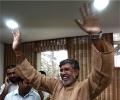
'Today, when Kailash Satyarthi is being honoured with the most prestigious global award, reports appear to the effect that many millions of Indian children are in 'slavery'. This is hardly the reputation that India should have when we are basking in the glory of 'Mangalyan',' says T P Sreenivasan.
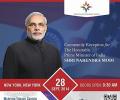
'Unlike Japan and China, the US has a long relationship with India. He is going there to fly the Indian flag in a gesture of friendship. This is a journey like none other, meant to signal that the two democracies are in a defining relationship of the 21st century.'

'The irresistible Cuban cigars, which acquire their unique flavour as they are rolled on the thighs of Cuban women, have always been the ultimate temptation for cigar connoisseurs in the US.'

The world is still figuring out the man as he continues his enigmatic journey towards the first 100 days of his presidency.

Thiruvananthapuram did not give him a resounding victory, but did not abandon him either. If he learns his lessons and avoids the pitfalls of the past, he will have a bright political future, says T P Sreenivasan.
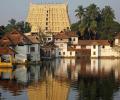
Two decisions handed down by the Supreme Court have spread gloom in Kerala as they have shaken two basic faiths of a majority of the people in the state, says T P Sreenivasan.

'Modi and Obama both had agendas that went beyond the nuclear deal. The threat from the chilly Himalayas had to be tackled in the warm waters of the Indian Ocean.'

Obama's decision to visit India must be a result of his judgement that Modi is a man of action, feels Ambassador T P Sreenivasan.

'From envy, heartburn and broken hearts to broken marriages, much damage has been done by unintended revelations in the social media. Suspicious partners bring out hidden relationships, which may never have come to light and hell breaks lose in many lives,' warns T P Sreenivasan.

'To expect that he has a magic wand to resolve all differences and announce breakthroughs in all issues during his first visit to the US is to be unrealistic,' says Ambassador T P Sreenivasan.
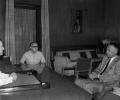
'A P Venkateswaran left an indelible impression on Indian diplomacy and made an incredible number of friends, who kept remembering him, more than other Indian diplomats, who served at those posts.' Ambassador T P Sreenivasan salutes a legend of the Indian Foreign Service who passed into the ages.
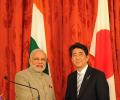
'Secretiveness and the element of surprise in announcing decisions marks the Modi style of diplomacy. From being a voluble politician, he became a reticent statesman... But the diplomatic dance is performed on thin ice and his adroitness is still to be proved,' says Ambassador T P Sreenivasan.
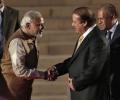
'India had nothing to gain by the talks except for some brownie points from the US for being reasonable. Pakistan desperately needed the talks to get arms and money from the Americans,' says T P Sreenivasan.

Should candidates for particular positions in the government be permitted to agitate for changing the recruitment process itself? The candidates have to meet the requirements of the jobs rather than ask for their own standards to be accepted as the requirement of the jobs. Those who cannot meet those criteria should seek other jobs that match their skills, says T P Sreenivasan.

The Nobel Prize for Malala may have caused deep divisions across the globe and disturbed the peace, while the award to OPCW, though not without critics, may have served the cause of peace by eliminating a weapon of mass destruction from the face of the earth, says Ambassador T P Sreenivasan.
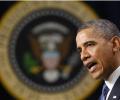
'By his very presence in Delhi on Republic Day, Obama is revisiting the most defining relationship of the 20th century after a period of stagnation,' says Ambassador T P Sreenivasan.

'Ne Win kept good relations with the Nehru family even though he did nothing to do business with India. When Indira Gandhi was assassinated, Ne Win took off to an undisclosed destination, leading to rumours that he had gone to India. But we had no knowledge of his visit and days later, we were told that he was so struck with grief that he went into meditation on an island.' Ambassador T P Sreenivasan delves into Rajiv Bhatia's new book on mysterious Myanmar.

'Modi's promise of change during the election campaign was on the domestic front, but his first year in office focused on foreign policy beyond all expectations,' says Ambassador T P Sreenivasan.

It is unconscionable to choose between Sardar Patel, who united India physically, and Indira Gandhi, who gave meaning, content and pride to the unity of the nation and became a martyr at the altar of national unity, says Ambassador T P Sreenivasan.

'It was China's rise that caused the New Cold War in Asia as it prompted the United States to rebalance its forces in Asia to experiment with engagement and containment at the same time,' says T P Sreenivasan.

No theory would ever justify the public humiliation of the acting head of the consulate of a friendly country. Whatever be the eventual solution, grievous damage has been done to her personally and to the relations between the two countries, says Ambassador T P Sreenivasan.

As India gears up to honour its pravasis on January 9 to mark their contribution in the nation's development, rediff.com presents perspectives from eminent writers on the Diaspora. Kicking off the series is Ambassador T P Sreenivasan, who points out that the change of the Diaspora policy put in place by Rajiv Gandhi following the military coup in Fiji and his decision to stand by them, was the one defining moment in India's dealings with its overseas family.

'If the Nairs split between Shashi Tharoor and the BJP candidate, O Rajagopal and the Nadars combine with the Leftists and the Christians to vote for the CPI candidate, Bennet Abraham, what would happen to Tharoor. It is presumed that the voters do not cast their votes, they vote their castes,' says Ambassador T P Sreenivasan
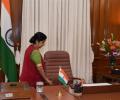
Sushma Swaraj, like Clinton, has a strong political base in her own party and is likely to have her imprint on foreign policy, says Ambassador T P Sreenivasan.

'Foreign policy-making cannot be shifted out of Delhi and the regional satraps, who do not have a national perspective, should not be allowed to dominate foreign policy. But regional inputs should be integral to foreign policy-making at every step of the way,' says Ambassador T P Sreenivasan.

T P Sreenivasan was India's high commissioner in Fiji in 1987, when Sitiveni Rabuka toppled the Indian-dominated government there. Ambassador Sreenivasan stayed on for two years after the coup, fighting for the rights of the people of Indian origin before he was expelled by Rabuka. 'Meeting Sitiveni Rabuka, who had overthrown a democratically elected government, discriminated against the Fiji Indians, brought untold humiliation and suffering to them, tried to disenfranchise them, ordered me out of Fiji and closed down the Indian high commission was a difficult decision to take even after 25 years,' notes Ambassador Sreenivasan who eventually caught up with Rabuka over a game of golf.

President Obama had no intention of risking a global conflagration on account of the use of chemical weapons in Syria, especially at a time when he was struggling to wind up the wars his predecessor had started, says T P Sreenivasan

Narendra Modi's promise to allow states a bigger say in strategising and building foreign policy is unexceptionable, says TP Sreenivasan.
 © 2026 Rediff.com - Advertise with us - Disclaimer - Privacy Policy - Sitemap - Feedback - About us - Terms of use - Grievances