
Indian authorities have requested additional information from the United States based on the interrogation of Tahawwur Rana, an accused in the 2008 Mumbai terror attacks. The request was made through the Mutual Legal Assistance Treaty (MLAT).
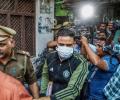
Radical Islamist networks are deliberately targeting Muslim youths embedded within the country's professional and academic ecosystems, leveraging their skills, mobility, and digital reach to quietly strengthen operational capabilities. This trend highlights a dangerous evolution in terror recruitment -- one that exploits ideological faultlines, online echo chambers and transnational radical Islamist influences to attract individuals who outwardly embody India's modern and aspirational narrative, points out Dr Kanchan Lakshman.
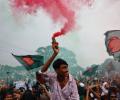
Bangladesh Jamaat-e-Islam's student front, Islami Chhatra Shibir (ICS), has secured a significant victory in the central students union elections at Jahangirnagar University (JU), following a similar win at Dhaka University. This outcome has surprised many, as these universities were not traditionally strongholds for the Islamist group.
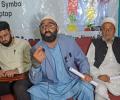
None of its candidates won. Most of them lost badly.
Bangladesh's Election Commission has announced that general elections will be held in the first week of February 2025. The announcement comes amid concerns about ensuring a free, fair, and impartial election. The BNP is expected to participate, potentially without its former ally, Jamaat-e-Islami.
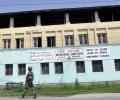
The process for the takeover of the management of the schools began on Saturday morning as officials of district administrations, principals of the respective nearest high and higher secondary schools, accompanied by police teams, reached these schools, the officials said.

A Bangladeshi court has sent 16 people, including veterans of the 1971 Liberation War, to jail under the Anti-Terrorism Act after a mob disrupted their public discussion.
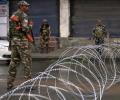
The Jammu and Kashmir government has declared the publication of 25 books as forfeited for promoting false narratives and glorifying terrorism. The books include those written by famous authors like Moulana Moudadi, Arundhati Roy, A G Noorani, Victoria Schofield and David Devadas.

'However, we must implement a tit-for-tat approach -- reciprocating their conduct with precision.' 'If they demonstrate respect, we respond accordingly. If they adopt hostile positions, we mirror that hostility with equal intensity.'

'Pakistan will also try to turn Bangladesh into a base for terrorist attacks on India.'

Police conduct raids at bookshops in Kashmir to seize banned books promoting false narratives and glorifying terrorism, following a government order. The ban and subsequent raids have drawn criticism from authors and political leaders.

Bangladesh's Chief Adviser Muhammad Yunus announced that the next general election will be held in February 2026, marking the first anniversary of the 'July Uprising'.

Shah said stringent actions would be taken against any individual who jeopardises the nation's security.
'Militants are taking over the administration. Fundamentalists have been released from jail.'
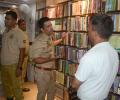
Bookstore owners were cautioned against keeping or distributing the books. Police personnel briefed the bookstore owners about the legal consequences of violating the ban.

Tahawwur Hussain Rana, a jailed accused in the 2008 Mumbai terror attacks, has moved a court in New Delhi seeking permission to speak to his family. The 64-year-old Pakistani-origin Canadian businessman is currently in judicial custody and is accused of conspiring with David Coleman Headley and operatives of Lashkar-e-Taiba (LeT) and Harkat-ul-Jihadi Islami (HUJI) to carry out the terror attacks. Rana was brought to India after the American Supreme Court dismissed his review plea against his extradition.

The move comes a few days after the Yunus-led government dropped the portrait of the country's founding father and deposed prime minister Sheikh Hasina's father Mujibur Rahman from new currency notes.
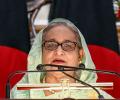
Bangladesh's International Crimes Tribunal is set to formally hear charges against deposed prime minister Sheikh Hasina on Sunday allowing state-run BTV to broadcast live the event, a first such instance in the country's history.
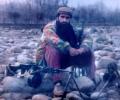
'A man with a gun commanded respect. I thought if I also got a gun, I could save my family. With this thought, I went to Pakistan and got training there'
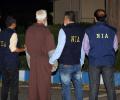
He was sent to judicial custody on May 9 and lodged in Tihar jail after his custodial interrogation by the NIA.
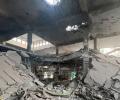
Pakistan claims it was a mosque and an educational complex that were hit in the strikes at Muridke, located at about 40 km from Lahore.
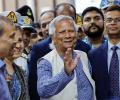
Bangladesh's interim government chief Professor Muhammad Yunus is considering resigning after political parties failed to reach a common ground, according to the National Citizen Party (NCP) chief. Yunus, appointed after a student-led uprising toppled the previous government, expressed concerns about his ability to function in the current political climate.
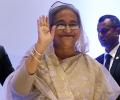
Deposed Bangladesh Prime Minister Sheikh Hasina has issued a strong warning against threats to ban her Awami League party, calling the demands "audacious" and accusing Nobel laureate Professor Muhammad Yunus of being a "fraud" and "corrupt" for his role in the current interim government. Hasina, who fled Bangladesh in August 2024 following a student-led uprising, claims Yunus assumed power through a "meticulous design" with funding from overseas and misled students and people. She asserts that her Awami League is the legitimate party, with a strong history of fighting for the people's rights, and accuses Yunus and his supporters of having no constitutional basis or people's mandate to rule the country.
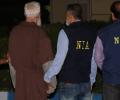
The National Investigation Agency (NIA) has begun questioning Tahawwur Hussain Rana, the mastermind behind the 2008 Mumbai terror attacks, to uncover the larger conspiracy behind the deadly strikes. Rana, who was extradited from the US, is being held at the NIA headquarters in New Delhi. The interrogation is focused on his possible connection with the Lashkar-e-Taiba (LeT) and his suspected links with the Pakistani spy agency Inter-Services Intelligence (ISI).
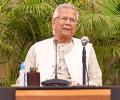
The chief adviser's decision to stay in office came two days after he told student-led National Citizen Party (NCP) leaders that he was mulling resignation as he felt "the situation is such that he cannot work", citing difficulties in working amid the failure of political parties to find common ground for change.
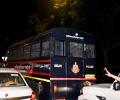
Tahawwur Hussain Rana, a key figure in the 2008 Mumbai terror attacks, has been extradited from the US to India and produced before a Delhi court. Rana, a close associate of David Coleman Headley, was brought to India after the US Supreme Court dismissed his review plea against extradition. The National Investigation Agency (NIA) has sought 20 days of custody to interrogate Rana, citing clinching evidence, including emails. The agency believes that Rana's interrogation is critical to understanding the larger conspiracy behind the attacks and his role in planning them.
The 64-year-old Pakistani-origin Canadian businessman would also be questioned on his suspected links with the officials of Pakistan spy agency Inter-Services Intelligence (ISI) and his association with terror group Lashkar-e-Taiba (LeT), which had orchestrated the attacks.
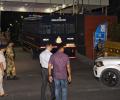
Tahawwur Hussain Rana, the key mastermind of the 2008 Mumbai terror attacks, is being interrogated for eight to ten hours daily by the National Investigation Agency (NIA) to unravel a larger conspiracy behind the strikes. Rana, who was extradited from the US, is being grilled by NIA investigators to probe a larger conspiracy behind the attacks, in which 166 people were killed and over 238 injured. He is being allowed to meet his lawyer and is being provided with basic necessities. The investigators hope to find some important leads on his travels in parts of northern and southern India days before the carnage in Mumbai on November 26, 2008.
Tahawwur Hussain Rana, a Pakistan-born Canadian national and close associate of David Coleman Headley, is set to be extradited to India from the US. Rana was involved in the planning and execution of the 2008 Mumbai terror attacks, which killed 166 people, including six Americans. He assisted Headley in obtaining a visa for India, established a front company in Mumbai, and helped in reconnaissance of targets in Mumbai and New Delhi. Rana was convicted in the US for providing material support to Lashkar-e-Taiba (LeT) and sentenced to 14 years in prison. His extradition to India will allow authorities to question him about his involvement in the Mumbai attacks and potentially uncover new information about the role of Pakistani state actors.
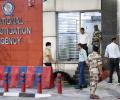
Tahawwur Hussain Rana, the mastermind behind the 2008 Mumbai terror attacks, has been taken into 18-day custody by the National Investigation Agency (NIA) in India. Rana was extradited from the United States after years of legal battles and will be questioned to unravel the complete conspiracy behind the attacks.
Tahawwur Hussain Rana, a Canadian national accused of involvement in the 2008 Mumbai terror attacks, has been extradited to India from the United States. Rana's interrogation is expected to shed light on the role of Pakistani state actors in the attacks, which claimed 166 lives. Indian authorities are particularly interested in his travels across India in the days leading up to the attacks, including visits to Hapur, Agra, Delhi, Kochi, Ahmedabad, and Mumbai. Rana's extradition follows a lengthy legal battle, with the US Supreme Court ultimately denying his application to challenge it. Rana is known to be associated with Pakistani-American terrorist David Coleman Headley, one of the main conspirators of the 26/11 attacks. The investigation into the Mumbai attacks has implicated senior members of terror outfits Lashkar-e-Taiba (LeT) and Harkat-ul Jihadi Islami (HuJI), as well as officials from Pakistan's Inter-Services Intelligence (ISI).
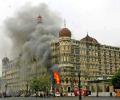
Tahawwur Rana, accused of involvement in the 2008 Mumbai terror attacks, is expected to be extradited to India from the United States soon. The US Supreme Court denied his last-ditch effort to stop his extradition, moving him closer to being handed over to Indian authorities. Rana's extradition is expected to help probe agencies expose the role of Pakistani state actors behind the attacks and shed new light on the investigation. He is associated with Pakistani-American terrorist David Coleman Headley, one of the main conspirators of the 26/11 attacks.
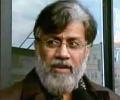
Tahawwur Hussain Rana, a Canadian national convicted in the United States for his role in the 2008 Mumbai terror attacks, has been extradited to India. Rana, a close associate of Pakistani-American terrorist David Coleman Headley, was involved in the conspiracy from 2005 onwards and assisted Headley in obtaining a visa for India. He is the third person to be sent on trial in India for the 26/11 attacks after Ajmal Kasab and Zabiuddin Ansari alias Abu Jundal. Rana's extradition comes after US President Donald Trump approved the request.
Tahawwur Hussain Rana, a key accused in the 26/11 Mumbai terror attacks, was brought to India on Thursday after being "successfully extradited " from the US, the National Investigation Agency (NIA) said. The 64-year-old Canadian citizen of Pakistani origin landed in Delhi in a special plane on Thursday evening, ending days of speculation of when and how he will be extradited, officials said. The NIA said in a statement that it had secured the successful extradition after years of sustained and concerted efforts to bring to justice the key conspirator behind the 2008 mayhem that claimed 166 lives. Rana is accused of conspiring with David Coleman Headley alias Daood Gilani, and operatives of designated terrorist organisations Lashkar-e-Taiba (LeT) and Harkat-ul-Jihadi Islami (HUJI) along with other Pakistan-based co-conspirators, to carry out the the three-day terror siege of India's financial capital.
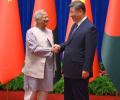
'It was the hostility of the Yunus regime that made India careful and wary of dealing with them.' 'They gradually backed off and lowered the noise, but the damage was done.' 'Their true colours had been exposed.'

The results of assembly elections in the Kashmir Valley have culminated in a significant rejection of separatist candidates, including those from Engineer Rashid-led Awami Ittehad Party and Jamaat-e-Islami, who failed to make a meaningful impact in the polls.

The Union home ministry said the Muslim Conference Jammu and Kashmir - Sumji faction, chaired by Ghulam Nabi Sumji, is known for its anti-India and pro-Pakistan propaganda and its members have been involved in supporting terrorist activities and providing logistical support to terrorists in Jammu and Kashmir.
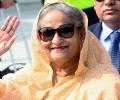
The Anti-Discrimination Student Movement (SAD), which led protests against Bangladesh Prime Minister Sheikh Hasina, has launched itself as a political party called the National Citizen Party (NCP). The new party, which aims to 'dismantle constitutional autocracy' and establish a 'second republic,' has pledged to create a 'solely Bangladesh-oriented' political system, with no room for 'pro-India and pro-Pakistan politics.' The NCP's inaugural rally was attended by representatives of various political parties, including the Bangladesh Nationalist Party (BNP), Jamaat-e-Islami, and envoys from the Vatican and Pakistan.
'We want to ensure that no government in J&K will be formed without our support.'
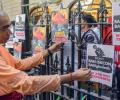
Amid growing outrage here about the large-scale attack on minority Hindus and their places of worship in Bangladesh, United States National Security Advisor Jake Sullivan on Monday spoke with the interim government's Chief Adviser Muhammad Yunus and both leaders expressed commitment to protect human rights in the troubled South Asian nation.
 © 2026 Rediff.com - Investor Information - Advertise with us - Disclaimer - Privacy Policy - Sitemap - Feedback - About us - Terms of use - Grievances