
The health minister said the Centre has taken timely measures ahead of the summer season to address heatwave-related illnesses.
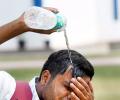
As Mumbai, Thane and other neighbouring districts in Maharashtra's Konkan region swelter under an unexpected, scorching heatwave, Dr Vidhe Sharma suggests how you can keep cool.

The heat wave is likely to impact parts of Jammu and Kashmir, Himachal Pradesh, Uttarakhand, Punjab, Haryana, Delhi, Rajasthan, Madhya Pradesh, Jharkhand, Odisha and Gangetic West Bengal, the Met office said.

Consume foods that keep you hydrated, are light and easy on the gut, advises Sanya Narang.

The maximum temperature at the Safdarjung Observatory, Delhi's base station, is likely to rise to 45 degrees Celsius.

Passenger vehicle retail sales in India witnessed a 7 per cent on-year decline in June as severe heatwave conditions resulted in 15 per cent less showroom walk-ins, industry body FADA said on Friday. Overall passenger vehicle registrations stood at 2,81,566 units last month, as compared to 3,02,000 units in June 2023. "Despite improved product availability and substantial discounts aimed at stimulating demand, market sentiment remains subdued due to extreme heat resulting in 15 per cent less walk-ins and delayed monsoons," the Federation of Automobile Dealers Associations (FADA) president Manish Raj Singhania said in a statement.
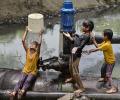
Western disturbances are near Pakistan-Afghanistan and are moving towards Delhi and thunderstorms or dust storms are likely to be experienced in northwest India, senior scientist at IMD RK Jenamani told ANI.

It is important to be wary of sunburn, dizziness, heatstroke, stomach issues and other heat-related illnesses, advises Dr Vidhe Sharma.
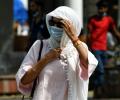
No part of northwest, central and east India is likely to record a heatwave over the next five days, the MeT office said.

Over the past few days, deaths due to heat stroke have been reported from different parts of the country including Uttar Pradesh, Bihar and Odisha.

Kashmir is reeling from a heat wave after the valley earlier this week witnessed the second-hottest September day in recorded history, causing hardships to locals and tourists alike.
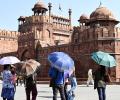
'The intensity and frequency of heatwaves will be much higher than in previous years over Punjab, Haryana, Rajasthan, Gujarat, Madhya Pradesh and Odisha.'
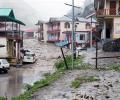
'The government only wakes up after devastation.' 'The government does not understand the gravity of the situation nor they do not want to understand the gravity of the situation.'

Glimpses from India and around the world that will make you smile and cry.

States are mandated to develop and implement 'heat HAPs' for prevention of heat-induced diseases. But most do not go beyond standard advisory on heat prevention.

Above-normal heatwave days are predicted in most parts of central, east and northwest India during this period.

A fresh spell of heatwave is likely to begin over northwest India from May 7 and over central India from May 8, the India meteorological department said on Thursday.

The India Meteorological Department has issued an 'orange' alert.

IMD data shows in the 24 hours between September 1 and 2, Haryana received 806 per cent more rainfall than normal, Punjab 759 per cent, Himachal Pradesh 510 per cent, Delhi 740 per cent, Chandigarh a staggering 1,638 per cent, and Rajasthan 193 per cent.

Wimbledon sprang into life on Monday as the world's oldest tennis tournament opened its gates to thousands of spectators who had queued up for hours in the gentle morning sunshine.

The mercury breached the 46-degree Celsius mark in several places such as Allahabad (46.8 degrees Celsius) and Jhansi (46.2 degrees Celsius) in Uttar Pradesh; Sports Complex (46.4 degrees Celsius) in Delhi; Ganganagar (46.4 degrees Celsius) in Rajasthan; Nowgong (46.2 degrees Celsius) in Madhya Pradesh; and Maharashtra's Chandrapur (46.4 degrees Celsius).

Glimpses from around the world that will make you smile and cry.

East and northeast India recorded 29 per cent rain deficit -- 141.5 mm against the normal of 199.9 mm -- from March 1 to May 3.

Severe heatwaves, responsible for thousands of deaths across India over the last few decades, are increasing with alarming frequency and soon the country could become one of the first places in the world to experience heatwaves that break the human survivability limit, according to a new report.

A study shows that the country has experienced 706 heatwave incidents from 1971-2019.

' Number of school hours per day may be reduced. Sports and other outdoor activities which expose students directly to the sunlight may be appropriately adjusted in the early morning'

Mother Dairy has hiked milk prices by up to Rs 2 per litre effective Wednesday to partly offset rising input costs. The price revision will be effective from April 30, 2025 across its market, a company official said on Tuesday.

The mercury at the Safdarjung Observatory is expected to breach the 43-degree mark on Thursday and touch 44 degrees Celsius by Friday, according to the India meteorological department.

Bankura continued to top the maximum temperature chart at 43.7 degrees Celsius, while Panagarh in Paschim Bardhaman district followed closely at 43.5 degrees Celsius, the weather office said.

The IMD said heatwave conditions are likely to continue over the northern plains, and central and southern parts of the country for two more days and abate gradually.
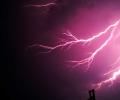
Lightning claims more lives in India annually than any other extreme weather event. Between April and July this year alone, 1,621 people died due to lightning strikes.

Wimbledon is braced for its hottest ever start with London set to endure a searing heatwave that is forecast to peak as play begins at the All England Club on Monday.

A cocktail of heatwave and upcoming cricketing events is expected to usher in the peak season for the country's largest beer maker, United Breweries. The beer maker, which has gained share in some key markets, will be a major beneficiary as April to July is an important period contributing to 40-45 per cent of its annual beer volumes. Going ahead, the T20 Cricket World Cup in June and the ongoing IPL will have a positive impact on volumes and should be able to offset the negative impact of elections on sales, experts believe.

The India meteorological department has issued a yellow alert, warning of a fresh heatwave spell in Delhi which may see temperatures soaring to 44 degrees Celsius by Wednesday.
In a letter to the states/UTs on Saturday, Union Health Secretary Rajesh Bhushan requested them to disseminate the guideline document 'National Action Plan on Heat Related Illnesses' to all districts for effective management of cases of heatwave.

A summary of Monday's action at the Women's Euros between Spain-Belgium and Portugal-Italy.

According to an IMD forecast issued on Thursday, a heatwave spell will persist over northwest and central India during the next five days and over east India during the next three days.

The Indian economy could remain less affected by global trade wars than other countries because the two engines of domestic growth - consumption and investment - are likely to face a limited impact from such headwinds, according to an article on the 'State of the Economy' in the Reserve Bank of India's (RBI's) bulletin, released on Tuesday.

>Bihar (18 days) has the most number of heatwave days in 2023, followed by Andhra Pradesh (15 days), Odisha (15 days), Jharkhand (13 days), West Bengal (8 days) and Tamil Nadu (6 days).

Eleven more patients admitted at Uttar Pradesh's Ballia district hospital have died due to various ailments on Monday, taking the death toll to 68 in five days, officials said.
