
'During times of adversity, a brick becomes better than a stone. That is how I look at the election season.'

HDFC Bank, Reliance Industries and ICICI Bank remained among the top mutual fund (MF) buys for the second consecutive month in September. MFs deployed a net of Rs 15,000 crore into these stocks during the two-month period (August-September), revealed Nuvama Alternative & Quantitative Research reports.

But the government will present a second tranche of Supplementary Demands for Grants during the Budget session of Parliament in February, when it can seek additional spending.
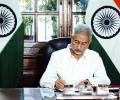
Signalling both change and continuity, India's new government, headed by Prime Minister Narendra Modi for a third consecutive term, got into work gear on Tuesday with cabinet ministers and ministers of state filing into their respective offices to assume charge.

'The global situation is not very good.'
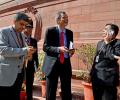
'We now look at divestment as an opportunity for maximising the value of public assets, not necessarily as a short-term resource-raising measure.'

RIL has proposed to charge the government- fixed rate for natural gas on a gross calorific value (GCV) basis, instead of net calorific value (NCV).

The Congress on Friday claimed that a 'silent undercurrent' is brewing across western Uttar Pradesh against the 'failures' of the Modi government, as it flagged issues such as 'neglect' of sugarcane farmers and examination paper leaks.

Trinamool Congress is the second highest recipient of political donations through electoral bonds.

Prime Minister Narendra Modi on Thursday said the interim Budget presented by Union Finance Minister Nirmala Sitharaman offers the "guarantee" of strengthening the foundation of a developed India and carries the "confidence of continuity".

'The policy focus of the government should have been on creating more good quality jobs but that was not their focus.'

'China is somewhat disappointing in its recovery, and slow growth, and India is reporting strong growth numbers.'

Here are some golden nuggets when it comes to creating wealth. Read them and if you find yourself saying, 'This everybody knows', cross your heart and ask yourself how many times you have forgotten these simple rules, says P V Subramanyam.

The external affairs minister said the SAARC is in trouble as one of its members has been supporting terrorism.

India's imports from Russia rose 64 per cent to $36.27 billion during the April-October period this fiscal on higher shipments of crude oil and fertiliser, according to the commerce ministry data. With this, Russia has become India's second-largest import source during the first seven months of this fiscal. The imports were $22.13 billion during April-October 2022.

Karnataka Minister for Sugar and Agriculture Marketing Shivanand Patil's statement that farmers wish for repeated droughts in the state so that their loans get waived has caused a stir, with the opposition on Monday terming it as an 'affront' to the farming community and seeking his removal from the Ministry.

Pirojsha Godrej, 43, patriarch Adi Godrej's son, is set to take over as chairman of the Godrej Industries Group from 2026 whol Nyrika Holkar, Smita Godrej Crishna's 42-year-old daughter, has emerged as the face of the Godrej Enterprises Group.
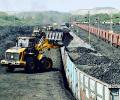
Production of eight infrastructure sectors increased by 5.4 per cent in November against a 3.2 per cent growth in the same month last year on a better show by coal, fertiliser, steel, cement and electricity segments, according to the official data released on Friday. Crude oil, natural gas and refinery products, however, recorded negative growth in November this year. The production growth of eight key sectors slowed down to 0.9 per cent in October.

India's private and state government-owned ports (non-major ports) continued to grow faster than those owned by the Centre (major ports) through the first three quarters of 2023-24 (FY24), cargo handling data shows. At 604 million metric tonnes (mmt), cargo at major ports grew by 5 per cent between April and December, while non-major ports' cargo traffic growth was 11 per cent at 531 mmt. During December 2023, central government-owned ports in India handled cargo volumes of 69.9 mmt, a tepid year-on-year (Y-o-Y) growth of 0.7 per cent.

Posthumous sperm retrieval during normal times can be done at the request of a widow without any need for legal bureaucracy, but parents who want their dead son's sperm to be retrieved and preserved must obtain an order from a family court.

The country's imports from Russia almost doubled to $25.69 billion during the April-August period this fiscal due to increasing inbound shipments of crude oil and fertiliser, according to the commerce ministry data. With this, Russia has become India's second-largest import source during the first five months of this fiscal. The imports were $13.77 billion during April-August 2022.

The ministry of finance is likely to assume crude oil price to remain within $85 per barrel while estimating subsidies for the Interim Budget 2024-25 (FY25), to be presented on February 1. Brent crude prices moved up on Thursday, ending at $78.9 per barrel. Crude oil and cooking gas prices, which move in tandem, impact fertiliser and cooking gas subsidies, constituting 53 per cent of the government's total subsidies.
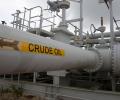
India's imports from Russia rose by about 67 per cent to $30.42 billion during the April-September period this fiscal on higher shipments of crude oil and fertiliser, according to the commerce ministry data. With this, Russia has become India's second-largest import source during the first half of this fiscal. The imports were $18.24 billion during April-September 2022.

Production of eight infrastructure sectors expanded by 7.9 per cent in September -- the highest in three months -- on account of better show by coal, fertiliser, cement and electricity segments, according to official data released on Monday. In September last year, the growth rate stood at 5.4 per cent. It was 4.1 per cent in August. The previous high was in June when the output expanded by 13.1 per cent.

Confident of securing a massive majority in the upcoming Lok Sabha elections, Prime Minister Narendra Modi on Wednesday outlined his vision for his next five-year term saying the Modi 3.0 government will put all its might to strengthen the foundation of 'Viksit Bharat' or a developed nation.
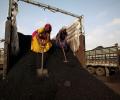
The growth of eight key infrastructure sectors rose to a 14-month high of 12.1 per cent in August 2023 against 4.2 per cent a year ago, mainly due to expansion in production of coal, crude oil, and natural gas, according to the official data released on Friday. The expansion in August is the highest since June 2022, when it was 13.2 per cent. The production of refinery products, steel, cement and electricity also grew in August, the data showed.

According to the third batch of supplementary demands for grants tabled in the Lok Sabha, approval is being sought for gross additional expenditure of over Rs 1.58 lakh crore.

Justice Swarana Kanta Sharma said a convict does not become a lesser citizen only due to his incarceration and, in the present case, where the "biological clock" of the convict and his partner may become a barrier for them to conceive once the sentence got over, the fundamental right to have a child "cannot be deemed to be surrendered in favour of the State".
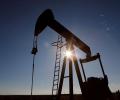
The growth rate in the production of eight key sectors slowed down to a 20-month low of 0.1 per cent in October on account of contraction in the output of crude oil, natural gas, refinery products, and cement, according to the official data released on Wednesday. In October last year, these sectors expanded by 8.7 per cent. In September this year, the core sectors' output growth stood at 7.8 per cent.

The RSS chief also noted that those who eat non-vegetarian food in India follow rules and desist from eating it during the Hindu month of Shravan and on Thursdays.

The government will formulate a strategy to make India self-reliant in edible oils by boosting domestic output of oilseeds and launch a comprehensive programme to support dairy farmers, Finance Minister Nirmala Sitharaman announced on Thursday. India imports a large quantity of edible oils to meet the domestic demand. During the 2022-23 marketing year (November-October), the country imported nearly 165 lakh tonnes of cooking oils, valuing a whopping Rs 1.38 lakh crore.

Finance Minister Nirmala Sitharaman on Wednesday said the government is keeping an eye on inflation which is purely "extraneous" nowadays because of fuel and fertiliser prices. Replying to the debat on the Supplementary Demands for Grants in the Rajya Sabha, the minister said wholesale inflation has fallen to a 21-month low. Later, the Rajya Sabha returned the Supplementary Demands for Grants to the Lok Sabha, thus completing the process of authorising the government to spend an additional Rs 3.25 lakh crore in FY2022-23.

Whether this remains under control in the coming months will depend on the future intensity and spread of the Russia-Ukraine war, and the effectiveness of the Indian government's response, points out A K Bhattacharya.

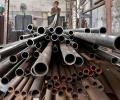
Growth of eight key infrastructure sectors slowed down to 8.2 per cent in June 2023 compared to the year-ago month due to a decline in the production of crude oil, according to the official data released on Monday.

Parents who give their daughters-in-law a hard time for not being able to fulfil their desire of "preserving their family tree", need to be educated that it is their son and not his wife whose chromosomes will decide the child's gender, the Delhi high court has observed.

If Modi wants to leave a real legacy, breaking India's strategic triangulation would be the real gift, notes Shekhar Gupta.

The growth of eight key infrastructure sectors slowed down to 4.3 per cent in May 2023 due to a decline in the production of crude oil, natural gas and electricity, according to the data released by the government on Friday. The core sector growth was 19.3 per cent in May 2022, while in April 2023, the key infra sectors recorded a growth rate of 4.3 per cent. During April-May this fiscal, the output growth of these eight sectors slowed down to 4.3 per cent against 14.3 per cent in the year-ago period, the data showed.

Pre-Budget excercise next month should scrupulously avoid adventurism of all types and refrain from making excessively ambitious projections on revenue and expenditure numbers for 2023-24, suggests A K Bhattacharya.

Finance Minister Nirmala Sitharaman on Thursday announced a Rs 11.11 lakh crore spending on infrastructure and vowed to continue reforms as she resisted resorting to populist measures in Modi government's last Budget before general elections, instead choosing to stay on the path of cutting deficit while bolstering measures for focus groups.
