
A poor monsoon could drag overall economic growth and compound the impact of the West Asia conflict on the Indian economy.

"This year, the Southwest Monsoon is likely to set over Kerala on May 31 with a model error of four days," the India meteorological department said on Wednesday.

India is likely to witness a mixed temperature pattern along with wetter-than-usual conditions in May, with the India Meteorological Department (IMD) indicating that rainfall across the country is "most likely to be above normal" at over 110 per cent of the long period average (LPA).

The Indian rupee is highly vulnerable among Asian currencies, with Barclays and MUFG warning of a potential depreciation towards 100/$ if the West Asia conflict persists, driven by widening current account deficits and elevated crude oil prices.

'Can you believe there are over 26,500 deaths linked to heatwave-driven ozone in 2024?'

Less-than-expected rainfall and a poor spatial distribution, experts say, can rekindle fears of a rise in food and fuel inflation that can have an impact on the RBI's monetary policy. The fear of less than optimal rainfall due to El Nino this year, analysts believe, is the biggest short-term risk for the markets, which they said has not been fully priced in yet by them. Monsoon set over Kerala on June 08, a week later than its scheduled date.

India's wholesale price inflation surged to 8.30 per cent in April, up from 3.88 per cent in March, primarily driven by a significant increase in the prices of fuel, power, and crude petroleum, according to data from the commerce and industry ministry.

ITC reported a 6.1 per cent year-on-year growth in its consolidated adjusted net profit from continuing operations, reaching ~5,469.74 crore in the January-March quarter (Q4FY26), primarily fuelled by strong performances in its cigarettes and non-cigarette fast-moving consumer goods (FMCG) businesses.

We should be prepared for any impact of the dreaded weather pattern.
A private sector weather forecaster, Skymet, and some global forecasters have already issued warnings for this year that this could happen.

This is the time for India to plan forward fully, with the goal of Atmanirbharata, and energy security. The Persian Gulf is no longer a reliable source, points out Rajeev Srinivasan.

Rainfall in August is predicted to be below normal (less than 94 per cent of LPA), but the situation is expected to improve comparatively in September, the IMD said.

Even if there is an early agreement on a cessation of hostilities in West Asia, the price shock will not go away easily, points out A K Bhattacharya.
If the weather phenomenon hits India, impact will be felt across sectors; be cautious on stocks based on rural consumption.
Senior officials of the India Meteorological Department said they were now more confident that El Nino would indeed appear during the second half of the southwest season, compared to April when the last official forecast was made.

The Reserve Bank of India (RBI) Governor Sanjay Malhotra is now confronting the classic growth-inflation tradeoff, a situation exacerbated by the West Asia war, which threatens to end the 'goldilocks period' of low inflation and robust growth.

'Monsoon is the pran (life) of our water system.' 'A weak monsoon will have a very negative impact on crops and people's lives.'

El Nino, which refers to warmer-than-average sea surface temperatures in the central and eastern tropical Pacific Ocean, will likely to keep CPI inflation up at 8-10 per cent in the second half of 2014 and will pose a 50-70 basis point risk to this fiscal's growth expectation, the report by financial services major Bank of America Merrill Lynch said.

'A weak monsoon always spells disaster. But it's too early to have a pessimistic view.'
The El Nino weather phenomenon will bring drier winter weather to Indonesia, India, Mexico, Central America and northern Brazil, US government weather forecasters said.
El Nino, an anomalous rise in sea surface temperature off the Peru coast, has been observed to often cause the Indian monsoon to flounder, resulting in poor rainfall. Nearly 60 per cent of agricultural land is wholly rain-dependent.

Revenue collection next financial year may be affected, and, along with this, subsidies on food and fertilisers can go up if the war in West Asia drags for long, according to experts.
.jpg)
An El Nino is a temporary change in the climate of the Pacific Ocean, in the region around the equator.

India's peak power demand is projected to hit 270 GW this summer, surpassing last year's record of 250 GW.

Officials in the weather department said the monsoon is expected to be below normal because of the El-Nino effect.

Wholesale price-based inflation eased to a nine-month low of 4.68 per cent in February, while retail inflation slowed to a 25-month low of 8.1 per cent.

'If because of El Nino, the monsoon is affected adversely in the current year, naturally it will affect income projections and consequently Budget numbers.'
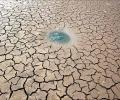
The government must expand the farm insurance cover and advice banks and financial institutions to settle crop insurance claims in the drought-hit areas without delay.
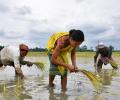
In the coming months, globally as well as in India, rice might remain a hot potato.

'Geopolitical risks and their impact on oil prices, if any, are another concern for global markets, particularly for India.'

IMD will present its month-wise and region-wise forecast in June.
The India Meteorological Department in its first forecast for 2014 had said southwest monsoon will be below normal at 95 per cent of the long-period average.

If El Nino condition affects the monsoons, as is being forecast by foreign agencies, it can slow down the economy to 5.2 per cent next fiscal from a projected 6 per cent.

The Indian Met Department has predicted a below normal monsoon.

Israel has for more than two decades and several US presidencies worked to draw the United States into a full-scale war with Iran. Having finally achieved that, the last thing it wants is Trump declaring victory and going home, as he is prone to do. Ali Larijani was the figure most capable of handing Trump a negotiated exit with something to show for it. Without Larijani, the road to an exit gets considerably narrower. Prem Panicker continues his must read daily blog on the Gulf War.

A rise in farm sector is estimated to raise demand for industrial goods and services, it added.
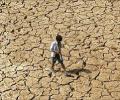
About 60 per cent of net sown area of the country is rain-fed. With every one per cent deficit in rains, the country's gross domestic produce falls by 0.35 per cent.

El Nino is often associated with below average warmer, dry weather across Asia Pacific region.
Steps to improve governance, instill confidence in the government machinery and streamlining function across the different ministries are also important to feed the positive mood, the DBS report added.
