
The Bombay High Court has ordered major social media platforms, including Meta, X Corp, and Google LLC, to immediately remove 'vile, abusive, obscene, and defamatory' deepfakes and AI-generated content targeting Union Minister Nitin Gadkari, emphasising the urgent need for online platforms to curb malicious digital content.

The Delhi High Court has issued an interim order protecting cricketer Yuvraj Singh's personality rights, restraining third parties from the unauthorised use of his name, image, voice, and likeness, including the sale of merchandise and the creation of AI-generated or deepfake content.

Union Minister Nitin Gadkari has received permission from the Bombay High Court to file a civil suit against Meta Platforms, X Corp, Google LLC, and other unknown entities for allegedly circulating 'defamatory' deepfakes and AI-generated content against him.

Union Minister Nitin Gadkari has filed a civil suit against Meta, X Corp, Google LLC, and unknown persons in the Bombay High Court over "defamatory" deepfakes and AI-generated posts concerning the ethanol policy. The court will hear the matter on August 5, with Gadkari seeking a permanent injunction and immediate takedown of the fake content, which he claims has harmed his reputation.

Personality rights violations are increasingly being used as vehicles for financial fraud, with unsuspecting consumers misled by fabricated endorsements.
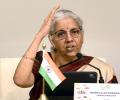
A 76-year-old man in Belagavi was allegedly cheated of Rs 7.9 lakh in an online investment scam that used an AI-generated deepfake video misusing the name of Finance Minister Nirmala Sitharaman to lure investors.
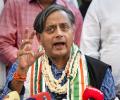
Congress MP Shashi Tharoor has approached the Delhi High Court seeking a ban on AI-generated deepfake videos that purportedly show him praising Pakistan. The court has issued summons to social media platforms and the Centre, indicating it may pass an interim order in Tharoor's favour.

Mrunal Thakur has taken a strong stance against the proliferation of deepfake content, issuing a formal notice that she will pursue legal action against anyone found creating or sharing such material using her likeness.

'It is not about a place with fewer incidents of violence but a city where women have real agency in planning their daily lives.'

Opposition Assam Jatiya Parishad (AJP) candidate Kunki Chowdhury has filed a police complaint regarding alleged deepfake videos circulating on social media that defame her family, following claims made by Chief Minister Himanta Biswa Sarma about her mother's food habits.

BRICS leaders, in their New Delhi Declaration 2026, have called for wider access to Artificial Intelligence resources and stronger international cooperation to ensure the technology is safe, secure, inclusive, and reliable. The declaration outlines a broad technology agenda covering AI, cybersecurity, digital public infrastructure, telecom, quantum technologies, and advanced manufacturing, committing to implement the grouping's statement on 'Global Governance of Artificial Intelligence'.

Union Minister Piyush Goyal has filed a police complaint after an AI-generated deepfake video, maliciously altering his remarks, surfaced on social media. The video falsely depicted him making threatening statements against students protesting the NEET examination. Government sources confirm many related links have been taken down, and Goyal has warned of strict legal action against those involved in its creation and dissemination.

India's IT Ministry sources state the country will not slow down its Artificial Intelligence development, distinguishing its focus on people-centric applications from global concerns over frontier models. The government acknowledges AI safety risks and is tightening incident reporting norms, with IT Minister Ashwini Vaishnaw emphasising regulation for user safety.

The Karnataka government is collaborating with ElevenLabs to explore pilot projects using voice AI across various sectors including skilling, investment promotion, healthcare, culture, and citizen services. This initiative aims to leverage advanced AI to enhance accessibility and efficiency of government services, with a strong focus on responsible AI use and safeguards against misinformation.

The Indian government is questioning whether Meta's recommendation systems and paid content promotion align with its status as an intermediary under the IT Act, raising concerns about the company's liability for content it actively decides to show users.

Meta Platforms CEO Mark Zuckerberg has issued an apology for the temporary removal of Prime Minister Narendra Modi's Facebook post, while company executives acknowledged significant content moderation failures, including issues with child sexual abuse material, deepfakes, and the paid boosting of certain content.

Meta has agreed to report child safety-related matters, including child sexual abuse cases, to appropriate law enforcement agencies in India, government sources confirmed, emphasising that online safety for children is a "non-negotiable" fundamental principle for social media platforms operating in the country.

The Delhi High Court has issued an interim order protecting cricketer Yuvraj Singh's personality rights, restraining third parties from unauthorised use of his name, image, voice, and likeness for commercial gain or creating AI-generated and deepfake content. The court emphasised the need to protect public figures from reputational damage caused by fabricated online content.
Government sources state that Meta, due to its algorithmic amplification of content, can no longer be considered a "simple intermediary" but rather a "service provider," implying greater responsibility and potential loss of legal immunity. This shift comes as Meta commits to directly reporting child abuse content to Indian law enforcement, amidst increasing government scrutiny over harmful online content and algorithmic bias.

The Indian government is reportedly planning to introduce a social media code of conduct for its officers and employees. This move aims to regulate their online activities, preventing the posting of personal opinions or content that glorifies their work on platforms like X, Facebook, and Instagram, addressing the current lack of specific guidelines.

Gautam Gambhir moves Delhi High Court against AI deepfakes and identity misuse, seeking takedown orders and Rs 2.5 crore damages.

Maharashtra Cyber Police have identified over 500 social media profiles involved in a coordinated cross-border disinformation campaign during a recent nationwide protest. The campaign used AI-generated and deepfake content to manipulate public perception and provoke unrest, with technical analysis pointing to elements operating from Pakistan and Middle Eastern countries. Legal action has been initiated, and the public is urged to verify information from credible sources.

BJP MP Raghav Chadha addressed the 12th IPU Global Conference of Young Parliamentarians in Samarkand, Uzbekistan, highlighting India's digital transformation journey. He emphasised how technology is widening access and promoting inclusion, citing UPI's success, affordable data, and robust data protection laws. Chadha also discussed India's digital cooperation with Uzbekistan and the importance of digital rights, safety, and skill development for all citizens.

The government is questioning the visiting Meta team on whether the company is adhering to the law of the land, following summons to the social media giant over temporary restriction of Prime Minister Narendra Modi's Facebook post recently, sources said on Thursday.

Conman Sukesh Chandrasekhar has been sentenced to eight years of rigorous imprisonment by a Delhi court for impersonating a Supreme Court judge and attempting to influence a bail proceeding. The court emphasised the need for a deterrent message against manipulating the justice system, especially given the rise of sophisticated impersonation techniques.

India's IT Secretary S Krishnan announced that the government is considering a dedicated regulatory framework for Artificial Intelligence, moving beyond existing IT rules to address challenges like deepfakes and synthetic content. This comes as global policymakers grapple with AI's rapid emergence and its implications.

Leading stock exchange BSE on Monday cautioned investors to remain vigilant against deepfake video of its CEO giving stock recommendations and investment advice on social media platforms. The exchange emphasised that the video is unauthorised and fraudulent, and its officials are not permitted to provide any stock tips.

The Delhi High Court has ordered the removal of certain objectionable social media content targeting MP Raghav Chadha, who had filed a lawsuit against malicious, AI-generated, and deepfake content impacting his reputation. While some content was deemed not prima facie defamatory, specific objectionable material was ordered to be taken down.

Chief Justice of India Surya Kant highlighted the rapid integration of Artificial Intelligence into arbitration practices, expressing concerns about its accuracy, authenticity, and ethical use. He stressed the need for mandatory disclosure when generative AI is used in preparing legal documents and reports, advocating for shared standards to manage deepfakes and AI-generated material. The CJI also encouraged embracing AI for efficiency in tasks like e-discovery while preserving core arbitration principles.

Meta's new Muse Image AI generator, which can create AI images from public Instagram accounts without explicit consent, has sparked significant privacy concerns and criticism over its 'opt-in-by-default' approach, raising fears of deepfakes and online impersonation.

India's markets regulator, Sebi, has issued a warning to listed companies and regulated entities about an emerging cyber fraud known as the "Boss Scam." This scam involves fraudsters impersonating senior officials like CEOs or MDs to trick finance teams into transferring funds, often using advanced AI tools or malicious software. Sebi advises organisations to verify requests independently and report incidents to prevent financial losses.

Union Minister Ashwini Vaishnaw indicates India may require a new legal framework for Artificial Intelligence, as the current IT law predates AI's rapid emergence. The government aims to balance innovation with regulation, engaging with the industry to ensure citizen safety while fostering technological growth.

The biggest challenge to widespread deployment is no longer AI. It is the financial and commerce infrastructure that was built decades ago for deterministic software and human interactions -- not autonomous AI agents.

The government on Tuesday brought in stricter obligations for online platforms on handling AI-generated and synthetic content, including deepfakes, saying platforms such as X and Instagram must take down within three hours any such content flagged by a competent authority or courts.

A parliamentary standing committee on Information Technology has demanded a personal apology from Meta CEO Mark Zuckerberg for the temporary removal of Prime Minister Narendra Modi's video from Facebook. The committee also discussed potential legal action and the withdrawal of safe harbour protection, while questioning Meta officials on algorithmic bias and accountability.

UN Women has issued a stark warning that the rapid advancement of artificial intelligence (AI) is placing women at a higher risk of discrimination and digital violence, citing studies that reveal significant gender bias in AI systems and large language models.

Taming the animal called AI in its many avatars will clearly remain a work in progress.

Police in Leh have registered an FIR to investigate a deepfake video falsely attributing statements to Ladakh DGP S D Singh Jamwal. The video, which claims climate activist Sonam Wangchuk was arrested on the defence minister's orders, has been debunked by the PIB as digitally manipulated.

How cybercriminals used the names and likenesses of celebrities to trick people into scams.

The government is going to bring a regulation on deepfakes soon that will take help of technology for efficient implementation, Union electronics and IT minister Ashwini Vaishnaw said on Saturday.
