
A new study published in The Journal of Neuroscience reveals a precise connection between individual breath patterns and neural activity in the brain. Researchers found that subtle variations in each breath, such as longer inhales or slower exhales, are directly reflected in corresponding brain activity patterns. This goes beyond traditional measures of breathing rate, offering a richer understanding of how respiration influences cognition, emotion, and memory, and could have implications for conditions like SUDEP and SIDS.
A seven-year study analysing thousands of social science research papers reveals insights into the reproducibility and robustness of findings in the field.
Dr Komal Verma Saluja, a final-year student at Government Medical College Kota (GMCK), has been awarded the "Researcher of the Year Award 2026" by the India chapter of the American College of Physicians (ACP). She is the youngest and first medical student to receive this prestigious accolade. Saluja's research includes identifying an imaging biomarker for early cognitive decline in type 2 diabetes and developing a diagnostic method for fatty liver disease using echocardiography. Her achievements have brought pride to GMCK and highlight the need for more novel diagnostic and therapeutic research in India.
A major US study has assessed the reproducibility of research papers in the social sciences, revealing insights into the credibility of findings and highlighting challenges in replicating results.
Researchers have developed an AI-based approach to generate detailed maps highlighting differences in how distinct parts of the brain age. This new model reveals that not all brain regions age at the same rate, with frontal and temporal lobes appearing biologically older. The study also links these regional ageing patterns to cognitive function and neurodegeneration, particularly in Alzheimer's disease.
Researchers have found that brainwave synchrony between individuals can be used to guide and improve social interactions, potentially "engineering" social connectedness. Studies involving thousands of participants, including collaborations with musicians and artists, demonstrated that being "on the same wavelength" is linked to healthy social relationships and can be boosted through interventions. This phenomenon, termed 'social synchrony', aligns brain, body, and language rhythms, playing a crucial role in social cohesion and learning.
A new study published in the Journal of Neuroscience reveals that even minor cardiac dysfunction can predict microscopic tissue degradation in brain regions associated with Alzheimer's disease. This research suggests that heart issues could serve as an early indicator for neurological risk, mediating the link between cardiac health and memory decline.
Researchers at IIT Kanpur are studying alpha waves in the brain to understand how stress affects cognitive functions. The study aims to build automated models of stress dimensions using EEG and correlating them with factors like loss of control, helplessness, and anxiety.
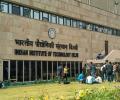
The eight-month intensive programme is designed to help professionals develop comprehensive expertise across both data science and decision science, said IIT-Delhi.

'Think of the brain like a machine, and Alzheimer's is like rust.'
'Like a rusty machine breaks down, a rusty brain also breaks down. And when it breaks down, you have memory loss, cognitive issues and so on.'
A new study reveals that a copper-containing compound, Cu(ATSM), can repair vital waste-clearing pumps in the brain, significantly reducing toxic amyloid-beta proteins associated with Alzheimer's disease and improving long-term spatial memory in mouse models. This discovery offers a promising new therapeutic avenue for neurovascular dysfunction in Alzheimer's.
Researchers have developed a lightweight, wearable polygraph system that adheres to the chest and measures heart activity, breathing patterns, sweat response, blood flow, and temperature to provide a real-time, whole-body view of stress.
Gurukul-educated students can now pursue postgraduate and doctoral research through the Setubandha Scholar Scheme. Selected fellows will receive a monthly fellowship of Rs 40,000 to Rs 65,000 and an annual contingency grant of Rs 1-2 lakhs.

The Supreme Court of India has allowed passive euthanasia for a 32-year-old man who has been in a permanent vegetative state since 2013, highlighting the legal and ethical considerations surrounding the right to die with dignity.
Jayashree Ramadas, Dean of the PhD programme in Science Education at the Tata Institute of Fundamental Research, tells us what science education is about, why science needs to be studied in a socially-applicable manner, and some interesting careers in teaching, education, and cognitive science that might follow.

'It is too early to conclude that there will be a bloodbath, that there will be no jobs, and that there will be civil unrest.' 'Let's calm down.' 'AI is a tool, it is not a weapon, it is not a virus.'
rediffGURU Nayagam PP, founder of EduJob360, breaks down the top government competitive exams aspirants can target in 2026, along with their eligibility criteria, important dates, syllabus essentials and preparation strategies.

What looks like convenience today might well be shaping a future where essential human skills quietly fade away.

'No matter how exhausted you feel, going to bed at your usual time reinforces the body's rhythm.'
Across all sectors, the future of work depends on adaptability.
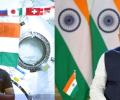
The interaction is planned via a telebridge set up at the U R Rao Satellite Centre in Bengaluru, said the Amateur Radio on International Space Station (ARISS), which facilitates interaction of school students with astronauts on the orbital laboratory.

'By integrating data, research, and new insights, we are designing work environments that foster innovation, collaboration, and wellbeing.'
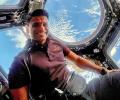
Shubhanshu Shukla's first seven days in space have combined science, ceremony, and moments of levity.
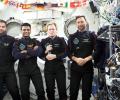
Astronaut Shubhanshu Shukla and the Axiom-4 crew are completing experiments on the International Space Station (ISS) before their scheduled return to Earth.
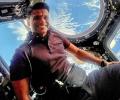
Indian astronaut Shubhanshu Shukla conducts experiments on the International Space Station, focusing on seed germination, microalgae deployment, and stem cell research in microgravity.

Astronaut Shubhanshu Shukla returns to Earth after an 18-day mission aboard the International Space Station, marking a significant milestone for India's space program and carrying out crucial scientific experiments.
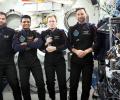
After 18 days of experiments, Shubhanshu Shukla and the Axiom-4 crew are set to return to Earth, marking the end of their mission at the International Space Station.
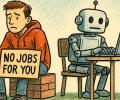
Generative AI is transforming workplaces but at a cost -- there are fewer jobs for young workers just entering the workforce, reveals a Goldman Sachs report.

Astronaut Shubhanshu Shukla concludes his 18-day stay at the International Space Station, praising India's ambition, confidence, and pride as seen from space. He echoes Rakesh Sharma's iconic words and expresses gratitude to all involved in the Axiom-4 mission.

The Human-rated LVM3 vehicle, the Crew Escape System and the Crew Module and Service Module are all in final stages of testing and integration.

So the next time you're tempted to 'power through' on four hours of sleep or binge-watch one more episode, remember: Quality sleep is self-care -- and it's science-backed.

Your yoga practice doesn't start on the mat; it begins in the kitchen, says Dr Yogrishi Vishvketu, global yoga educator and founder of the Akhanda Yoga Institute.

'Working in collaboration is beneficial and more rewarding in the long run.' 'Competition may bring personal glory, but is very short lasting.' 'Work with people who are interested in working with you instead of competing with you.'

Unanimously confirmed by the Senate last week, Panchanathan, 58, from the Arizona State University, replaces White House Office of Science and Technology Policy (OSTP) Director Dr Kelvin Droegemeier who served as Acting Director of the National Science Foundation (NSF).

Dr Sethuraman 'Panch' Panchanathan, senior vice president, Office of Knowledge Enterprise Development, ArizonaStateUniversity, was last week appointed to the United States National Science Board by President Barack Obama.
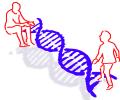
Just as the atom and the byte needed careful societal control to prevent damage to society, perhaps, so does the gene, particularly in debates like 'genes vs merit', explains Ajit Balakrishnan.
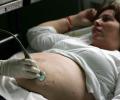
Samvardhinee Nyas, an affiliate of the Rashtriya Swayamsevak Sangh, has started a campaign titled 'Garbha Sanskar' for pregnant women to teach babies culture and values in the womb, its national organising secretary Madhuri Marathe said on Monday.
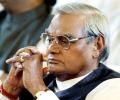
The 93-year-old former prime minister was admitted to the premier All India Institute of Medical Sciences on June 11 with a kidney tract infection, urinary tract infection, low urine output and chest congestion.

The Right to Read programme hopes to cover 100,000 schools, covering 15 million students.

The demand for full-stack developers in India have seen a 20% increase in the last one year.
