
rediffGURU Nayagam PP, founder of EduJob360, breaks down the top government competitive exams aspirants can target in 2026, along with their eligibility criteria, important dates, syllabus essentials and preparation strategies.
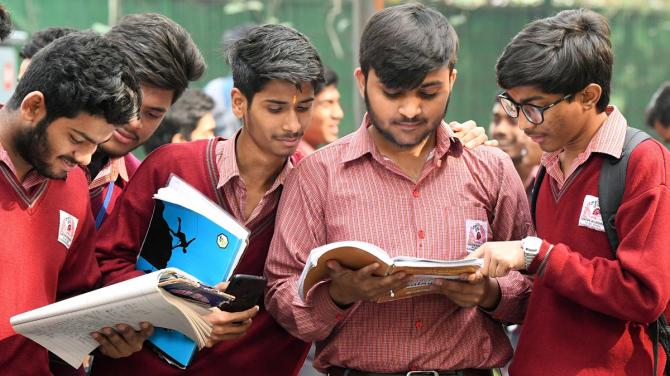
The year 2026 promises plenty of opportunities for ambitious job seekers across India.
With numerous government examinations scheduled throughout the year, candidates have multiple pathways to enter prestigious positions in the civil services, defence, banking, railways and various state administrations.
Here's a comprehensive list of the top government competitive exams you should consider preparing for, along with their tentative timelines, eligibility criteria, syllabus overview and proven preparation methodologies.
1. NDA and National Academy Examination (NDA I and II)
Notification (I): December 10, 2025
Last Date (I): December 30, 2025
Exam Date (I): April 12, 2026
Notification (II): May 20, 2026
Last Date (II): June 9, 2026
Exam Date (II): September 13, 2026
Eligibility: Class 12 passed/appearing; age limit 16.5 to 19.5 years (varies by NDA cycle)
Exam Pattern: Written examination (offline, 900 marks) + SSB (Services Selection Board) interview
Syllabus: Mathematics, General ability test (English, General knowledge)
Difficulty Level: Moderate to high; competitive
Duration: Written exam of two and a half hours per paper
2. CDS (Combined Defence Services)
Notification Release: December 10, 2025
Application Deadline: December 30, 2025
Exam Date (I): April 12, 2026
Exam Date (II): September 13, 2026
Eligibility: Bachelor's degree; age limit 19 to 25 years (varies by service)
Exam Pattern: Written test (objective) + SSB interview
Syllabus: English, General knowledge, Elementary mathematics
Difficulty Level: Moderate
Duration: Two hours per paper
3. State Public Service Commission Exams
Expected Notification: December 2025 to March 2026
Expected Prelims: April to June 2026
Expected Mains: July to November 2027
Eligibility: Bachelor's degree; age generally 20 to 37 years (relaxations for OBC/Female/SC/ST up to 42 years)
Exam Pattern: Prelims (objective), mains (descriptive) followed by personal interview and personality test
Syllabus: General studies, Current affairs, Language, State-specific topics and optional subjects
Difficulty Level: High
Duration: Two to three hours per paper
4. UPSC Civil Services Examination (CSE)
Notification Release: January 14, 2026
Application Deadline: March 3, 2026
Prelims Exam Date: May 24, 2026
Mains Exam Date: August 21, 2026 onwards
Eligibility: Bachelor's degree from recognised university; six attempts for those in the general category, nine for OBC
Age Limit: 21 to 32 years (general); 21 to 35 years (OBC); 21-37 years (SC/ST) and 21-42 years (with relaxations for persons with benchmark disabilities)
Exam Pattern: Will be held across two stages -- prelims (objective, 400 marks) and mains (descriptive, 1,750 marks), followed by a personal interview round.
Syllabus: General studies (history, geography, polity, science, technology, current affairs), CSAT (reasoning, comprehension, quantitative), optional subjects, essay writing
Difficulty Level: Highly challenging; requires 12+ months dedicated preparation
Duration: Two hours per paper (prelims); three hours per paper (mains)
5. Central Armed Police Forces (CAPF)
Notification Release: February 2026
Application Deadline: March 2026
Exam: July 2026
Eligibility: Bachelor's degree; age 20 to 25 years
Exam Pattern: Written examination followed by physical test, document verification and interview.
Syllabus: General studies, General science, General intelligence and reasoning, Essay and comprehension
Difficulty Level: Moderate to high
Duration: Two hours (Paper I) and 3 Hours (Paper II)
6. UPSC Combined Medical Services (CMS)
Notification Release: March 11, 2026
Application Deadline: March 31, 2026
Exam Date: August 2, 2026
Eligibility: MBBS degree/provisional registration with specialised medical knowledge.
Exam Pattern and Syllabus: Two papers (General medicine and pediatrics and surgery, Gynaecology and obstetrics) and Preventive and social medicine.
Difficulty Level: High
Duration: Two hours per paper
7. SSC Combined Graduate Level Examination (CGL)
Expected Notification: April 2026
Application Period: April to May 2026
Expected Tier I: June to July 2026
Eligibility: Proficiency/Skill test with document verification
Syllabus: General intelligence and reasoning, General awareness, Quantitative aptitude, English comprehension
Difficulty Level: Moderate
Duration: One to 2.5 hours per tier (duration varies significantly by tier)
8. AFCAT (Air Force Common Admission Test)
Notification Release: May to June 2026
Application Period: June to July 2026
Exam Date: August 2026
Eligibility: Bachelor's degree; age 20-26 years (varies by branch)
Exam Pattern: Computer-based test (CBT); single sitting
Syllabus: General awareness, Verbal ability, Numerical ability, Reasoning, Military aptitude
Difficulty Level: Moderate
Duration: Two hours
9. FCI (Food Corporation of India) Recruitment
Expected Notification: May-June 2026 or August–September 2026
Expected Application Period: June-July 2026 or September–October 2026
Expected Exam Period: August to November 2026
Eligibility: Bachelor's degree; age 20 to 27 years
Exam Pattern: CBT (two papers)
Syllabus: Reasoning, Quantitative aptitude, English language, General awareness and Numerical ability (depending upon post)
Difficulty Level: Highly competitive
Duration: 1.5 to two hours per paper
10. SSC Multi-Tasking Staff (MTS)
Expected Notification: June 2026
Expected Exam Period: August to September 2026
Expected Notification: May-June 2026 or August-September 2026
Eligibility: Class 10 pass
Age for most posts: 18 to 27 years (with relaxations)
Exam Pattern: CBT -- objective type (two sessions)
Syllabus: General intelligence and reasoning, Numerical aptitude, General English, General awareness
Difficulty Level: Low to moderate
Duration: 45 to 90 minutes
11. SSC Junior Engineer (JE)
Notification Release: June 2026
Application Period: June to July 2026
Paper I: November to December 2026
Paper II: January to February 2027
Eligibility: Diploma/degree in relevant engineering
Exam Pattern: CBT; two papers
Syllabus Coverage: General intelligence and reasoning, General awareness, General engineering (technical subjects based on stream)
Difficulty Level: Moderate to high
Duration: Two hours per paper
12. IBPS Probationary Officer (PO)
Notification Release: June to July 2026
Application Period: July to August 2026
Prelims: August 2026
Mains: October 2026
Eligibility: Bachelor's degree; age 20 to 30 years
Exam Pattern: Prelims (objective, 100 marks), Mains (objective, 225 marks) followed by interview.
Syllabus: Reasoning, quantitative aptitude, English language, General awareness, Computer knowledge, Data analysis and interpretation, Banking awareness, Letter and essay writing.
Difficulty Level: Moderate to difficult
Duration: One hour (prelims); three and a half hours (mains)
13. IBPS Clerk (Customer Service Associate)
Notification Release: July 2026
Expected Prelims: September to October 2026
Expected Mains: November 2026
Eligibility: Bachelor's degree; age 20 to 28 years. Computer literacy is mandatory.
Exam Pattern: Prelims (objective, 100 marks), mains (objective, 200 marks)
Syllabus: Reasoning, Numerical ability, English language, General/Financial awareness, Computer aptitude and Quantitative aptitude
Difficulty Level: Moderate
Duration: One hour (prelims); two hours and 40 minutes (mains)
14. GATE (Graduate Aptitude Test in Engineering)
Registration Start: August 2026
Exam Dates: February 2027
Eligibility: Bachelor's degree in engineering/science; final-year students allowed
Exam Pattern: CBT
Syllabus: Engineering mathematics, subject-specific topics (30 papers available)
Difficulty Level: High; technical depth required
Duration: Three hours
15. RRB NTPC Graduate (Non-Technical)
Application Period: September to November 2026
Expected Exam Period
CBT-1: December 2026 to January 2027
CBT-2: February to March 2027
Skill Test/Interview: April to June 2027
Eligibility: Bachelor’s degree; age limit between 18 to 33 years
Exam Pattern: CBT, skill test, document verification and medical test
Syllabus: General awareness, Mathematics, Reasoning, English/Hindi
Difficulty Level: Moderate
Duration: One and a half to two hours
16. UPSC Engineering Services (IES)
Notification Release: September 2026
Application Deadline: October 2026
Prelims: February 2027
Mains: June 2027
Eligibility: Bachelor's degree in engineering from recognised university
Exam Pattern: Prelims (objective), mains (descriptive), interview
Syllabus: Engineering discipline-specific subjects and general studies
Difficulty Level: High; specialised technical knowledge required
Duration: Two to three hours (prelims, two papers); three hours (mains, two papers)
17. SBI Probationary Officer (PO)
Expected Notification: December 2025 to January 2026
Expected Prelims: March 2026 (likely)
Expected Mains: April to May 2026
Eligibility: Bachelor's degree; age 21 to 30 years
Exam Pattern: Prelims, mains, group discussion and interview
Syllabus: Reasoning, Quantitative aptitude, English language, Current affairs, Banking awareness, Computer aptitude, Data analysis and interpretation
Difficulty Level: Moderate to high
Duration: One hour (prelims); three hours and 30 minutes (mains)
18. CISF Assistant Commandant (Executive)
Notification Release: December 3, 2025
Application Deadline: December 23, 2025
Exam Date: March 8, 2026
Eligibility: Bachelor's degree; candidate must be a serving CISF sub-Inspector (general duty)/Inspector (GD) with a minimum of four years of regular service as of January 1, 2026
Exam Pattern: Written test, physical test, document verification and interview
Syllabus: General intelligence and reasoning, General awareness and Quantitative aptitude
Difficulty Level: Moderate
Duration: Two hours
19. CBI/Delhi Police Special Branch (DSP)
Notification Release: December 24, 2025
Application Deadline: January 13, 2026
Exam Date: February 28, 2026
Eligibility: Bachelor's degree; age limit 40 years (45 years for SC/ST)
Exam Pattern: Computer-based test (three papers) along with descriptive, followed by interview/personality test
Syllabus: Reasoning, General awareness, Quantitative aptitude, English and Criminal law
Difficulty Level: Moderate to high
Duration: Two to three hours per paper
How to study and prepare for competitive government exams
1. Analyse the syllabus
Before commencing preparation, thoroughly examine the complete syllabus available on official websites.
Create a detailed checklist of all topics, subtopics and weightage distribution.
This foundational step prevents gaps in knowledge and ensures systematic coverage of all examination content.
2. Have a strategic study plan
Reverse-engineer your preparation timeline by working backward from the exam date.
Allocate specific durations to high-weightage subjects, medium-priority topics and low-weightage areas.
Incorporate buffer periods for revision (20 per cent of total preparation time) and maintain flexibility for unexpected circumstances.
3. Collect relevant study material
Choose only credible, officially recommended textbooks and study materials rather than consulting numerous sources simultaneously.
Supplement core materials with standard reference guides, government publications and authentic online resources.
Avoid overwhelming yourself with excessive study materials; focus on depth rather than breadth.
4. Block your daily schedule
Implement strategic time management through daily time blocks.
For example, you can dedicate morning hours (6 to 9 am) for concept learning, mid-morning (9 to 12 noon) for problem-solving practice, afternoon (2 to 5 pm) for mock tests and analysis and evening (7 to 9 pm) for revision.
This systematic approach enhances retention and builds consistent discipline.
5. Take regular mocks and practice tests
Solve previous years' question papers and take full-length mock tests at regular intervals (weekly or fortnightly).
These simulations will help you understand exam patterns, commonly asked questions, topic weightage and highlight your weak areas.
Performance analysis after each mock test guides targeted improvement efforts.
6. Revise with smart tools
Dedicate 30 to 40 minutes daily to revising previously learned concepts. Use flashcards, summary notes and mind maps for quick recall.
Spaced repetition significantly improves long-term retention compared to cramming techniques.
7. Follow current affairs and general knowledge
Read daily newspapers, follow reliable news websites and maintain a current affairs notebook. Government exams prioritise recent developments, policy changes and contemporary issues.
This continuous engagement ensures relevance to rapidly evolving examination patterns.
8. Don't ignore physical and mental wellness
Sleep for seven to eight hours every night, exercise regularly (at least 30 minutes daily) and eat nutritionally balanced meals.
Physical fitness enhances cognitive function, concentration levels and stress management -- critical components for sustained preparation excellence.
9. Work on concept clarity over rote learning
Although the syllabus may seem vast, you must prioritise conceptual understanding over mechanical memorisation.
This approach enables problem-solving flexibility and helps tackle unfamiliar question variations effectively.
10. Regular self-assessment is important
Track preparation progress through weekly self-evaluation.
Identify persistent weak areas requiring additional attention and celebrate incremental improvements to maintain motivation throughout your preparation journey.









 © 2025