
Jobs in the clean-energy sector are projected to reach 905,000, while energy efficiency-related jobs are expected to surge to 428,700 by 2029-2030.

India's clean energy technology industry is experiencing rapid growth, with recruitment increasing significantly due to policy support and investments in green energy. However, challenges remain in talent availability, skills alignment, and gender diversity.

A new study reveals that green hydrogen's potential as a sustainable fuel is contingent on the rapid decarbonisation of energy grids worldwide.

Amazon has announced plans to invest an additional $7 billion in renewable energy projects in India by 2030, building on its existing USD 4 billion commitment. This new investment will fund four major wind and solar projects with a combined capacity of 934 megawatts, making Amazon a leading corporate purchaser of carbon-free energy in the country.

The Indian government has released commemorative postage stamps honouring Dr Ram Bux Singh, known as the "father of modern biogas". Dr Singh made significant contributions to biogas technology in India and globally, including developing early gobar gas plants and establishing Asia's first gobar gas research station. The stamps were released on November 13, alongside a book detailing his legacy and biogas technology.

A new study reveals that achieving net-zero emissions involves more than just reducing greenhouse gases; it necessitates considering the broader environmental consequences of the technologies and resources employed. Different clean energy pathways exert varying pressures on mineral, land, and water resources, highlighting the need for a balanced approach to decarbonisation that addresses overall environmental sustainability.
India has prohibited the export of lithium-ion battery black mass to bolster domestic recycling capabilities and enhance the recovery of critical minerals like lithium, cobalt, nickel, and manganese. This move aims to ensure feedstock availability for local recyclers, reduce import dependence, and strengthen supply chains for electric vehicles and clean energy technologies, aligning with the Aatmanirbhar Bharat vision.

Prince William and Princess Catherine of Wales are set to conclude their three-day visit to India next week with a meeting with Prime Minister Narendra Modi in New Delhi. Their trip will also include attending the 2026 Earthshot Prize ceremony in Mumbai, focusing on climate action, innovation, and strengthening UK-India ties across various sectors.

Mahindra Last Mile Mobility won the Earthshot Prize 2026 in the "Clean Our Air" category for its work on electric rickshaws that makes the vehicles affordable to buy and run and provide sustainable solutions to combat air pollution.

India's venture capital equity funding for startups has remained largely flat over the past three years, with a slight increase in total funding but a sharp decline in the number of rounds, indicating a concentration of capital in fewer, larger deals, particularly in deeptech and AI sectors.

'India will become number one. There is no doubt about it. Andhra Pradesh will be number one in India.'
The Indian government has approved a Rs 2,814 crore capital expenditure support scheme to promote domestic processing of critical minerals like lithium and nickel. This five-year scheme, running until 2030-31, aims to reduce import dependence, develop value chains, and enhance India's self-reliance in essential materials for clean energy and modern technologies. It includes a 30% capital subsidy for setting up processing plants.

Atomic Energy Commission chairman Ajit Kumar Mohanty stated that India is on the verge of a significant technological transformation, driven by advancements in AI, quantum technologies, and other fields. Speaking at BIT Mesra's convocation, he emphasised the need for strong indigenous capabilities, skilled professionals, and interdisciplinary collaboration to achieve a developed India. Other speakers, including BIT Mesra's Chancellor and Vice Chancellor, echoed the importance of continuous learning and contributing to national progress.

The country received $ 6bn in clean energy investment in 2013, out of a total of USD 62bn from 2006 to 2013.

The climate finance battle once again exposes the deep divide between rich and developing nations.

India's manufacturing and services sectors are set to create over 35 crore new jobs by 2030, necessitating urgent skilling and industry-academia collaboration. Key sectors like automotive, logistics, telecom, clean energy, and textiles will drive this growth, highlighting the need for competency-driven learning to prepare the workforce.

Tata Power has partnered with Norway's Ocean Sun to introduce innovative membrane-based floating solar technology to India. A 300 kWp pilot project will be undertaken at Tata Power's Mulshi reservoir in Maharashtra to evaluate the technology's performance, reliability, and cost-effectiveness under Indian conditions. This collaboration aims to leverage India's significant floating solar potential and contribute to its renewable energy goals.

Reliance Industries has delivered the first batch of solar modules from its green energy complex in Jamnagar, Gujarat, marking the operational rollout of its New Energy business. The company is developing an integrated clean energy manufacturing ecosystem, including solar modules, batteries, green hydrogen, and bio-energy infrastructure.
With more than 90 per cent of worldwide investment, the G-20 members continue to dominate the clean energy landscape.
He emphasised that technology sharing and availability of funding are the two crucial links for ensuring the commercial availability of SMR technology.

India has banned the export of lithium-ion battery black mass with immediate effect to ensure domestic availability of critical minerals and strengthen its battery recycling industry. This move aims to address the underutilisation of domestic recycling capacity due to inadequate feedstock and reduce reliance on imports for essential minerals like lithium, cobalt, nickel, and manganese.

The International Atomic Energy Agency (IAEA) has concluded its first physical protection advisory mission to Pakistan, stating that the country has established a "robust nuclear security regime" for its nuclear material and facilities. The mission, conducted from September 28 to October 9, reviewed Pakistan's legislative framework and assessed measures at a nuclear facility, noting continuous improvements and contributions to nuclear security expertise.

Tata Power on Saturday said it has inked a pact with IIT Delhi to work together on clean energy and other projects that can be transformed from research and development level to pilot stage. Tata Power, one of India's largest private sector integrated utilities, and the Indian Institute of Technology (IIT) Delhi have signed a Memorandum of Understanding (MoU) to collaborate in areas like smart grid technology, clean energy solutions, a company statement said. Considering the large number of experts with their excellence in different fields in IIT Delhi and Tata Power, there is an immense potential to collaborate between academia, research and domain experts from business with a high transformational impact, it added.

After the nuclear sector, the focus for the United States is India's clean energy.

Google has chosen four Indian startups -- Terrastack, Varaha Climate, Farmers for Forests, and Climitra Carbon -- for its inaugural Google DeepMind Accelerator: AI for the Planet programme.
India's power sector is undergoing a significant transformation, driven by a planned shift towards renewable energy and ambitious capacity expansion targets, with major players like NTPC, JSW Energy, Adani, and Tata Power prioritising predictable returns. However, execution challenges and valuation concerns remain critical factors for sustained growth.

To mobilise private capital in the clean energy sector, the US has agreed to place a field investment officer in India apart from hosting a series of events to overcome strategic barriers in accelerating institutional and private financing.

Prince William, speaking at the Earthshot Prize 2026 Impact Assembly in Mumbai, lauded India's progress in sustainable development and climate solutions. He highlighted India's achievement of 50% non-fossil fuel electricity capacity ahead of schedule and its innovative Earthshot Prize winners and finalists, showcasing how growth and environmental protection can coexist.
All the growth, it says, has meant that investment capital has poured into the sector with clean energy stocks easily outpacing the broader markets. The NASDAQ's 'Clean Edge' index was up 66.67 per cent last year, compared to just 3.53 per cent for the S & P 500 and 9.81 per cent for the NASDAQ Composite. Overall clean energy index returns particularly for wind and solar companies have fared even better.

Prime Minister Narendra Modi has announced a significant 24,000 crore Nepalese rupees development package for Nepal, further solidifying bilateral ties and launching key India-assisted projects, including a new cross-border passenger rail link between Ayodhya and Janakpur Dham. This move signals a major reset in relations after a period of strain over border disputes, with both leaders emphasising deep kinship and mutual support.
Wipro, the $5 billion company with interests in IT services, consumer care, lighting and furniture, is entering a new set of businesses which will enable the company to leverage its growth on the clean energy and agriculture sectors. The company is readying a plan to include alternate energy, water treatment, food and agriculture businesses under its infrastructure business - Wipro Infrastructure Engineering Limited.
This is expected to mobilise up to $400 million to provide clean and renewable electricity to up to 1 million households by 2020
President George W Bush has said the US would help countries like India and China to develop and deploy clean energy technology.

The Pew Charitable Trust, in its report, said India's clean energy sector continued to flourish in 2011, with private investment increasing 54 per cent to $10.2 billion, placing the country at number 6 spot among the G-20 nations.

The government had in July 2010 imposed a cess on coal at an effective rate of Rs 50 a tonne.
Researchers at IIT Indore have developed a groundbreaking method to convert carbon dioxide and glycerol, two common waste materials, into valuable green chemicals like lactic acid and formic acid in just seven minutes. This low-energy process uses a specially designed ruthenium-based catalyst and microwave heating, offering a sustainable solution for waste management and green manufacturing.
China is now the global leader in wind energy.
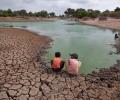
Renewable energy is mistakenly restricted to electricity.
America will have to shell out $4.4 trillion if it needs clean energy, according to a plan drawn by Google Inc that calls for a big push in wind, solar and geothermal power to replace fossil fuels.
A new study by The Energy & Climate Initiative Society (ENCIS) predicts that AI adoption in India's power generation sector will surge from 35% to 65% by 2030, becoming a core operational capability. The study highlights that nearly seven out of ten professionals see power generation as offering the best opportunity for efficiency gains through AI, driven by India's expanding digital infrastructure and significant investments from energy giants. Predictive asset management and proactive maintenance are identified as key areas for AI application, with efficiency being the primary driver for AI investments.
