The DGCA has revised air ticket refund norms, allowing passengers to cancel or change tickets without additional charges within 48 hours of booking, subject to conditions. The new rules also address name correction fees and medical emergency cancellations.

While this doesn't mean that air travel is now a breeze, what it does mean is that you now have more rights and more control over your money.

The aviation regulator stated that the "primary cause" of the disruptions was IndiGo's failure to make "adequate arrangements" to meet the revised staffing, duty-time and rostering requirements under the newly implemented Flight Duty Time Limitations scheme.

Aviation regulator Directorate General of Civil Aviation (DGCA)'s chief Faiz Ahmed Kidwai on Friday requested the cooperation of all pilots to ensure smooth flight operations amid massive IndiGo flight disruptions.
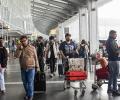
Aviation watchdog DGCA has set up a four-member committee to carry out a comprehensive review and assessment of the circumstances that led to the massive flight disruptions.
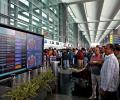
Pilots' body Airlines' Pilots Association (ALPA) India on Friday took 'strong' objection to safety regulator Directorate General of Civil Aviation (DGCA)'s 'selective and unsafe' relief to domestic carrier IndiGo, amid widescale cancellations, saying the decision sets a dangerous precedent.
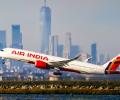
The Directorate General of Civil Aviation (DGCA) is probing the incident reported on November 26. The regulator had asked the airline to carry out an internal probe to fix the responsibility and ensure that such incidents do not occur in the future.

A bench of Chief Justice Devendra Kumar Upadhyaya and Justice Tushar Rao Gedela also asked how could other airlines take advantage of the crisis situation and charge hefty sums for tickets from the passengers.
'It has got to be the biggest error in aviation. If it is the biggest error, then all those individuals in positions of power should be removed because they have caused the biggest meltdown in Indian aviation history.'
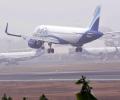
'Where rostering systems are automated and duty time software interfaces directly with DGCA, the assertion that they suddenly discovered crew shortages is simply implausible.' 'If adequate crew planning hasn't materialised within 12 to 24 months from inception, how will 45 days -- from December 5 to February 12 -- suddenly resolve matters?'
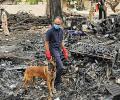
'The crash site must be secured because something small -- like a pipe or hydraulic line -- could hold a critical clue.'

The octogenarian was asked to wait due to heavy demand for wheelchair.

Against the backdrop of a significant number of flights getting delayed and cancelled and passengers facing tough times, the regulator has come out with a set of Standard Operating Procedures (SOPs).
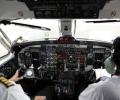
Pilots might soon be asked not to use perfume, mouthwash and tooth gel as that may result in positive breath analyser test. The Directorate General of Civil Aviation (DGCA) has sought comments on a draft Civil Aviation Requirements (CAR) wherein it has also proposed barring crew from using any "drug/formulation or use any substance such as mouthwash/tooth gel/perfume or any such product which has alcoholic content". Comments have been sought on the CAR, which pertains to procedure for medical examination of aircraft personnel for alcohol consumption, till October 5.

This is the third enforcement action against a Tata Group airline in over a month.
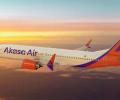
The Delhi high court on Wednesday agreed with the contention of Akasa Air that the DGCA is not completely barred from taking action against pilots who violate the terms of their employment agreements. However, the court did not grant any immediate relief to Akasa Air which sought direction to the DGCA and Union Ministry of Civil Aviation to take action against its pilots who have resigned without serving the notice period, saying it will first decide the issue of jurisdiction raised by the aviation sector regulator. Justice Manmeet Pritam Singh Arora said since the Directorate General of Aviation (DGCA) has contended it has no jurisdiction to consider a representation made by the airline against the defaulting pilots under the extant law as it was a contractual dispute, the court will have to first decide the issue of jurisdiction before passing any other direction.

The fledgling Akasa Air has told the Delhi high court it is in a "state of crisis" following the "sudden and abrupt" resignation of over 40 pilots who left the airline without serving the mandatory notice period. The airline and its CEO Vinay Dube approached the high court with their petition on September 14, seeking a direction to the Directorate General of Civil Aviation (DGCA) to take coercive action against these pilots for their "irresponsible actions". The high court has fixed the plea for hearing on Friday.

The safety and security of citizens is primary for the government, he said.
Amid concerns over alleged poaching of pilots, Air India told Akasa Air that petitioning a competitor to collude in restricting the rights of staff to change an employer could potentially violate the competition law. Air India CEO and managing director Campbell Wilson wrote a letter to Akasa Air CEO Vinay Dube against the backdrop of Akasa Air raising concerns about Air India Express hiring pilots from the airline. The letter, dated September 21, followed a letter by Dube to Tata Sons on September 11.

On July 25 and 26, the regulator's team carried out the surveillance of Air India in the areas of internal audit, accident prevention work and availability of required technical manpower.
This is the second time in less than a week that the watchdog has taken enforcement action against the airline in connection with unruly passenger behaviour.
The sources said that an ATC posted at the Indira Gandhi International Airport in New Delhi was subjected to the drug test.
In an advisory, DGCA said there are provisions under the civil aviation requirement for action to be taken by the airline to deal with unruly passengers.

Increasing cases of aviators in India complaining of fatigue and in some cases leading to death have spurred the DGCA to bring in draft rules to reduce stress.

The woman said she was constrained to approach the court because Air India and the DGCA failed to treat her with care and responsibility after the incident.
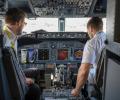
DGCA's move seeks to ban perfumes for pilots as they have alcohol and can affect the results of breathanalyser tests. But the FAA and EASA have different standards, says senior journalist Shobha John.

The incident came to the notice of the Directorate General of Civil Aviation (DGCA) only on January 4 and the latest actions are for violations of various norms.
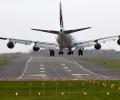
Indian civil aviation norms don't apply to foreign aviation companies, experts said.
Citing various aspects, the forum has appealed to the DGCA to "withdraw the harsh punishment and suspension of the PIC". it said.
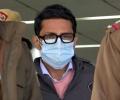
An airline official said the ban is with immediate effect and is in addition to the 30-day ban it had imposed on the individual earlier.

Nearly two months after the urination incident on its New York-New Delhi flight, Air India on Tuesday said it has closed the internal probe into the case and will assist the flight's pilot-in-command with an appeal against the suspension of his licence by DGCA as the airline deems the action as "excessive".
According to e-mails accessed by ANI, the Air India cabin crew supervisor had reportedly sent out emails on November 27 at around 1 pm to the head of the Inflight Service Department (IFSD), base operations in India, Lead HR head of IFSD, and head of the northern region of IFSD and of complaints (customer care), informing them about the incident.
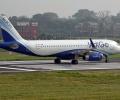
IndiGo had on May 9 said the boy was denied permission to board the Ranchi-Hyderabad flight as he was visibly in panic.
The airline said it has filed a police complaint about the incident, but did not specify when the 30-day ban came into effect.
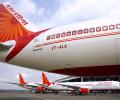
Holding that Air India's conduct appeared to be 'unprofessional', aviation regulator Directorate General of Civil Aviation (DGCA) on Thursday issued notices to the officials and crew of the New York-Delhi flight, asking why action should not be taken against them for 'dereliction' of duty while handling the November 26 'urination' incident.

In his petition, Kamra said he was banned by IndiGo for a six-month period before its internal committee even arrived at a decision while other airlines -- Air India, Spicejet and GoAir -- imposed an indefinite ban on him.
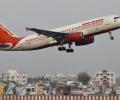
Air India on Friday opposed before the Delhi high court the reinstatement and payment of back wages to over 40 pilots, saying that unless resignation is specifically made prospective, it is effective immediately and a pilot cannot withdraw it subsequently. "Unless otherwise specified, resignation is effective immediately. "There is no competence (with pilots) to withdraw on the ground that I am still serving notice period," Solicitor General Tushar Mehta, representing Air India, told a bench headed by Justice Rajiv Shakdher.

Air India's handling of an incident in which an inebriated male flier allegedly urinated on a woman co-passenger suggests an urgent need for stricter rules to deal with unruly passengers, according to legal and aviation experts.
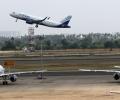
The aviation regulator Directorate General of Civil Aviation (DGCA) had last week imposed a fine of Rs 5 lakh on the airline for denying boarding to a specially abled child at Ranchi airport on May 7.
The Directorate General of Civil Aviation (DGCA) has released a draft procedure that calls for testing pilots, other aviation personnel and crew members for psychoactive substances before they take to the skies. The Indian civil aviation regulator has sought comments from stakeholders over the next 30 days before issuing a regulation to this effect. Asking airlines and airports to do random checks on crew and air traffic controllers, DGCA proposed that violators be suspended for a minimum of three years or their licence be permanently cancelled as maximum punishment.
 © 2026 Rediff.com - Investor Information - Advertise with us - Disclaimer - Privacy Policy - Sitemap - Feedback - About us - Terms of use - Grievances