
Engineering product firms were among the first to embrace AI and machine learning. And the early adopters are reaping gains.

Tata Consultancy Services (TCS) has announced a global partnership with AI major Anthropic to help enterprises accelerate their adoption of artificial intelligence, including equipping 50,000 TCS employees with Anthropic's Claude AI models.
Oracle India head Shailender Kumar states that Indian businesses have transitioned from AI pilot projects to full-scale deployment, realizing significant benefits. While challenges like cost, skills, and infrastructure exist, companies are keen to adopt AI once tangible advantages are proven, with governance and regulation evolving alongside the technology's maturity.
The Indian Institute of Management Ahmedabad (IIMA) has opened applications for the second batch of its two-year Blended MBA Programme in Business Analytics & Artificial Intelligence (BPGP: BA & AI). The programme, offered by the Krishnamurthy Tandon School of AI, aims to develop professionals who can integrate AI technology with management principles, addressing the industry's need for leaders capable of driving transformation and managing complex IT infrastructure, including data centres.

India's markets regulator, Sebi, is set to issue comprehensive guidelines for the responsible use of Artificial Intelligence (AI) in capital markets, aiming to balance technological innovation with robust investor protection. The guidelines will focus on disclosures, accountability, and human oversight in critical AI-driven decisions.

The NCERT has released a 20-hour introductory module on computational thinking (CT) and artificial intelligence (AI) for students in classes 9 to 12. Developed with IIT Madras and IIT Jodhpur, the module aims to educate students on AI's workings, limitations, ethical use, and data privacy through activity-based learning.
A national study of top 75 Indian B-schools reveals a significant competency gap in AI skills among management graduates, with industry expectations far exceeding current MBA capabilities. A new framework by AIMS, EPSI, and IMC highlights the urgent need for management education to adapt to an AI-led workplace, emphasizing behavioural competencies alongside data fluency.

A World Bank report, 'The Promise of Artificial Intelligence', states that AI presents a historic opportunity for low- and middle-income countries to overcome development challenges, despite many being unprepared. It advises these nations to adopt and adapt existing AI tools rather than focusing on building frontier models immediately. The report also notes a significant gap in AI adoption and job automation between high-income and developing countries.
State Bank of India (SBI) Chairman C S Setty has warned that artificial intelligence-related errors could cascade across interconnected financial systems, creating significant governance risks for institutions. He emphasised the critical need for clearly defined permissions, transaction limits, audit trails, and human intervention mechanisms as banks increasingly deploy autonomous AI systems.
Karnataka Chief Minister D K Shivakumar met with AI major Anthropic to discuss a long-term partnership aimed at accelerating AI adoption across governance, education, healthcare, research, and the state's startup ecosystem. The collaboration focuses on deploying AI solutions responsibly, ensuring data privacy, and developing AI-focused skilling programmes and an AI University.
Microsoft India and South Asia President Puneet Chandok highlighted at the Bengaluru Tech Summit that while AI adoption is straightforward, achieving tangible impact on the ground presents the greater challenge. He urged leaders not to delay embracing AI, drawing parallels with ISRO's innovative approach to space exploration. Chandok also stressed India's crucial role in global AI development, stating that if AI works for India's diverse population, it will work for the world.

India has secured a spot among the top 10 leading emerging-market performers in artificial intelligence (AI) readiness, with private investment in AI more than tripling to USD 4.1 billion in 2025, according to a new World Bank report.

A man accused of strangling a 65-year-old woman for gold in Thrissur in 1995 has been arrested in Kollam after evading capture for nearly three decades by using a false identity. Police used AI to enhance an old photograph and track him down.

A new report by BinQle indicates India will face a significant demand-supply gap of artificial intelligence professionals by 2026, requiring 1.4 million AI experts against an available pool of 400,000. This shortage could hinder growth for enterprises and GCCs, driving up salaries and necessitating continuous reskilling and strategic talent development.
Preeti Lobana, Google India VP, stated on Wednesday that Google views AI as an "economic equaliser" and a democratic technology. Speaking at Google Cloud Day, she highlighted AI's potential to empower businesses, especially SMEs, in India's journey towards Viksit Bharat 2047. Google has committed USD 15 billion to scale India's digital and AI infrastructure, including an AI hub in Visakhapatnam, to support the IndiaAI Mission.

Experts at the TIS-H Clinical AI Summit 2026 highlighted the critical need for real-world evaluation of AI solutions in healthcare. They stressed that promising results from development or pilot programmes do not guarantee effective and safe deployment in hospitals, emphasising clinical relevance, validation, and integration into existing workflows.
ServiceNow has launched AI Workflow Factory and Autonomous Engineer, new solutions designed to help enterprises integrate and scale AI workflows, closing execution gaps caused by legacy infrastructure. These tools aim to accelerate business operations, with Indian partners already adopting them, reflecting India's faster AI operationalisation compared to the global average.

Airtel Business CEO Sharat Sinha stated that evolving architecture and methodologies for safely deploying Artificial Intelligence, coupled with adequate guardrails, are essential to unlock productivity gains. He welcomed the government's upcoming consultation paper on AI regulation, focusing on safety, deepfakes, and a human-first approach. Sinha also highlighted AI's role in driving demand for digital infrastructure and Airtel's growth in cybersecurity and fraud prevention.
TRAI has proposed a comprehensive draft framework for the responsible use of artificial intelligence in telecom networks. The guidelines mandate service providers to adopt board-approved AI policies, establish dedicated governance and safety committees, and report serious AI-related incidents to the regulator. Entities will be accountable for AI system outcomes, classify AI risks, ensure human oversight, and maintain inventories of all AI systems.
IBM Chairman and CEO Arvind Krishna details the company's substantial annual investment in India and its global USD 10 billion commitment to quantum computing over the next five years. He addresses the potential for AI to displace 10-20 per cent of jobs, particularly in the BPO sector, while also highlighting India's significant opportunity in the AI ecosystem. Krishna urges India to accelerate AI adoption, scale existing tech initiatives, and build its semiconductor manufacturing, advocating for a light-touch approach to AI regulation and emphasizing critical thinking in an AI-driven economy.
SBI Chairman CS Setty has cautioned against the potential for Artificial Intelligence (AI) systems to exclude rural, small, and new-to-credit borrowers due to inherent biases. Speaking at an event, Setty emphasised that financial inclusion must be a core principle in the design and deployment of AI tools, highlighting the responsibility of bank boards to ensure fair and inclusive systems. He also noted the importance of AI training for bank directors.

Former Supreme Court Justice Abhay Oka warned that major cities might be forced to adopt mandatory face mask usage within 20-25 years due to environmental degradation. He stressed that protecting the environment is a fundamental constitutional duty, countering the misconception that humans own the Earth. Justice Oka also encouraged students to study law and use AI responsibly.
OpenAI has launched local processing of AI requests in India for its API, enabling businesses and developers to run workloads on its GPT-6 Luna model within the country. This initiative addresses data localisation needs by ensuring both processing and data storage occur in India, removing a significant barrier for Indian organisations, especially in sectors like financial services.

IT services giant Wipro has launched an Applied AI Centre of Excellence (CoE) in Bengaluru, focusing on Anthropic's Claude models. This initiative aims to accelerate enterprise AI adoption, train 10,000 experts, and integrate AI into core business workflows and Wipro's internal operations.
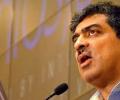
Infosys co-founder Nandan Nilekani has dismissed fears that artificial intelligence will lead to job losses in India's IT services sector, calling such concerns "hogwash" and "disaster marketing." Speaking at the Bloomberg New Economy Forum 2026, Nilekani argued that AI will actually increase demand for IT firms as it necessitates complex business transformations and creates new types of jobs, particularly in small businesses.

Information technology (IT) giant Wipro has a strong pipeline of large artificial intelligence (AI)-led deals in the health care vertical, according to a senior company executive. Health care stands as the third-largest vertical for Wipro, contributing roughly 14 per cent to the company's overall revenue. Moreover, while most other verticals reported negative growth, health care demonstrated robust growth of 9.9 per cent year-on-year and 7.5 per cent quarter-on-quarter in constant currency during the October-December quarter.
A new IDC report reveals that artificial intelligence is prompting organisations worldwide to retrieve and utilise previously archived, "cold-tier" data for AI training, significantly increasing its perceived value and leading to longer data retention periods and a burgeoning market for datasets.
HCLTech has launched 'HCLTech Pulse', a new business unit designed to help enterprises with annual revenues between USD 500 million and USD 5 billion accelerate their adoption of artificial intelligence and modernise their technology infrastructure, targeting a USD 400 billion global market opportunity.
A World Bank report highlights how Artificial Intelligence-powered weather forecasts have enabled small farmers in Telangana, India, to save up to USD 560 by adapting their farming practices to specific risks. The report, "The Promise of Artificial Intelligence," advocates for developing countries to rapidly adopt small, low-cost AI tools to enhance productivity, improve government services, and avoid missing out on the AI revolution.

A culture of science and innovation must be embedded in society wherein people not only use new technology but understand it as well. Without this, obscurantism and blind faith can sit side by side with digital technology and, in fact, use the same technology to reinforce their hold on people, says Shram Saran.

Industry leaders at an AIMA panel discussion emphasised the need for businesses to quickly adapt to changing market conditions and invest in technologies like artificial intelligence to build resilience and achieve long-term growth. They highlighted the current era of uncertainty driven by geopolitical tensions, supply chain disruptions, and rapid regulatory changes, stressing that tactical responses are as crucial as long-term strategy.
A new report from Cambridge University Press & Assessment highlights the critical need for Indian policymakers to collaborate with teachers in developing AI education policies. The study emphasizes investing in teacher professional learning and involving educators and learners in the design and evaluation of AI tools to ensure policies are grounded in classroom realities and promote critical AI literacy.
A SAP study reveals that Indian enterprises are rapidly moving from AI experimentation to value-driven implementation, positioning India as a global leader in enterprise AI adoption. Indian organisations plan significant investments in AI, with projected fivefold growth in Agentic AI returns and a high percentage of businesses having defined AI strategies and dedicated AI leaders.

The SCO Civilisational Dialogue Forum, hosted by India, concluded with the adoption of the Indraprastha Communique. This outcome document advocates for the protection of cultural heritage, combating illicit trafficking, and promoting respect for all civilisations. The three-day forum, inaugurated by PM Modi, saw participation from SCO member countries, including Pakistan, and laid out a roadmap for future cultural cooperation and heritage preservation.
LinkedIn has partnered with Wadhwani AI to launch 'AI for Future SMEs,' a digital empowerment programme for 2,000 small and micro entrepreneurs in northeast India. This 12-month initiative aims to build AI literacy and digital readiness in underserved regions, focusing on practical, business-focused training to improve productivity and market engagement in sectors like handloom, handicrafts, and tourism.
Bharti Airtel Chairman Sunil Mittal has called for proactive regulation of Artificial Intelligence, stating that waiting for an "accident" before implementing safeguards would be "foolish." Speaking at the Bloomberg New Economy Forum 2026, Mittal highlighted the struggle of governments to keep pace with AI's rapid growth and emphasised the need for a global regulatory framework, similar to the aviation sector, to ensure national security and responsible development.
Kerala Chief Minister V D Satheesan announced the state's vision to become a national hub for artificial intelligence and emerging technologies, coinciding with the launch of Naviq Technology by IBS Software Group. The state government is implementing initiatives like an AI-powered dashboard, a Global Job Watch Tower, and curriculum revisions to align with technological advancements and foster skill development in AI and semiconductor sectors.

Finance Minister Nirmala Sitharaman has called for enhanced accountability and safeguards for artificial intelligence, particularly as it integrates into critical sectors like finance. Speaking at the Global Fintech Fest, she highlighted the dual nature of AI, capable of accelerating transactions but also amplifying fraud and cyberattacks. Sitharaman stressed the need for human and institutional responsibility in AI-driven decisions, urging regulators and companies to scrutinise high-risk AI applications. She also proposed a federated industry platform for Indian tech companies to navigate international regulations and ensure tax compliance globally.
BRICS leaders, in their New Delhi Declaration 2026, have called for wider access to Artificial Intelligence resources and stronger international cooperation to ensure the technology is safe, secure, inclusive, and reliable. The declaration outlines a broad technology agenda covering AI, cybersecurity, digital public infrastructure, telecom, quantum technologies, and advanced manufacturing, committing to implement the grouping's statement on 'Global Governance of Artificial Intelligence'.
Hexaware Technologies has announced Vivek Jetley as its CEO-Designate, succeeding Srikrishna Ramakarthikeyan. Jetley will take over on October 28, 2026, with a mandate to accelerate growth and scale the company's AI-led services globally, leveraging his extensive experience in AI and enterprise transformation.
