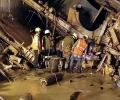
'The recent occurrences of tunnel collapses during construction have prompted a critical assessment of current implementation methodologies and the necessary improvements to prevent such incidents from recurring.'

The multi-agency search operation to trace 33 missing persons in cloudburst-hit Kishtwar district in Jammu and Kashmir has entered its eighth day. The death toll stands at 65, and rescue efforts are ongoing with the help of multiple agencies and heavy machinery.
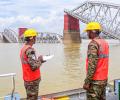
A specialist team of Indian Army engineers conduct a comprehensive assessment of earthquake-affected infrastructure in Myanmar.

People along the Line of Control and International Border in the Jammu region continue to live under the shadow of death, with unexploded mortar shells fired by Pakistani troops still embedded in farmlands and residential areas even though hostilities have stopped for nearly a week. IMAGE: Kindly note that this image has been posted for representational purposes only. Photograph: / Rediff.com Despite the May 10 understanding between India and Pakistan, locals describe the border areas as a 'death trap'. Sixty-two-year-old Balvinder Singh, who returned to his home in Pargwal sector on May 14, recounted a narrow escape. "Two shells exploded in our compound, damaging our house. Three more landed on our farmland. We were terrified and told our family to stay away from the fields until the Army could help," Singh told PTI. Army engineers later came to the village and safely defused the unexploded shells, bringing a temporary sense of relief. "Fear is writ large on the faces of people to these death traps in border hamlets", he said. Scenes of destruction are evident rooftops torn apart, broken houses, windows punctured by shrapnel, and carcasses of cattle lying in pools of blood. The acrid smell of gunpowder still lingers in the air. Sardar Gurmeet Singh faced a similar ordeal. His family could not re-enter their home as a live mortar shell had sunk into the compound in a village close to the International Border. "The army's bomb disposal squad removed it after four days, allowing us to finally enter, back home," he said. Indian Army engineers have launched a sweeping clearance operation across border districts, defusing over 80 unexploded shells in the past five days -- including 6 in Pargwal, 19 in Rajouri, 42 in Poonch, and 12 along the IB. "These shells, mostly 120 mm calibre, have a range of 15 to 30 km and pose a serious threat to both civilian and military targets," an Army officer said. "Many of them were fired by Pakistan during recent hostilities." On May 7, the Indian Army launched Operation Sindoor, conducting precision strikes on nine terror hubs in Pakistan and Pakistan-occupied Jammu and Kashmir (PoJK) in response to the April 22 terror attack in Pahalgam that killed 26 people, most of them tourists. The subsequent retaliation by Pakistan pushed the region to the brink of war. From 7 to 10 of May, 27 civilians were killed and over 70 injured in Pakistani shelling in the Jammu region. Farid Din Gujjar, a resident near the border, expressed fear about returning to his fields. "Several shells created deep craters in our paddy land. We cannot resume work until all unexploded ordnance is cleared. It's a death trap," he said. Army units, in coordination with Jammu and Kashmir Police, have evacuated high-risk zones and issued stern warnings to residents not to touch any suspicious objects or unexploded shells. In one major operation, 42 live shells were safely destroyed in the Poonch villages of Jhullas, Salotri, Dharati and Salani. "All safety protocols were followed. The shells posed a serious danger to local lives," an Army spokesperson said, calling the effort a 'continued commitment to protect civilians and restore normalcy'. Poonch saw the vast majority of deaths due to shelling. Security officials said that Pakistan used a mix of mortar shells, armed drones, and missiles during the shelling spree, specifically targeting civilian habitations and border towns in Jammu, Samba, Kathua, Rajouri, and Poonch. As clearance operations continue, the border residents are slowly returning to their homes, but with caution, fear, and lingering uncertainty about shelling that may yet happen in the future.
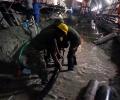
Eight persons remained trapped inside the tunnel since February 22, after a part of it collapsed.
Cadaver dogs from Kerala police have joined the rescue operation at the partially collapsed SLBC tunnel in Telangana, where eight people have been trapped since February 22. The dogs, specially trained to locate missing humans and human bodies, are being used to identify the presence of survivors in the tunnel. Rescue personnel, including NDRF teams, are also working tirelessly to reach the trapped individuals amidst challenging conditions, including slush and seepage of water.
'Balancing tunnel developments with ecological realities is a major challenge and, when overlooked, can contribute to mishaps.'

Rescue efforts continue in Telangana for eight people trapped in a collapsed tunnel, but hopes for their survival are fading as experts from the Geological Survey of India and the National Geographical Research Institute have been brought in. The tunnel is filled with debris, making the rescue operation extremely difficult. Despite relentless efforts by the Indian Army, Navy, NDRF, and other agencies, no breakthrough has been achieved so far.
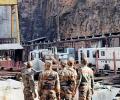
A team of experts involved in rescuing eight people trapped in a partially collapsed tunnel in Telangana have reached the end of the tunnel, but debris is hindering further progress. The rescue operation, described as one of the most complex in the world, continues with experts from the Indian Army, Navy, NDRF, and GSI working tirelessly to find a breakthrough. Despite continuous efforts and oxygen pumping, there has been no contact with the trapped individuals.

Despite facing inclement weather, rising water levels and the challenges of working through the night, the Madras Engineers Group team completed the bridge at landslide-hit Choorlamala in Wayanad.

Grim and sad scenes from landslide hit Wayanad district.

Unfazed by the 'sit-in' by the Chinese border guards at Demchok in Ladakh that led to a face-off with Indian troops earlier this week, Army engineers have finished the work for laying a water pipeline for irrigation purpose for local villagers in Ladakh division.
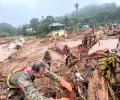
As rescue operations in the landslide-hit areas of this north Kerala district entered fifth day, rescuers unearthed more bodies and body parts, taking the death toll to 215, with around 206 people still reported missing.
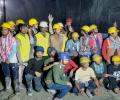
'An even bigger salute to all the rescue workers and all the agencies that worked tirelessly to rescue our 41 workers trapped in the Utarkashi Silkyara tunnel. Jai Hind!''
Manual horizontal digging will start soon in addition to the ongoing top-down drilling to rescue the 41 trapped workers in the Silkyara tunnel in Uttarkashi, the NDMA said on Monday.

The NDMA member further stated that the health conditions of the rescued workers will be monitored for the next 48 to 72 hours.

The vertical approach was one of the at least five options on which preparatory work had begun some days back, as anxiety mounted over the fate of the men trapped in the under-construction tunnel on Uttarakhand's Char Dham route.

'These are people whom very few give importance and they were doing a mammoth job for the nation.'

'It is flabbergasting to think that this heavenly region has, for decades, been coveted by India's aggressive neighbours,' says Claude Arpi after a recent visit to Ladakh. 'Wanting to use the newly created infrastructure to defend the borders after the clash of 2020 with China and the resulting standoffs, the home ministry is keen to boost border tourism to show that these areas are controlled by India.'
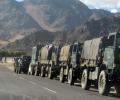
According to estimates, both India and China have deployed more than 50,000 troops in the Eastern Ladakh sector opposite each other despite the limited disengagement in the Pangong lake sector by both sides earlier this year.

The UT has been facing a widespread power shutdown Since Sunday owing to a deadlock between the Power Development Department (PDD) employees and the administration over the latter's bid to privatise electricity in the region.

In the early part of the Kargil operations, the army opted to more or less go it alone, sacrificing large numbers of men and officers in almost superhuman struggles against an enemy on higher ground. Some generals seem to think their predecessors would have succeeded better if they had had air resources at their disposal, points out David Devadas.
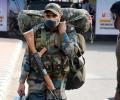
The military is mobilising to play a central role in holding patients exposed to the coronavirus.
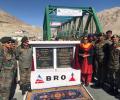
'These combat engineer units are used in war for building bridges for advancing troops.' 'Instead of training by building bridges over the Mula and Mutha rivers in Pune, they will practice by building bridges in Mumbai,' Indian Army chief General Bipin Rawat tells Ajai Shukla.

The army on Friday handed over the newly-built Bailey pedestrian overbridge to the Delhi government, just six days after it was tasked to do it. The bridge connects the parking lot of the stadium with other side of the street in Lodhi Road in south Delhi. The army engineers began work on the bridge on Saturday and completed its construction on Wednesday.
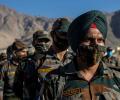
'China is mindful of the fact that it is not confronting the Indian Army of 1962. But the sabre rattling will continue.'

With the introduction of new notes, India will have denominations of Rs 1, 2, 5, 10, 20, 50, 100, 200, 500 and 2000.
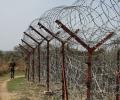
Army troops during routine patrolling detected a 50-mt long tunnel near a forward post along the Indo-Pak border in Jammu sector's Pallanwala sector, a defence spokesman said on Saturday.
Bengaluru has been attacked. Low intensity blasts in a span of one hour in six different places rocked the IT capital of India on Friday afternoon in which two people died and several others were injured. While the first seven blasts took place between 1.30-2.30 pm, the eighth blast blast took place at Hosaguddahalli, near Gopalan Mall, on Mysore road at around 5.30 pm and the ninth blast took place near the Army Engineering College on Mysore Road at 6.30 pm.

As the borewell was just one foot in diameter, army engineers have dug a parallel 55-ft tunnel to pull out the child, rescuers said. "It will be extended by 5 ft or so and then a trench will be dug towards the borewell," they added.
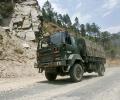
In 2005, the Border Road Organisation was asked to construct 73 roads in the strategically important regions along the Sino-India border but there has been huge delay in implementation of the project which has apparently left the army unhappy.
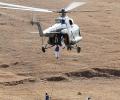
On till February 21, the 'Surya Kiran' series of exercises are aimed at enhancing inter-operability between the Indian and the Nepalese Army units in jungle warfare and counter terrorism operations in the mountainous terrain. The training also focuses on humanitarian aid and disaster relief, including medical and aviation support.

The New Year would be the "year of national solidarity", he said, adding that the nation would witness the birth of peace and justice in the year.

The FoBs were constructed by the Army Engineers in a record 117 days.
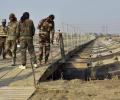
Many senior officers believe the chief should have taken a stronger stand against using army resources to help what one officer calls "a government-friendly godman".
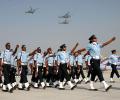
'Ex-servicemen engineers and technicians are true professionals worthy of being 'Make in India' agents. They can be trusted to bring long term dividends -- it is in their character to be long term loyalists!' says Air Marshal P V Athawale (Retd).

The Srinagar-Leh National Highway connecting Ladakh with Kashmir Valley was reopened for traffic on Tuesday after remaining closed for seven days due to heavy rains, boosting connectivity to the flood-hit region awaiting crucial supplies.

The decision to suspend the operations was taken after shutters of the Idamalayar and Cheruthoni dams, part of Idukki reservoir, were opened on Tuesday evening to release excess water.

Expressing concern over revelations by whistleblower Edward Snowden alleging that the NSA spied on Chinese leaders and businesses, China on Monday demanded that the US explain the facts and stop surveillance activities.
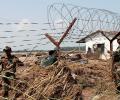
Seventy army installations, including camps, bunkers and posts, have been hit by the devastating floods in the Kashmir Valley but security forces have swiftly relocated the damaged and washed out posts to plug the gaps in the sensitive border areas.
 © 2026 Rediff.com - Investor Information - Advertise with us - Disclaimer - Privacy Policy - Sitemap - Feedback - About us - Terms of use - Grievances