
The company is already setting up shop elsewhere in Asia in Malaysia, Singapore and the Philippines.

Smartphone supplies in India grew by 6 per cent to 4.6 crore in the July-September quarter with Vivo leading the chart and iQoo clocking the highest growth rate among top 10 brands, a report by market research firm IDC said on Wednesday. The market was dominated by Chinese players, with leading brands cornering around 72 per cent market share during the quarter. "The Indian smartphone market grew for the fifth consecutive quarter.
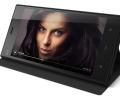
What does the Mi 3 offer buyers at this price? A closer look at the phone that sold 95,000 units in six online flash sales.

Why Ashish Narsale is looking forward to its launch.

China's smartphone giant Xiaomi on Thursday launched its new flagship phones to rival iPhone 6 at virtually half the prices and vowed to expand its India operations, brushing aside the legal challenges it faced over patent issues.

Xioami, currently the world's third-largest smartphone maker, is now planning to raise about $1.5 billion in its fifth round of financing, media reports said.

Following the footsteps of Motorola, Chinese handset maker Xiaomi is also teaming up with e-Commerce major Flipkart to launch its handsets in India.

The online strategy cuts down on marketing and distribution costs, allowing Xiaomi to sell feature-rich phones at low prices.

Xiaomi, which sells its phones exclusively through e-commerce website Flipkart.com in India, is looking to find a foothold in a market that has at least 80 different phone companies fighting it out for market share.

The company is also looking to invest in Indian start-ups.

The handset delivers on build quality, battery, design, ergonomics and a pretty decent display. The camera performance is not exactly ground breaking, but the price tag covers up for that slight blip, says Himanshu Juneja
Priced at Rs 13,999, the it comes with Qualcomm Snapdragon 800 processor and 2GB RAM.
Handset maker Xiaomi will set up a research and development unit in Bangalore, its first such facility outside of China, as it looks to beef up presence in the booming Indian smartphone market.

Xiaomi Mi 4i is attractive but camera quality could have been better.
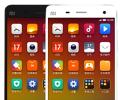
Chinese handset maker Xiaomi is expected to launch its latest 4G device Mi4 in the country later this month as it looks to strengthen its position in the booming Indian smartphone market.

Himanshu Juneja takes a closer look to find out what the phablet from Xiaomi is all about.

The Mi Max 2 has a bit of many things, but fails to show perfection in any one department.

Xiaomi, Lenovo and Micromax have launched low cost phones to attract consumers at large scale.

Manu Kumar Jain, India head, Xiaomi, tells Sangeeta Tanwar how the Chinese smartphone maker won over the Indian market.

Chinese smartphone maker Xiaomi Inc has tied up with Taiwan's Foxconn to start assembling phones in India.
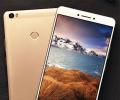
Priced at Rs 14,999, Xiaomi's Mi Max is hard to ignore.
Xiaomi easily broke their record from the same event last year.

Manu Kumar Jain, vice-president, Xiaomi, and managing director, Xiaomi India, shares his thoughts with Arnab Dutta on how the firm has put India on the forefront.
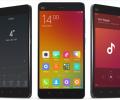
The Xiaomi Mi4 has a 5-inch IPS display and is powered by a 2.5 GHz quad-core Snapdragon 801 processor and has 3GB RAM.

It's a good deal for those looking for stock Android experience without compromising.

Stocks of electronics manufacturing services companies have been major outperformers, with four of the top eight listed majors by market capitalisation doubling their value over the past 12 months. The biggest gainer in this space has been the market leader, Dixon Technologies (India), which is up nearly threefold.

The Redmi 3S boasts of a fantastic built quality, brilliant battery back up, and a pretty good display
It has 18.9 per cent share of the market, down from 22.6 per cent for the third quarter of 2018 while Xiaomi has 27.1 per cent share.

A few critical shortcomings and a possible pricing blunder on the 64 GB (Rs 23,999) capacity model might just take the wind out of the sales of Xiaomi's latest offering.

India's smartphone market grew by three per cent year-on-year (Y-o-Y) in volume in the third quarter (Q3) of calendar year 2024, while its value surged by 12 per cent Y-o-Y to reach an all-time record for a single quarter, according to a report by research firm Counterpoint. The value growth was driven by an ongoing premiumisation trend, while the increase in volume was driven by an earlier onset of the festival season compared to the previous year.

At Rs 24,999, the Xiaomi Mi 5 has a lot going as a flagship.

As Chinese gadget-maker Xiaomi, the world's third largest smartphone seller after Apple and Samsung, turns five today, it will seek to intensify its India push. But there are miles to go before it can claim true success in India, as a harrowing experience of one of its smartphone users suggests.
Khalid Anzar lists the pros and cons.
As competition for the smartphones market hots up, new players are making waves.

Dubbed as the 'fastest' smartphone in the world, Xiaomi has left no stone unturned to launch Mi 4, the successor to Mi 3 next year. But how is the Mi 4 different from Mi 3? Can these two along with a bouquet of smartphones launched by the Chinese company help it cross the 100 million mark next year?
The company may offer phones at around Rs 20,000, less than half the starting price of Apple handsets.

The strategy of selling the phone will remain the same.

India's smartphone shipment grew by 11.5 per cent in the first quarter of calendar year (CY) 2024 on a year-on-year basis to 34 million units. This is the third consecutive quarter of growth in shipments, International Data Corporation's (IDC) Worldwide Quarterly Mobile Phone Tracker said.

This one's a flagship smartphone with no real competition.

With minimal advertising and superb viral trends the company has created a buzz like no other and Redmi 1s is definitely worth the wait.
