
Will the Redmi Note 6 be a bestseller? Ashish Narsale/Rediff.com finds out.

Finally Mi TV arrives on the Indian shores for the first time as Mi TV 4.

The smartphone category as a whole was expected to spend around Rs 1,000 crore on marketing and promotional activities over the next six months, even as India unlocks gradually, said media industry experts. This spending is expected to come down, as firms temper their launches.
While the outbreak has forced most leading brands like Apple, Xiaomi, Oppo, Vivo, and Realme to rework their launch dates and pricing strategies, Samsung, which struggled to maintain its hold over the market last year, has taken the lead.

Xiaomi's latest smartphone Mi4 surely can give Apple's iPhones serious competition, says Shruti Puri, and could dent sales of iPhone 6 and iPhone 6 Plus that helped Apple post fantastic quarterly numbers recently.

A pan-India 'fraud-to-phone' network has been busted by security agencies, which have also arrested eight people and seized nearly 300 new mobile phones bought with stolen funds, officials said on Tuesday. Moreover, 900 mobile phones, 1,000 bank accounts and hundreds of unified payment interface (UPI) and e-commerce IDs of this gang have been identified and are under investigation. Nearly 100 bank accounts, and debit and credit cards have been frozen by the security agencies so far, officials said.

Their favourite alternatives: Malaysia, Vietnam and the Philippines. Note, India is missing from that list. And this is despite an attractive financial incentive scheme for OSAT players. The reason, said a senior executive of a US chip company who had a meeting in Taiwan just a few weeks ago, is that "they want more predictability in government policy because they plan to put in big money."

In a boost to the electric vehicle boom in India, Taiwanese major Hon Hai Technology Group (aka Foxconn) is likely to set up an EV manufacturing unit in India through its subsidiary Foxtron. Amid speculation that the company may look at Tamil Nadu and probably the Ford India unit near Chennai for its new facility, sources indicate that the group was already betting big in the electric vehicle component space in India through Bharat FIH, which is already having a tie up with companies like Ola Electric and Ather. Bharat FIH currently has two manufacturing units in Tamil Nadu's Sriperumbudur that manufactures phones like Apple iPhones and Xiaomi phones.

Oppo is the second Chinese brand after Xiaomi to secure single-brand retail licence. Xiaomi has now 600 retail partners.

Chinese mobile brands are deeply entrenched in the Indian market. A move to bar them may send a bold diplomatic message. But its cost for the local industry is anybody's guess. In the event that Chinese brands face curbs, two handset makers - Samsung and Apple - squarely stand to gain.

The Income-tax department has conducted searches at multiple premises of Chinese telecom company Huawei in the country as part of a tax evasion investigation, official sources said on Wednesday. The raids were launched at the company's premises in Delhi, Gurugram (Haryana) and Bengaluru in Karnataka on Tuesday. Sources said the officials looked at financial documents, account books and company records as part of a tax evasion investigation against the company, its Indian businesses and overseas transactions.

Foxconn means serious business in India. Its delegation to India was led by its Chairman Young Liu who met Prime Minister Narendra Modi.

At Rs 8,999, this 'Made in India' budget smartphone competes with Chinese rivals Xiaomi Redmi 4, Nubia N1 Lite and Xiaomi Redmi Note 4. But can it win Micromax the lost ground?
Streamlining its delivery network and shifting focus back to the mass segment - at a time when competitors were struggling to restore normalcy in operations due to the pandemi - aided the firm's revival.

The scales started tilting in favour of smartphones in 2014, when a slew of new, yet vibrant, brands entered the market, with their competitively priced offerings helping smartphones become the indispensable device that it has turned into today.

A number of smartphone players such as Xiaomi, Samsung, LG and Micromax also have smart TVs in their product portfolio.

This year's list includes 40 influential people under 40 years of age in five categories -- finance, technology, healthcare, government and politics, and media and entertainment.

Xiaomi has ticked all the correct boxes with the Redmi Note 3. It should be on the list of probables for buyers with a sub Rs 15,000 budget.

Here's why the Xiaomi Mi3 is not just another made-in-China smartphone.

Even with a dated OS, Xiaomi's first 4G compatible device is a performance beast.

Ashish Narsale brings you the first look.

After six weeks into the second half, the faltering offline channel, which traditionally rakes in 60 per cent of sales for the market, has become the biggest hurdle towards the path of revival.

It seems like Xiaomi has achieved what it had set out to with the Mi Pad: Providing a cost-effective iPad, at least, in terms of look and feel, says Himanshu Juneja

In the coming weeks, online retailers are expected to further raise the pitch with shopping festivals, discounts, and cashback offers.

A successor to Mi 4, the 'i' in 4i reflects Xiaomi's focus on India even as the Chinese company is losing ground to Apple on home turf.

If a phone under Rs 15,000 is what you're looking for, then this is among the best, says Khalid Anzar.
According to research firm IDC, a slowdown in smartphone shipments began showing up as early as late February, though companies insist that the March quarter was fine, albeit on a low base.
They are both electronic manufacturing services (EMS) companies, also known as contract manufacturers. One is Taiwan's Foxconn group, the undisputed global number one in this business with revenues of $223 billion. The other is Dixon Technologies, the biggest domestic player with revenues of over Rs 10,500 crore.

The Indian Air Force has asked its personnel and their families not to use Chinese 'Xiaomi Redmi 1s' phones, as it believes these phones could be transferring data to their servers in China and hence be a security risk.

Has Asus cooked the right recipe to dethrone Xiaomi Redmi Note 5 Pro as India's best selling budget phone?

'We welcome India's ban on certain mobile apps that serves as an appendage of the CCP's surveillance State'
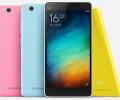
The biggest attractions of the phone are the Sunlight Display and virtual IVR.

India is the world's third-largest smartphone market.

It's a twin of Samsung Galaxy J6, launched only a couple of months ago.

It has captured 38 per cent of the feature phone segment in 2018 through frequent innovation, says Arnab Dutta.

But this could be shortlived as the rise has been buoyed on Chhattisgarh assembly poll freebies

Digitally driven businesses have cut short the time to market significantly.

147 domestic and international recruiters -- including Ola, Amazon, Flipkart and Xiaomi -- hired all 460 graduates.

Xiaomi's next iteration of the loved and most sold Redmi Note 4 is here.

172 firms participated in the final placement process.
