
A seminar in New Delhi commemorated Acharya Prafulla Chandra Ray's birth anniversary, focusing on his significant contributions to pharmaceutical sciences and his vision for indigenous research and self-reliance. Organised by DPSRU and VIBHA, the event highlighted Ray's pioneering efforts in "Swadeshi science" and his role in establishing India's pharmaceutical industry.

Delhi Police's crime branch has busted an interstate illegal pharmaceutical drug supply network, arresting four men and recovering over 14 kilograms of Alprazolam and Tramadol. The operation involved multiple arrests, including the initial interception of two individuals on October 31, leading to the apprehension of their supplier and another accomplice, with two vehicles also seized.

A joint report by OPPI and EY reveals that India's pharma Global Capability Centres (GCCs) contribute an estimated USD 10.5 billion in GVA and employ 120,000 professionals. These centres, operated by 80% of top biopharma companies, are expanding beyond delivery to global mandates in science, technology, and business, leveraging India's talent, cost advantage, and digital strength. The report highlights their role in India's transition to a global pharma powerhouse driven by research and innovation, with AI becoming central to operations.

PwC India has launched its Future AI Experience Lab in Gurugram, offering businesses a platform to simulate scenarios and prototype AI, robotics, and digital twin solutions. The lab features over 90 pre-validated AI solutions across various sectors, aiming to help clients achieve measurable outcomes like revenue growth and productivity improvements.

India's drug price regulator, NPPA, has revised downward the maximum retail price of 543 anti-cancer medicines, effective November 9. This follows an announcement enforcing trade margin rationalisation on 137 non-scheduled anti-cancer drugs, leading to significant price drops for several key brands.

Indian stock market benchmark indices Sensex and Nifty rallied significantly in early trade, driven by robust foreign fund inflows, better-than-expected Q2 results, and a sustained moderation in crude oil prices. The 30-share BSE Sensex jumped 1,097.33 points, while the 50-share NSE Nifty rallied 274.30 points. Track Sensex, Nifty on November 11.

The National University of Singapore (NUS) is inviting applications for its 2027 Amgen Scholars programme.
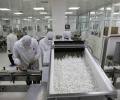
The Supreme Court has strongly criticised the Centre and pharmaceutical manufacturers over the significant disparity between the Maximum Retail Price (MRP) of medicines and their price to retailers, questioning the justification for such high margins and the perceived ineffectiveness of the National Pharmaceutical Pricing Authority (NPPA). The court reserved its verdict on petitions seeking strict price control and prevention of unethical overpricing of essential medicines.

Following Prime Minister Narendra Modi's strong criticism of India Inc for not creating enough jobs and hiking salaries despite corporate tax cuts, industry leaders and business associations have responded, detailing their efforts and highlighting challenges in boosting employment and reducing import dependence.

India's Production-Linked Incentive (PLI) schemes have achieved only 28% of their targeted employment generation by FY26, despite mobilising 76% of the envisaged investment, according to a NITI Aayog assessment. The report highlights an uneven translation of manufacturing growth into job creation and calls for refining the schemes' design, shifting towards demand-side support and sector-specific interventions.

PAPs can reduce expenditure by 30 to 60 per cent for some expensive immunotherapies and targeted therapies.

Prime Minister Narendra Modi has challenged Indian industry leaders to increase job creation and employee salaries, arguing that government tax concessions and income tax relief should translate into greater employment and economic activity. He also urged businesses to improve product quality for the domestic market and leverage new trade agreements for global competitiveness.

The Maharashtra Food and Drug Administration (FDA) has suspended licenses of 19 food businesses and seized food articles worth over Rs 9 crore during a special festive-season drive. This included Patanjali cow ghee from a super distributor due to suspected misbranding and adulteration. The drive also led to seizures from other major retailers and manufacturers, with 13 FIRs registered and 16 arrests. Additionally, the FSSAI issued show-cause notices to several companies, including Tata 1mg and Amazon, over alleged labelling and advertising violations.

Foreign portfolio investors (FPIs) withdrew Rs 34,843 crore from Indian equities in October, marking the second consecutive month of heavy outflows due to concerns over crude oil prices, global interest rates, and corporate earnings. However, a notable shift occurred towards the end of the month, with FPIs turning net buyers and infusing approximately Rs 6,300 crore between October 26-30.

The GST Council has approved a proposal allowing pharmaceutical companies to claim Input Tax Credit (ITC) on free samples and goods destroyed or written off due to expiry, effective from the next fiscal year. This move aims to support manufacturing, liquidity, and exports within the sector.

The IDBI Bank stake sale could generate over Rs 26,500 crore, helping the government surpass its annual divestment target, notes A K Bhattacharya.

The Supreme Court has questioned the Centre's decision to cap trade margins on anti-cancer drugs at 30 per cent, asking why similar restrictions could not be extended to other medicines and medical consumables, citing glaring disparities between procurement costs and maximum retail prices (MRPs).

Festive shopping on EMIs and credit cards can leave households struggling with debt after Diwali. A clear repayment plan, prioritising expensive loans and refinancing wisely can help borrowers regain control of their finances.

They had bought Rs 29,631 crore worth of shares in August.

A new study reveals significant disparities in the return on investment (ROI) of COVID-19 vaccines across countries, with high-income nations reaping far greater economic and health benefits than low- and middle-income countries. While the global investment in vaccine development and delivery was USD 79.4 billion, the benefits ranged from USD 6.43 trillion to USD 64.3 trillion, showing a massive overall ROI. However, early access and faster rollouts in wealthier nations led to disproportionate gains.

India's drug price regulator, the National Pharmaceutical Pricing Authority (NPPA), has significantly reduced the maximum retail prices (MRPs) of 543 cancer drug brands and pack sizes, with some reductions reaching up to 93 per cent. However, expensive innovator drugs from multinational corporations, including high-selling Bevacizumab and immunotherapy Keytruda, remain unaffected, highlighting limitations in the price control intervention.

'I have seen in Agra parents selling their buffalo, which is their sole source of livelihood, to buy expensive medicines to treat their child.' 'I was very moved by such cases and therefore approached the court to regulate the price of medicines in our country.'
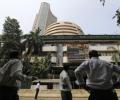
Analysts predict that the US midterm election results, which saw Democrats gain control of Congress, will primarily influence Indian markets through changes in global financial conditions, trade policy expectations, and geopolitical developments, with a keen focus on the US administration's actions in West Asia and their potential impact on crude oil prices.

The Union Sports and Education Ministries, in collaboration with UNESCO, have launched the 'Sports Values in Every Classroom Toolkit' to promote clean sport values and integrity among students nationwide. The initiative, announced at NADA India's Clean Sport Conclave, aims to integrate values like respect and fairness into education through multilingual video modules. Ministers Mandaviya and Joshi emphasised the importance of this partnership in strengthening India's sporting ambitions and bridging the gap between education and sports.

Shalu Manocha, daughter-in-law of murdered pharmaceutical trader Vineet Manocha, has been released by a Kanpur court after police filed a closure report, finding no evidence of her involvement. She was initially arrested based on an accused's statement but a detailed investigation cleared her, leading to the arrest of Vineet's son, Subrat Manocha, for plotting the murder.

Indian equity benchmarks Sensex and Nifty extended their losses for a third consecutive session, with the Sensex declining 460.30 points and the Nifty dropping 123.70 points, primarily due to surging crude oil prices driven by escalating tensions in West Asia and weak global cues.

India's 10 largest pharmaceutical companies have consistently maintained positive average volume growth throughout 2026, while smaller rivals have experienced more erratic performance, driven by a market shift towards chronic and sub-chronic therapies.

A Russian drone strike on a Turkish-owned civilian cargo vessel in the Black Sea resulted in the death of the ship's captain and injuries to one crew member. The vessel, carrying corn, had Azerbaijani and Indian citizens on board. Ukrainian President Volodymyr Zelenskyy condemned the attack, highlighting the ongoing disruption to global food security and India's diplomatic efforts to resolve the conflict.

Chief Economic Advisor V Anantha Nageswaran stated that 2026 marks an inflection point for India, akin to 1991, necessitating the country to become globally indispensable in carefully chosen sectors to build strategic leverage for accessing geopolitically contested resources amidst a series of external shocks.

Indian IT stocks have experienced their most significant weekly surge in 18 years, with the Nifty IT index climbing 11.72 per cent, as a global sell-off in AI-linked equities redirected investor attention towards India's IT services sector. This shift aligns with a JP Morgan report identifying India as a 'natural AI hedge' due to its large, liquid market and strong domestic institutional investor base.

Indian equity benchmark indices extended losses for a second consecutive session, with the Sensex dropping 143 points, driven by a sell-off in power, banking, and financial stocks, coupled with elevated crude oil prices and persistent FII selling.

Finance Minister Nirmala Sitharaman stated that the Reserve Bank of India (RBI) will persist in its efforts to prevent excessive volatility in the rupee, which has significantly depreciated against the US dollar due to global uncertainties, despite India's strong macro-economic fundamentals.

Rajasthan Police arrested Wasim Hussain in Gurugram for his alleged role in a cyber fraud case. A Jaipur resident was swindled out of Rs 22 lakh after fraudsters, posing as an American citizen, promised a job abroad for his son and demanded various clearance fees. Hussain allegedly provided mule bank accounts used to receive part of the defrauded amount.


India has achieved its highest-ever annual Foreign Direct Investment (FDI) inflow of USD 94.53 billion in FY 2025-26, with cumulative FDI reaching USD 843 billion since 2014-15, announced Commerce and Industry Minister Piyush Goyal. Production Linked Incentive (PLI) schemes have also significantly boosted investment, production, exports, and job creation.

New Zealand Prime Minister Christopher Luxon stated that the historic Free Trade Agreement with India, now in effect, will help grow both economies, allowing Kiwi businesses to reach over a billion more customers with significantly reduced tariffs, leading to 'more jobs and higher wages for Kiwis'.
A new Rs 6,000 crore integrated phenol and acetone plant, India's largest, has been inaugurated in Haldia, West Bengal. Developed by Adperma Private Limited, a subsidiary of Haldia Petrochemicals Limited (HPL), the facility aims to reduce India's reliance on imported industrial chemicals and boost the domestic specialty chemicals sector. West Bengal's Chief Minister announced a new industrial policy following the inauguration.

Police in Bengaluru have arrested Balasubramanian, a partner in DM Pharma, in connection with an interstate counterfeit drug racket. This arrest follows the apprehension of alleged kingpin Prashanth Rajan Babu. The Special Investigation Team is probing the supply chain, financial transactions, and distribution channels of fake medicines worth nearly Rs 5 crore, which were being relabelled as premium brands.

Two Indian nationals have been charged in a US federal court for their alleged involvement in a transnational scheme to distribute counterfeit Ozempic, a popular diabetes drug. The scheme involved obtaining fake drugs from China, deceptive packaging, and continued even after FDA warnings, with the accused facing significant jail time if convicted.

Police in Kanpur have arrested Subrat Manocha, son of pharmaceutical dealer Vineet Manocha, in connection with his father's murder. The arrest follows allegations by an alleged contract killer, Vishal Gautam, who claimed Subrat hired him for Rs 6 lakh to commit the crime. Investigators are verifying evidence, including call records, as Subrat denies the charges.
