
Biocon aims to become the world's leading insulin company, capitalising on larger pharmaceutical rivals' strategic shift towards newer, high-margin GLP-1 diabetes therapies. The company plans to expand its insulin presence across 80 markets, focusing on value maximisation and addressing the indispensable need for insulin, particularly for Type-1 and late-stage Type-2 diabetics.

Hyderabad is rapidly emerging as a strategic hub for multinational companies (MNCs) deepening their focus on artificial intelligence (AI), life sciences, and global capability centres (GCCs), supported by the city's strong pharmaceutical (pharma) base, deeptech talent pool, and a policy environment that encourages high-value investment.

For decades, multinational pharmaceutical companies and Indian drugmakers worked in ways that supported each other: MNCs brought innovation and brands, while Indian companies built scale through generics and cost efficiency. There was an important overlap - generic drugs - but this is shrinking fast. And the consequences are reshaping India's gigantic pharmaceutical market.

Sanofi-aventis has a significant presence in India and has 1,800 employees.

Sanofi India is seeking approval of the shareholders for perpetuity.

Sanofi-aventis on Monday said it has extended its $18.5 billion offer for Genzyme for the second time, a move that will give the French drug-maker additional time to reach an agreement with US biotechnology firm.

Glenmark Pharmaceuticals on Monday said its subsidiary Glenmark Pharmaceuticals SA has granted licence to Sanofi-aventis for developing drugs to treat chronic pain, for an initial payment of $20 million (about Rs 89 crore).

The French drug maker has its vaccine approved in Mexico for all four serotypes for patients aged 9 to 45.

Pharma major Dr Reddy's Laboratories delivered a muted operational performance in the fourth quarter of financial year 2024-25 (Q4FY25), even as revenue growth remained healthy. Lower gross margin performance and muted domestic growth are key concerns. Most brokerages have a "Sell" or "Reduce" rating as there are uncertainties related to the development of a new product portfolio and the launch timelines.
.jpg)
The Paris-based global drug giant announced last week that it would have the vaccine available by the first half of next year.

Beleaguered liquor baron Vijay Mallya on Wednesday announced he will retire as chairman of Sanofi India and will not seek reelection as a director of the drug maker.
In recent months, several pharma multinational corporations (MNCs) are increasingly turning to Indian companies to expand market reach in the country's pharmaceuticals sector. Sanofi's partnerships with Dr Reddy's, Cipla, and Emcure, AstraZeneca and Mankind Pharma - teaming up for asthma medication distribution - are a few instances of this trend. This strategy allows MNCs to leverage established Indian networks and reach a wider audience. Indian companies also benefit from global brands and expertise, say analysts.

The Indian pharmaceutical market (IPM) grew 6.8 per cent to touch a turnover of ~1.93 trillion in calendar year 2023, despite volumes going down marginally by 0.9 per cent. This indicates the price increase has been the major growth driver. Growth in the moving annual turnover (the previous 12 months' turnover) in December was 5.1 per cent and that in new product introduction 2.6 per cent, while volumes dipped 0.9 per cent, leading to an overall growth rate of 6.8 per cent, according to the data from market research firm Pharmatrac.

Notwithstanding the fact that the country's pharmaceutical (pharma) pricing regulator has allowed a 12 per cent price increase for medicines listed under the National List of Essential Medicines (NLEM) in 2023, analysts and industry insiders predict that the overall domestic pharma industry will only witness a price hike of 5-6 per cent. This is attributed to higher competitive intensity in the market. Krishnakumar V, executive director and chief operating officer (CEO) of Eris Lifesciences, a domestic-focused pharma company, noted that the NLEM segment experienced growth suppression of around 150 basis points due to price reductions during the January to July period this year.
The pharmaceuticals sector is expected to post a revenue growth of around 13.5 per cent and a net profit growth of 30.3 per cent for the third quarter of 2023-24 (FY24), riding on the approval for niche drugs in the US market, fall in raw material prices and correction in shipping rates. In the healthcare segment, hospitals are expected to post revenue growth of 13 per cent during the coverage, while net profit growth would be around 37 per cent, ICICI Securities said in a note. However, the performance may not be comparable on a sequential basis due to the offset of the festive season in Q3FY24, the analysts noted.

The top 300 pharmaceutical brands in the country will now bear a quick response (QR) code on their packaging to rein in spurious drugs and ensure better traceability.

Ajit Mishra, vice president, Research, Religare Broking, answers your queries.

The government will settle almost all the retrospective tax cases this month, closing a chapter that plagued India's reputation as an investment-friendly destination, a top official said on Friday. A 2012 amendment that gave taxmen powers to go back 50 years and slap capital gains levies wherever ownership had changed hands overseas but business assets were in India, was used to raise Rs 1.1 lakh crore demand against multi-nationals such as telecom group Vodafone, pharmaceuticals company Sanofi and brewer SABMiller, now owned by AB InBev, and Cairn Energy Plc. Such demands brought uncertainty in the minds of investors.
The Centre has also contacted five domestic and three multinational vaccine makers to understand how soon a candidate vaccine against Covid-19 will be ready.

The biotech company's revenues had fallen to as low as Rs 50 cr.

NPPA denies price hike on Sanofi, Novartis, and Allergan products.

The Philippines launches probe after Sanofi reveals WHO-approved dengvaxia - a dengue vaccine - aggravates symptoms in some cases.

Reliance Industries Ltd, the country's largest company by revenues, profits and market value, has topped Indian corporate in the World's Best Employers rankings 2021 published by Forbes. Reliance was placed at 52 in the overall ranking of 750 global corporates likes Phillips, Sanofi, Pfizer and Intel. Other Indian names in the top 100 rankings were ICICI Bank at 65, HDFC Bank at 77 and HCL Technologies at 90, according to the Forbes ranking.

Irrespective of demonetisation and GST blues, IIM Lucknow has been able to successfully place their batch of 459 students.

'The tie-up with Serum Institute Life Sciences brings to the table their strengths in manufacturing and also their vaccine portfolio.'

Alkem Labs was issued drug alerts twice last year -- in June and July -- for its drug Glimekem.
.jpg)
Moving quickly towards ending a retrospective tax dispute with a firm that gave India its largest oilfield, the government has accepted Cairn Energy PLC's undertakings which would allow for the refund of taxes, sources said. Meeting the requirements of the new legislation that scraps levy of retrospective taxation, the company had earlier this month given required undertakings indemnifying the Indian government against future claims as well as agreeing to drop any legal proceedings anywhere in the world. The government has now accepted this and issued Cairn a so-called Form-II, committing to refund the tax collected to enforce the retrospective tax demand, two sources with direct knowledge of the development said.
The Indian government has paid Cairn Energy Plc Rs 7,900 crore to refund taxes it had collected to enforce a retrospective tax demand, ending a seven-year-old dispute that had tarred the country's image as an investment destination. The company, which is now known as Capricorn Energy PLC, in a statement said it has received "net proceeds of $1.06 billion", of which nearly 70 per cent will be returned to the shareholders. The tax department had used a 2012 legislation, which gave it powers to go back 50 years and slap capital gains levies wherever ownership had changed hands overseas but business assets were in India, to seek Rs 10,247 crore in taxes from Cairn.

Cairn Energy and Air India have jointly asked a New York federal court to stay further proceedings in the British firm's US lawsuit targeting the airline for enforcement of a $1.2-billion arbitral award. The move follows the government enacting a law to scrap retrospective taxation in the country, which in effect will result in withdrawal of the Rs 10,247 crore tax demand on Cairn, according to court documents reviewed by PTI. The British company had won an international arbitration award against levy of such taxes and sought to take over Air India assets when the government refused to honour the award and pay it $1.2 billion-plus interest and penalty.

More than 2 million people have been diagnosed with coronavirus across the world, and the pharmaceutical industry is pulling out all stops to find potential treatments and vaccines for the global pandemic. According to the World Health Organization, there are now more than 70 potential vaccines under evelopment, with some already in clinical trials.
Britain's Cairn Energy Plc has dropped lawsuits against the Indian government and its entities in the US and other places and is in the final stages of withdrawing cases in Paris and the Netherlands to get back about Rs 7,900 crore that were collected from it to enforce a retrospective tax demand. As part of the settlement reached with the government to the seven-year old dispute over levy of back taxes, the company - which is now known as Capricorn Energy PLC - has initiated proceedings to withdraw lawsuits it had filed in several jurisdictions to enforce an international arbitration award which had overturned levy of Rs 10,247 crore retrospective taxes and ordered India to refund the money already collected. Two sources with direct knowledge of the matter said Cairn on November 26 withdrew the lawsuit it had brought in Mauritius for recognition of the arbitration award and took similar measures in courts in Singapore, the UK and Canada.

Another cap for imported insulin; domestic manufacturers cry foul.
The levy of retrospective tax on the UK's Cairn Energy Plc is a tale of bizarre twists and turns that saw its attached shares being sold in May 2018 amid the passing of the baton from a full-time finance minister to interim one and the talks at the highest level to resolve the dispute, to claims that levy of back taxes was a result of an investigation into Panama Papers leak. The government late last month refunded about Rs 7,900 crore it had collected from selling residual shares of the British firm in its erstwhile India unit, seizing dividend and withholding tax refunds, to settle an eight-year-old dispute that had tarred the country's reputation as an investment destination. But, this did not come about easily. For seven years, the establishment vehemently justified in courts and outside seeking of Rs 10,247 crore in back taxes plus interest and penalty from a firm that gave India its biggest onshore oil discovery.
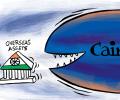
A New York court has paused Cairn Energy's pursuit of US assets of Air India for the recovery of $1.2 billion arbitral award, so as to allow the British firm to reach a settlement with the Indian government on the long drawn dispute. The New York district court delayed the tax suit to November 18, according to court documents reviewed by PTI. This follows Cairn Energy and Air India jointly asking the court to stay further proceedings in view of the fresh government enacting a fresh law to scrap retrospective taxation in the country.

Severe price cuts help multinationals ramp up growth, gain market share.

The ministry has asked 44 pharmaceutical companies, including global drug majors such as Eli Lilly, Novartis, Pfizer, Bayer, Merck, Johnson & Johnson and Sanofi Aventis, to explain why they have not given the compensation, which is mandatory under the current drug laws.

Adani Power will also be dropped from the S&P BSE 100 index

Daiichi Sankyo had entered into a licensing agreement with Sanofi-Aventis in 1993 for marketing levofloxacin (Tavanic) in Europe, Africa, South America and in some countries in Asia. Sanofi-Aventis is currently selling the drug in more than 90 countries under the brand 'Tavanic'.
UK-based Cairn Energy PLC on Wednesday said it has agreed to drop litigations to seize Indian properties in countries ranging from France to the UK as it has accepted the Indian government's offer to settle tax dispute relating to the levy of taxes retrospectively. Meeting the requirements of new legislation that scraps levy of retrospective taxation, the company has given required undertakings indemnifying the Indian government against future claims as well as agreeing to drop any legal proceedings anywhere in the world. The government now has to accept this and issue Cairn a so-called Form-II, that will commit it to refund the tax collected to enforce the retrospective tax demand.

The patent relates to the manufacturing process for the active ingredient in Sanofi-Aventis' Allegra and Allegra-D drug products. Both Dr Reddys and Sandoz are known to be marketing these products in the US.
