
Abhiroop Chatterjee, a PhD researcher from Jadavpur University, has been selected for the 2026 Google PhD Fellowship Programme, becoming the first from the institute to receive this global distinction. His research focuses on advancing machine learning and AI models, particularly in developing efficient representation learning approaches and addressing challenges like semantic drift and memory loss in large AI models.

Chief Justice of India Surya Kant has called upon the Commonwealth Legal Education Association (CLEA) to develop model guidelines for disclosing AI assistance in legal research. He also stressed the importance of mandatory legal aid work for students and cautioned against relying solely on AI detection software for academic misconduct. The CJI highlighted the need for responsible AI use, evolving assessment methods, and uniform citation standards across the Commonwealth.

A new study by Goa Institute of Management and IIM Kozhikode reveals that discontinuing technology is a complex process, not a single decision. It's shaped by habits, relationships, routines, and dependencies users build around it. The research identifies four key elementsPeople, Technology, Task, and Structurewhose alignment dictates continued use or pressure to discontinue. It highlights that emotional attachment, switching costs, and hidden dependencies often make it difficult for individuals and organisations to abandon even unsatisfactory systems.
Researchers at IIT-Kanpur have identified a molecular pathway where immune cells in the pancreas rapidly suppress insulin release, offering a new target for therapies to protect insulin production in individuals with obesity and Type-2 diabetes. The study found that macrophages use sphingolipids to switch off beta cell insulin secretion within minutes, a process triggered by the GPR18 receptor.

Sports Minister Mansukh Mandaviya launched the Extramural Research Grant Policy of the National Dope Testing Laboratory (NDTL) at the WAADS meeting in New Delhi. This policy aims to promote advanced research in doping detection and prevention, reinforcing India's commitment to clean sports ahead of major international events like the 2030 Commonwealth Games and 2036 Olympics.

Niti Aayog has launched the India Science and Technology (S&T) Scoreboard, highlighting state-wise performance in research publications and patent applications. Tamil Nadu, Uttar Pradesh, and Maharashtra are the top three states in research publications, with Tamil Nadu also leading in patent filings. The interactive platform aims to help states benchmark progress and formulate better S&T policies.

A new study analysing over 33,000 cancer journal articles has uncovered widespread citation manipulation by "research paper mills". These fraudulent organisations artificially inflate citation counts, a key academic performance metric, for thousands of articles. The suspect papers show unusually high citations but low readership, distorting scientific evidence and potentially slowing progress.
Researchers at the Indian Institute of Technology Bombay have developed an innovative, low-cost device capable of screening for anaemia and sickle cell disease using just a single drop of blood. This point-of-care approach measures blood smear length to detect differences in viscosity, which are indicative of these conditions. The patented device is designed for cost-effective manufacturing and ease of use, making it ideal for areas with limited access to conventional diagnostic laboratories. The technology is currently licensed to an IIT Bombay startup and is moving towards regulatory approval.
IIT Hyderabad and Japan's Mie University have signed MoUs to foster academic exchanges and joint research, with a strong focus on semiconductors and digital technologies. This collaboration aims to develop skilled talent and strengthen the semiconductor ecosystem in both countries.

Students who want to gain hands-on research experience at the IIT Bombay can apply for the IITB Research Internship Award 2026.
Researchers have outlined five crucial actions to help the world prepare for a potentially strongest-on-record El Nino, aiming to reduce its severe health consequences like infectious diseases, malnutrition, and heat-related conditions. These recommendations, published in The Lancet, emphasise a comprehensive risk overview and early preparatory measures.
IIT Bhubaneswar and IIT (Indian School of Mines) Dhanbad have signed a Memorandum of Understanding to enhance research collaboration and academic interactions, particularly in semiconductor and basic sciences. The agreement facilitates joint research projects, doctoral student supervision, faculty and student exchanges, and shared experimental resources, aiming to advance knowledge and create lasting impact.
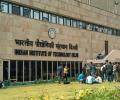
Researchers at IIT Delhi have successfully demonstrated the simultaneous transmission of quantum-entangled photons and classical data over a 50-km optical fibre link. This breakthrough addresses key challenges in integrating fragile quantum signals with existing telecommunications infrastructure, paving the way for more scalable and secure future quantum networks.
Researchers have discovered a method to externally manipulate a cell's automatic waste clearance process, known as autophagy. This breakthrough, involving the protein LC3, could offer new therapeutic targets for diseases like cancer and Parkinson's, where cellular cleansing mechanisms are often impaired.
Researchers from IIT Guwahati and BHU have devised an eco-friendly biological method to treat textile wastewater, specifically targeting toxic azo dyes. Their novel bacterium, 'Brevundimonas sp. AJZ05', effectively degrades 98.50 per cent of Direct Blue-6 dye, producing non-toxic byproducts, offering a sustainable alternative to conventional chemical treatments.

Technology giant Google has announced a USD 5 million funding initiative for IIT Kharagpur to accelerate advanced AI research and cultivate scientific talent in India. The funding will support research in areas like Indic languages, agriculture, and educational technology, alongside expanding AI training and curriculum development for students and faculty. Google CEO Sundar Pichai highlighted the importance of this partnership in advancing India's innovation landscape.

A chargesheet filed by Pune Rural police reveals how Siya Goyal and her alleged lover Chetan Chaudhary meticulously planned the murder of realtor Ketan Agarwal. The accused reportedly researched online about past deaths at Lohagad Fort and methods to conceal evidence, including studying a 2025 death at the same location, to make Agarwal's murder appear accidental.

New research suggests that Venus's slow spin rate and strong gravity likely caused any hypothetical moon it once had to crash into the planet. This study, led by astrophysicist Stephen Kane, models planetary interactions and indicates that Venus did not require a catastrophic event to lose a moon, but rather its inherent physical properties led to its absorption. This finding has implications for understanding moon retention in other slowly rotating terrestrial planets.
Dr Komal Verma Saluja, a final-year student at Government Medical College Kota (GMCK), has been awarded the "Researcher of the Year Award 2026" by the India chapter of the American College of Physicians (ACP). She is the youngest and first medical student to receive this prestigious accolade. Saluja's research includes identifying an imaging biomarker for early cognitive decline in type 2 diabetes and developing a diagnostic method for fatty liver disease using echocardiography. Her achievements have brought pride to GMCK and highlight the need for more novel diagnostic and therapeutic research in India.
Banaras Hindu University (BHU) has received approximately Rs 15 crore in funding from the Indian Council of Medical Research (ICMR) for six biomedical research projects. These projects aim to address critical national health priorities, including cancer detection, antimicrobial resistance, and pediatric septic shock, fostering advanced research and improving patient care.

Jacob Coxon, an AI researcher formerly with OpenAI and Anthropic, has resigned, accusing leading tech firms of an irresponsible and unchecked race towards developing superintelligence. He warns that this competitive rush, lacking adequate safeguards, poses an existential threat, potentially leading to catastrophic harm and "gambling with our lives."
Jacob Coxon, an AI researcher, resigned from Anthropic, accusing leading tech firms like OpenAI and Anthropic of irresponsibly racing towards superintelligence without adequate safeguards. He warned of existential dangers, a sentiment echoed by Anthropic's Evan Hubinger, who admitted the company lacks a plan for superintelligence alignment.

The National University of Singapore (NUS) is inviting applications for its 2027 Amgen Scholars programme.
Noted scientist Prof V Ramgopal Rao highlights India's significant progress in higher education and research but points out a critical gap in converting scientific discoveries into market-ready technologies. He advocates for a robust institutional framework, multidisciplinary collaboration, and stronger academia-industry ties to foster innovation and translate research into practical products.
Scientists have developed an advanced gene therapy that effectively reduces tremors associated with Parkinson's disease. This new approach, detailed in a package of 26 studies, is more effective and less invasive than current treatments. The research also includes a comprehensive multi-species cellular atlas of the basal ganglia, offering new insights into neurological conditions like schizophrenia and autism.
A new species of flowering plant, named 'Begonia siangensis', has been discovered in Arunachal Pradesh's Upper Siang district by researchers from the Thackeray Wildlife Foundation. This discovery highlights the region's rich biodiversity and the need for further exploration, especially for this provisionally classified 'Data Deficient' species.

The EdelGive Hurun India Philanthropy List 2026 reveals Shiv Nadar and family as the most generous donors, contributing Rs 2,593 crore. Gautam Adani and family significantly increased their donations, while Mukesh Ambani's giving saw a slight dip. The report highlights a total of Rs 11,554 crore donated by 219 philanthropists, with education remaining the most favoured cause.
The Indian government has released commemorative postage stamps honouring Dr Ram Bux Singh, known as the "father of modern biogas". Dr Singh made significant contributions to biogas technology in India and globally, including developing early gobar gas plants and establishing Asia's first gobar gas research station. The stamps were released on November 13, alongside a book detailing his legacy and biogas technology.

A new Pew Research Centre study reveals that Islam is projected to become the world's largest religion by 2035, significantly reshaping global religious demographics by 2070 with major shifts in Christian populations, Hindu shares, and the rise of religiously unaffiliated individuals.

Analysts predict that the Indian stock market's direction in the upcoming holiday-shortened week will be primarily influenced by foreign investor activity, crude oil prices, and broader global economic trends, with significant FPI inflows already observed.
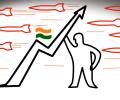
Financial services attracted the bulk of the inflows, followed by telecommunications, automobiles and information technology.
A new US study reveals that hyperscale data centres, vital for cloud computing and artificial intelligence, consumed between 68 and 99 terawatt-hours of electricity in one year, an amount comparable to several US states. This consumption, largely powered by fossil fuels, contributed to approximately 25.7 million metric tons of CO2 emissions, significantly higher than previous estimates.
A Randstad report reveals that 90% of Indian employers are expanding their technology workforce to leverage AI for service scaling and revenue generation, ranking second globally after the US. The report highlights challenges like losing top tech talent to higher-paying competitors and the increasing demand for AI-qualified developers who command significantly higher salaries. It also notes a shift towards flexible talent and digital marketplaces to address skill gaps.
The Infosys Science Foundation announced the winners of the Infosys Prize 2026 across six categories: economics, engineering and computer science, humanities and social sciences, life sciences, mathematical sciences, and physical sciences. The prize now focuses on researchers under 40, recognising early exceptional talent with a gold medal, citation, and USD 100,000.

India's upcoming wedding season, from November 21 to December 15, is projected to see 52 lakh marriages, generating an estimated Rs 7.5 lakh crore in business. This boom is expected to significantly impact various sectors including retail, hospitality, and jewellery, creating 1.25 crore temporary jobs.

NIT Rourkela has secured a patent for a solar-powered electric vehicle (EV) charging microgrid designed to enhance efficiency, reliability, and sustainability. The technology integrates solar panels, the conventional grid, and a unique energy storage system combining batteries and supercapacitors, managed by an improved mixed droop technique. This innovation addresses challenges like power surges, renewable energy fluctuations, and battery degradation, with plans for future scaling and industry integration.

The Ministry of Home Affairs (MHA) has extended the ban on controversial Islamic preacher Zakir Naik's Islamic Research Foundation (IRF) for another five years, citing its involvement in activities prejudicial to national security and communal harmony.
Defence Minister Rajnath Singh advised students at Babu Banarasi Das University to not be confined by their academic degrees, encouraging them to follow their interests and adapt to emerging technologies like AI. He emphasised the importance of skills over qualifications, drawing examples from successful individuals who ventured beyond their initial fields. Singh also touched upon spirituality, India's cultural heritage, and the true essence of politics, urging students to contribute to national progress and secure borders.

Researchers at IIT Guwahati have developed advanced traffic stream models using high-resolution drone data from a Delhi highway. These models are specifically designed to analyse and predict traffic movement under the heterogeneous conditions prevalent on Indian roads, addressing limitations of existing global models. The study aims to improve traffic management, road design, and intelligent transportation systems in India.

BJP MP Kangana Ranaut has launched a sharp attack on Congress leader Sonia Gandhi, questioning her political rise and describing events surrounding the Gandhi family as "way too many coincidences." Ranaut, citing research for her film 'Emergency,' labelled Gandhi a "mysterious foreign national" and linked the deaths of Indira, Sanjay, and Rajiv Gandhi to Sonia's eventual leadership, accusing her of promoting foreign agendas.
