
'The directives to enhance last-mile funding, consider revival funds, and systemic reforms across the sector are expected to revive stalled projects, improve accountability, and accelerate the delivery of affordable and mid-income housing.'

Asian champion 100m hurdler Jyothi Yarraji undergoes successful knee surgery to repair ACL tear

The SC said every day, hundreds of dog bites were being reported in the city and on its outskirts, leading to rabies and ultimately, children and the aged were falling prey to the dreadful disease.

'Day by day we expose how soulless we have become as a society. Every day is a disappointment.'

The Supreme Court has expressed concerns over student suicides at IIT Kharagpur and Sharda University, directing expedited investigations into the incidents. The court questioned the institutions' handling of mental health issues and compliance with previous directives.

The Supreme Court has directed the Delhi government and civic bodies to address the 'extremely grim' stray dog menace by picking up strays and housing them in shelters for sterilization and immunization. The court also warned against obstructing authorities and ordered the creation of a helpline for reporting dog bite cases.

A two-judge bench of the top court had on August 11 directed authorities in Delhi-National Capital Region (NCR) to start picking up stray dogs from all localities "at the earliest" and relocate the animals to dog shelters.

The Supreme Court has directed authorities in Delhi-NCR to relocate stray dogs to shelters, emphasizing public safety and addressing concerns about dog bites, particularly among vulnerable populations.
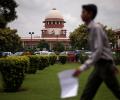
The Supreme Court has deleted its critical observation against Allahabad High Court judge Prashant Kumar, clarifying that it did not intend to embarrass or cast aspersions on him. The decision follows a request from Chief Justice B R Gavai to reconsider the matter.

The Supreme Court's order to remove stray dogs from Delhi-NCR localities has sparked mixed reactions, with RWAs welcoming the move and animal rights activists raising concerns about implementation and potential harm.

The Supreme Court on Monday dismissed the pleas of telecom majors Vodafone, Airtel and Tata Teleservices seeking the waiver of adjusted gross revenue (AGR) dues. A bench comprising Justices J B Pardiwala and R Mahadevan called the pleas "misconceived".
The Supreme Court of India has reprimanded the Rajasthan government over the alarming rise in student suicides in Kota. The court expressed its deep concern over the situation, questioning the state's efforts to address the crisis. The court also ordered an FIR to be filed in the case of a 22-year-old IIT Kharagpur student who died by suicide in his hostel room, citing a delay in reporting the incident to the police.
A five-judge Constitution bench of the Supreme Court is scheduled to consider the Presidential reference on whether timelines could be imposed by judicial orders for the exercise of discretion by the President while dealing with bills passed by state assemblies.
A Constitution bench comprising Chief Justice B R Gavai and Justices Surya Kant, Vikram Nath, P S Narasimha and A S Chandurkar, would fix the timelines on July 29 and commence hearing on the presidential reference in mid-August.
A bench comprising justices J B Pardiwala and R Mahadevan on April 8 gave a huge relief to the Dravida Munnetra Kazhagam-led Tamil Nadu government and cleared 10 state bills which were stalled and reserved by Governor R N Ravi for President's consideration, and also set a timeline for all governors to act on the bills passed by state assemblies.

The Supreme Court of India has taken a strong stance against child trafficking rackets, canceling the bail granted to 13 accused and criticizing the Uttar Pradesh government for its inaction. The court expressed concern over the rising number of trafficking cases and the changing patterns of the crime. It also directed the state to ensure trafficked children are admitted to schools and receive support for their education.

The Supreme Court of India has directed changes in digital know your customer (KYC) guidelines for persons with disability and acid attack survivors, citing the right to digital access as an intrinsic component of the right to life under Article 21 of the Constitution. The court found that existing KYC procedures, which require visual tasks such as head movements and facial positioning, pose significant challenges for these groups, preventing them from accessing essential services like bank accounts and welfare schemes. The court emphasized the importance of bridging the digital divide and ensuring universal accessibility to digital services for all citizens.

The Supreme Court of India has agreed to hear on May 6 the pleas of the Kerala government against the governor over the delay in approving bills passed by the state assembly. The court will consider whether the issues raised in the Kerala petition are covered by a recent judgment on a similar plea by Tamil Nadu, which set timelines for governors and the President on granting assent to bills.

The Supreme Court of India has directed its registry to call for a report from IIT Kharagpur and Kota, Rajasthan, after the suicides of a student and a NEET aspirant came to light. The court is seeking to ascertain whether FIRs were registered in both cases, highlighting the disturbing pattern of student suicides in educational institutions. The court has also previously ordered the formation of a national task force to address mental health concerns and prevent suicides in higher educational institutions.
The Supreme Court of India has ordered all high courts to ensure that civil courts under their jurisdiction decide execution petitions within six months, failing which presiding officers will be held accountable. The court cited the significant delay in resolving such petitions, which are filed to enforce decrees in civil disputes, and noted that this delay undermines the purpose of the decree itself. The verdict stems from a 1980 civil dispute from Tamil Nadu, highlighting the long-standing issue of delayed execution proceedings in India's legal system.
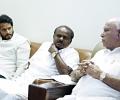
The Supreme Court referred to a larger bench the legal issues stemming from a plea of BJP leader B S Yediyurappa, including the question whether a prior sanction to prosecute is needed under the Prevention of Corruption Act after a magisterial court order of inquiry. The questions revolve around the interplay between the provisions of the Prevention of Corruption Act and the Code of Criminal Procedure on the issue of prior sanction to prosecute a public servant.
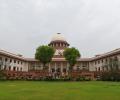
A Governor does not possess any discretion in exercise of functions under Article 200 of the Constitution in respect to any bill presented to them and must mandatorily abide by the advice tendered by the council of ministers, the Supreme Court has held.

Tamil Nadu Chief Minister M K Stalin has welcomed the Supreme Court's ruling that state governors must give assent to bills passed by state assemblies, calling it a 'historic' victory for all state governments in India. The court's decision came after the Governor of Tamil Nadu, R N Ravi, withheld assent to several bills passed by the state legislature. The court found that the governor's actions were in violation of the Indian Constitution, which mandates that governors must act on the advice of the council of ministers. The ruling is seen as a significant step towards strengthening the federal structure of India.

The Supreme Court raised concerns about a potential stalemate in Tamil Nadu due to the Governor's delay in assenting to bills passed by the state assembly. The court questioned the Governor's actions, noting that he should have communicated his concerns about the bills' constitutionality to the state government. The case focuses on the delicate balance of power between the state government and the Governor, highlighting the importance of open communication and transparency in the legislative process.

Tamil Nadu Governor R N Ravi has sparked controversy by asking students at a government-aided college in Madurai to chant "Jai Shri Ram". The State Platform for Common School System-Tamil Nadu (SPCSS-TN) has demanded his removal, alleging that he violated his oath of office and secular principles. The group claims Ravi's actions were against the Constitution, which outlines India as a secular country and emphasizes the importance of upholding secular values in education. The incident follows a recent Supreme Court ruling that overruled Ravi's decision to withhold 10 Bills passed by the Tamil Nadu government, highlighting ongoing tensions between the Governor and the state administration.

The Supreme Court on Thursday exercised its extraordinary constitutional powers and ordered the liquidation of grounded air carrier Jet Airways' assets. A bench of Chief Justice D Y Chandrachud and Justices J B Pardiwala and Manoj Misra set aside the National Company Law Appellate Tribunal (NCLAT) decision upholding the resolution plan of Jet Airways and approved the transfer of its ownership to Jalan Kalrock Consortium (JKC).

President Droupadi Murmu has exercised powers under Article 143(1) used in rarity to know from the Supreme Court whether timelines could be imposed by judicial orders for exercise of discretion by President while dealing with the bills passed by state assemblies.

The Supreme Court of India has ruled that Tamil Nadu Governor R.N. Ravi can no longer serve as chancellor of state-run universities, a decision welcomed by the ruling DMK party. The court's judgment stems from a long-standing dispute between the state government and the governor over the assent of 10 bills passed by the Tamil Nadu Assembly. The DMK alleges that the governor had obstructed the smooth functioning of universities by delaying appointments and other critical matters. The judgment paves the way for the Tamil Nadu government to appoint new chancellors for its universities, effectively removing the governor's influence in higher education.

The Supreme Court of India has ruled that courts have the authority to determine the appropriate interest rate in cases involving share valuation, considering the specific facts of each case. The decision came in a 52-year-old legal battle between private parties and the Rajasthan government over the valuation of shares transferred to the state government. The court also modified the interest rate applicable to delayed payments, awarding 6 percent per annum simple interest from July 8, 1975, until the date of decree, and 9 percent per annum simple interest from the date of decree until realization of the payment.
"The open-ended nature of Section 6A has, with the passage time, become more prone to abuse due to the advent of forged documents to establish, inter-alia (among other things), wrong date of entry into Assam, inaccurate lineage, falsified government records created by corrupt officials, dishonest corroboration of the date of entry by other relatives so as to aid illegal immigrants who are otherwise not eligible under Section 6A by virtue of having entered into Assam after March 24,1971," he noted in a separate 127-page dissenting judgment.
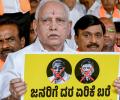
The Supreme Court of India has reserved its verdict on a plea by BJP leader and former Karnataka Chief Minister B S Yediyurappa challenging an order reviving a corruption case against him. The case involves allegations of corruption and criminal conspiracy related to the allocation of industrial land. The court has framed several key legal questions, primarily focusing on the interplay between various provisions of the Prevention of Corruption Act and the Criminal Procedure Code regarding prior sanction to prosecute a public servant. The court has asked Yediyurappa's counsel to file written submissions within two weeks.
The Supreme Court of India has ruled that governors cannot indefinitely delay giving assent to bills passed by state legislatures, setting a timeline of one to three months for their actions. The court said the governor must act "as soon as possible" and that failure to comply with the timeline will make their inaction subject to judicial review. The ruling comes as several opposition-ruled states have accused governors of delaying assent to bills passed by their assemblies.
"This is complete abuse of the process," said the bench comprising Chief Justice D Y Chandrachud and justices JB Pardiwala and Manoj Misra while junking the PIL on the issue.

Unless Governor Ravi or the Union of India moves in appeal, seeking a hearing by a constitutional Bench, this is where it all will have to end, observes N Sathiya Moorthy.

In a landmark verdict, the Supreme court fixed a timeline for Governor to act on bills passed by the state legislature as it pulled up Tamil Nadu Governor R N Ravi for reserving 10 bills for President's consideration, saying it was against the constitutional provisions.

Four days after the top court cleared 10 bills, which were stalled and reserved by Tamil Nadu Governor R N Ravi for the president's consideration, and set a timeline for all governors to act on the bills passed by the state assemblies, the judgement running into 415 pages was uploaded on the apex court's website at 10.54 pm on Friday.
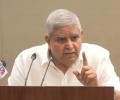
Rajya Sabha member Kapil Sibal has criticised Vice President Jagdeep Dhankhar for questioning the judiciary over the timeline for the president to take decisions, calling it "unconstitutional " and a lowering of the dignity of the chair. Sibal asserted that Dhankhar's remarks are not neutral and amount to an attack on the judiciary by the executive. He also pointed out that the president acts on the aid and advice of the council of ministers, and therefore, the president's power cannot be curtailed. Sibal urged Dhankhar to seek a review of the judiciary's decision or an advisory opinion from the Supreme Court if he has problems with it. He also questioned why Dhankhar only focuses on actions taken during Congress governments and not after 2014.

IOA president PT Usha made it clear that it is the responsibility of the athlete to manage their weight and the attack on its medical team.
The Supreme Court of India has formed a National Task Force (NTF) to address the growing concern of student suicides in higher educational institutions. The court took note of the recurring cases and directed Delhi Police to register FIRs on the complaints of families of two students who died by suicide at IIT Delhi in 2023. The NTF, chaired by former apex court judge Justice S Ravindra Bhat, will prepare a comprehensive report, including the identification of causes leading to suicides, analysis of existing regulations, and recommendations for strengthening protections. The NTF will also have the authority to conduct surprise inspections of higher educational institutions and make further recommendations to ensure a holistic approach to addressing mental health concerns and eliminating suicides.
The Supreme Court of India has ruled that courts should not hesitate to deny liberty to accused individuals in order to ensure a corruption-free society. The court's statement came while upholding the dismissal of an anticipatory bail plea in a corruption case against a public official. The court highlighted the dangers of corruption and emphasized that the presumption of innocence alone cannot be the sole consideration for granting bail in such cases.
 © 2026 Rediff.com - Advertise with us - Disclaimer - Privacy Policy - Sitemap - Feedback - About us - Terms of use - Grievances