
Lack of infrastructure development in Jammu and Kashmir for decades post Independence was one of the reasons behind the rise of terrorism in the Union territory, Defence Minister Rajnath Singh said on Friday after unveiling 75 new projects including bridges, roads and helipads in border areas.
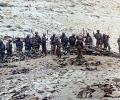
The Chinese activity at an air base near the Barahoti area has also gone up and a large number of drones have been deployed by them there, they said.
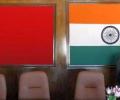
As the border standoff entered the sixth month, an early resolution to the row appeared dim with close to 100,000 Indian and Chinese troops remaining deployed in the high-altitude region and showing readiness for a long-haul. There is no official word on the talks yet but sources said the agenda was to finalise a roadmap for disengagement of troops from all the friction points.

China has chosen to keep New Delhi guessing, while retaining for itself the option of constantly changing facts on the ground and shifting the LAC westwards -- the strategy called 'salami slicing', notes Ajai Shukla.

'India has to prepare for future warfare where kinetic use of force at the border will be limited. War will take place in the realms beyond the border.'

INS Vishakapatnam's ground attack and anti-ship capabilities are achieved through a bank of BrahMos cruise missiles that can be fired at targets up to 295 km away.

'The supreme art of war is to subdue the enemy without fighting.' Former RA&W official Jayadeva Ranade explains what China's military reforms mean for the world.
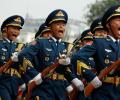
Since the June 15 clash, the PLA has inducted large numbers of troops, armoured vehicles and artillery along the LAC, from Depsang and Galwan in northern Ladakh to Hot Springs, Pangong Tso, and Chushul in central Ladakh, to Demchok and Chumar in southern Ladakh.

The commander said the situation in the region has been stable and no major "changes or palpable shift of stance has been noted" even as the Indian and Chinese troops are engaged in a stand-off in Demchok and Depsang in eastern Ladakh.

'The MEA, hopefully, made it clear that the Indian PM can't be seen in Xi Jinping's company when China has, for all intents and purposes, annexed over 1,000 sq kms of Indian territory in eastern Ladakh, and essentially that the Wuhan spirit and the Mamallapuram spirit have turned into vinegar.'
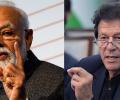
Modi's hardline policy towards Pakistan and J&K has created numerous leverages and bargaining positions that New Delhi can bring to the bargaining table and translate into concessions, argues Ajai Shukla.

16 Indian Army divisions face China, 20 face Pakistan and two divisions are reserves. This powerful signal can hardly be missed in China or Pakistan, notes Ajai Shukla.

'We're hitting at the core strength of our armed forces.'

Real Good Chicken, the flagship brand of Godrej Agrovet Ltd and a leading player in the fresh chicken category in the Indian market has received the HACCP and ISO 9001-2000 certification from Det Norke Veritas.
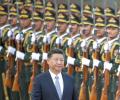
The president said China would never allow "any people, organisation or political party to split any part of Chinese territory out of the country at any time, in any form."

He praised the PLA's combat readiness.
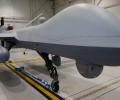
The sources said the talks are focused on sorting out certain issues relating to cost component, weapons package and technology sharing.

The heightened state of alert was only relaxed after Wang met his Jaishankar in Moscow on Friday on the sidelines of the Shanghai Cooperation Organisation summit, a second source said.

'China is unwilling to restore the status quo ante of April 2020.' 'India will have to weigh its options based on this premise.'

Chinese state-sponsored hackers had targeted India's power grids in Ladakh possibly for information on India's critical infrastructure or to prepare for sabotage in the future, according to the American cybersecurity firm Recorded Future.
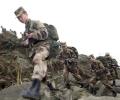
After frequent incursions in Ladakh area, Chinese People's Liberation Army troops have been spotted at forward posts along the Line of Control on the Pakistani side of Kashmir, ringing alarm bells in the security grid.

The "bumper" 40 per cent increase followed a number of sweeping reforms intended to transform the "bloated People's Liberation Army, into a more modern, nimble fighting force".
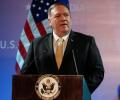
He said the actions of the ruling Chinese Communist Party meant there were 'threats to India, threats to Vietnam, threats to Malaysia, Indonesia and the South China Sea challenge'.

The sources said the situation in eastern Ladakh remained 'tense' and that around 30-40 soldiers of China's People's Liberation Army (PLA) are holding up at a position close to an Indian post in the Rezang-La ridgeline in eastern Ladakh.

Defence Secretary Lloyd Austin on Thursday directed that the aircraft carrier USS Ronald Reagan and the ships in her strike group will remain on station in the general area to monitor the situation.

Chinese President Xi Jinping has asked the People's Liberation Army to be combat ready to win a "regional war" and make sure that all decisions from the central leadership are strictly followed.

Will China's new military reforms endanger Xi Jinping's rule?

The balloon, which was being used by the People's Republic of China in an attempt to surveil strategic sites in the continental United States, was brought down above US territorial waters.

The army made the comments as part of a statement trashing a media report that said the Chinese military has again crossed the Line of Actual Control in eastern Ladakh at several places and that there has been at least one incident of clash between the two sides.

The Mumbai police, who are on toes in view of the intelligence inputs about a possible terror attack by Khalistani elements, on Friday appealed to citizens to remain indoors and avoid New Year parties.

The Chinese military is now desperately attempting to give "ex post facto strategic meaning" to its actions in eastern Ladakh.
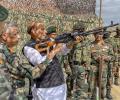
Amid the ongoing border conflict with China, Defence Minister Rajnath Singh is likely to visit Sikkim on this Dussehra to boost the morale of troops deployed against the People's Liberation Army (PLA).
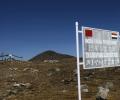
The five youths had gone missing on Friday from the Sino-Indian border in the Upper Subansiri district of Arunachal Pradesh.
Security forces have arrested a People's Liberation Army terrorist of Manipur while he was trying to cross over the international border at Dawki in East Khasi Hills district of Meghalaya.
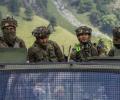
India and China on Saturday held another round of military talks with a focus on taking forward the disengagement process in Hot Springs, Gogra and Depsang in eastern Ladakh and bring down the tensions in the region, official sources said.
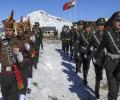
The Chinese government had "planned" the Galwan incident in June even as Beijing ramped up its multiyear coercion campaign against its neighbours, provoking military or paramilitary standoffs with countries from Japan to India, the United States top panel said in its report released on Wednesday.

Army Spokesperson Colonel Aman Anand said troops from China's People's Liberation Army (PLA) 'violated' the consensus arrived at during military and diplomatic engagements on the ongoing standoff in eastern Ladakh, and carried out provocative military movements to change the status quo.

Chinese President Xi Jinping on Sunday said the People's Liberation Army has the confidence and capability to defeat all invading enemies as he inspected a massive military parade at the country's largest military base to mark the 90th founding anniversary of the 2.3-million strong army.

After a gap of over three months, India and China on Wednesday are holding another round of high-level military talks to resolve the 20-month-long military standoff in the remaining friction points in eastern Ladakh, sources in the security establishment said.
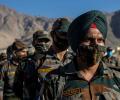
The political-electoral calculus favours spending thousands of crores on vanity projects like Sardar Patel's statue and the Central Vista over building up our military to handle the confrontations and conflicts that loom large, points out Ajai Shukla.
