A team at Bristol University used recently developed techniques to validate that the vaccine accurately follows the genetic instructions programmed into it by the Oxford University team.
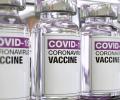
The Oxford vaccine, which also has a tie-up with the Serum Institute of India, is expected to win approval in the UK before Thursday, speeding up the provision of the jab to the most vulnerable groups.

This means there are now four promising vaccines on the horizon after Pfizer-BioNTech, Sputnik and Moderna already reporting good preliminary data from Phase 3 trials.
The comments came after AstraZeneca and Oxford University acknowledged a manufacturing error that is raising questions about preliminary results of their experimental COVID-19 vaccine.
This new trial, a single-blind, randomised Phase II trial, will enrol 300 volunteers, with up to 240 of these volunteers receiving the ChAdOx1 nCoV-19 vaccine and the remainder a control meningitis vaccine, which has been shown to be safe in children but is expected to produce similar reactions, such as a sore arm.

The Medicines and Healthcare Regulatory Agency, which had been formally tasked by the UK government last month with the process of clearance after the jab emerged "safe and effective" against the novel coronavirus in human trials, is expected to authorise the vaccine by December 28 or 29 after the final data is provided on Monday, 'The Daily Telegraph' quoted senior government sources as indicating.

The Oxford vaccine, which also has a tie-up with the Serum Institute of India, was first administered to Brian Pinker, an 82-year-old Oxford-born dialysis patient. Pinker is among the first to be vaccinated by the Oxford University Hospital's (OUH) chief nurse, hailed as a major milestone in the phased vaccination programme being undertaken by the National Health Service (NHS).
However, in two different dose regimens, the vaccine's efficacy was 90 per cent in one and 62 per cent in the other.
The Pune-based company's chief executive Adar Poonawalla said the company, which is the largest vaccine maker in the world, is putting $200 million at risk by manufacturing nearly 300 million doses before the final nod to launch the vaccine in market, which is expected at best by the end of the year.
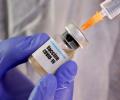
The United Kingdom government has pledged 20 million to support the "ChAdOx1 nCoV-19" coronavirus vaccine trial programme, with UK Health Secretary Matt Hancock saying the government would "throw everything at" finding a vaccine against the deadly virus.
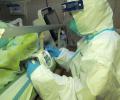
The researchers, working in an 'unprecedented' vaccine development effort to prevent COVID-19, said they have started screening healthy volunteers (aged 18-55) from Friday for their upcoming trial in the Thames Valley Region of England.

Blood samples taken from a group of UK volunteers given a dose of the vaccine showed that it stimulated the body to produce both antibodies and 'killer T-cells', a senior source from the trial was quoted by The Daily Telegraph as saying.

The UK's National Health Service was already lining up thousands of medics and volunteers to be ready to deliver jabs up and down the country.

While it is not clear whether the volunteer had received the vaccine or a placebo shot during the trial, Anvisa has refused to reveal any more information citing reasons of medical privacy, CNN reported.
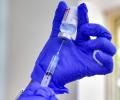
The study also noted that the booster dosage of the company's COVID-19 vaccine Vaxzevria also increased the immune response to Beta, Delta, Alpha and Gamma SARS-CoV-2 variants.
The phase 3 trial is being implemented as part of Operation Warp Speed, a multi-agency collaboration led by the US Health and Human Services, which aims at accelerating the development and manufacturing of medical countermeasures for COVID-19 and delivering 300 million doses of an effective vaccine by January 2021.
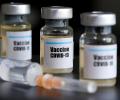
AstraZeneca Plc and the University of Oxford are facing questions about their Covid-19 vaccine and whether regulators would quickly authorise its emergency use after the pharma company acknowledged an error in the vaccine dosage received by some participants and other irregularities and omissions, according to the New York Times.
The British-Swedish pharmaceutical major and the UK's medicines regulator said that the vaccines produced by Oxford University in collaboration with AstraZeneca to protect against COVID-19 are safe.
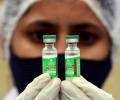
United Kingdom-headquartered pharmaceutical giant AstraZeneca (AZ) has admitted that in 'very rare cases' its Covid vaccine can cause a blood clot related side effect but the causal link is unknown, according to court papers being quoted in the UK media.

Bharat Biotech, Serum Institute, Zydus Cadila, Panacea Biotec, Indian Immunologicals, Mynvax and Biological E are among the domestic pharma firms working on the coronavirus vaccines in India.
Early data from its vaccine candidate 'mRNA-1273' showed it produced protective antibodies in a group of eight healthy volunteers, Moderna said. The other closely watched COVID-19 vaccine is the one being developed by scientists at Oxford University.
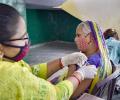
Backing the 12-16 weeks gap between the two doses of Covishield in the country, the chief investigator of the AstraZeneca vaccine clinical trials on Friday said that the level of protection provided by one dose of the preventive significantly increases in the second and third months after the jab.
The institute expects to complete both, phase-2 and 3 trials in India by the end of this year.

Serum Institute is investing $200 million to create capacities for the COVID-19 vaccine. Sohini Das profiles its 39-year-old CEO.

The Serum Institute of India, the largest vaccine maker in the world, has been chosen by Oxford and its partner AstraZeneca to manufacture the vaccine once it is ready. Trials results for the first two phases were published earlier this month.
The research published in 'Nature Nanotechnolog' on Monday is based on a new approach to vaccine development called "proactive vaccinology", where scientists build a vaccine before the disease-causing pathogen even emerges, which has shown promising results in mice.

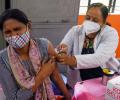
For vaccination, online registration is mandatory. Thereafter, eligible beneficiaries will be informed on their registered mobile number about the nearest vaccination facility, and the date and time of vaccination.

'We seem to be in a situation where we can do little, and nothing needs to be done anyway.'

The Oxford/AstraZeneca vaccine is also being produced as part of a tie-up by the Serum Institute of India.
While the vaccine could be available at $3-6 (Rs 225 to Rs 550) per dose, herd immunity might be two years away due to implementation challenges, it said, adding the experience in large scale adult vaccination programmes is thin.
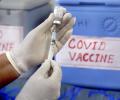
Paul noted that "three to four months from now, there will be other vaccines and the stockpile will be even bigger. "And more acceleration can be brought about in the vaccination programme," Paul added.

The world is learning about a side effect of the COVID vaccine called Thrombosis with Thrombocytopenia Syndrome, he said.

The official expressed hope on the success of the five vaccines that are under different phases of trial in the country.
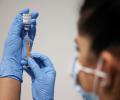
AstraZeneca has stressed that patient safety is its "highest priority" and pointed out that regulators around the world "consistently state that the benefits of vaccination outweigh the risks of extremely rare potential side effects".
'The challenge will be making sure its efficacy is high.' 'If a vaccine is only 50 to 60 per cent efficient, it's a double-edged sword.'
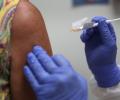
The ministry further stated that it was advisable to receive a complete schedule of the anti-coronavirus vaccine irrespective of past history of infection with COVID-19 as this will help in developing a strong immune response against the disease.
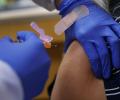
'Our client is suffering due to the ill-effects of the vaccine. He has to be compensated for his suffering. Further, a detailed investigation has to be done on the Covishield vaccine and its side-effects,' says the volunteer's advocate.

As India launches the world's most ambitious and biggest vaccination drive against COVID-19, the country will encounter the formidable challenge of rapidly scaling up distribution of the vaccines to secure immunity for its entire population, two prominent Indian scientists at World Health Organisation have said.
The new vaccine candidate, DIOS-CoVax2, uses banks of genetic sequences of all known coronaviruses, including those from bats, believed to be the natural hosts of many relatives of human coronaviruses.
More than 2 million people have been diagnosed with coronavirus across the world, and the pharmaceutical industry is pulling out all stops to find potential treatments and vaccines for the global pandemic. According to the World Health Organization, there are now more than 70 potential vaccines under evelopment, with some already in clinical trials.
