
India has launched three indigenous AI foundation models, EKA-1, Dhir 2B, and Dhir 5B, under the IndiaAI Mission. Developed by Soket Labs Technology and Research and ZenteiQ AiTech Innovations, these models aim to enhance India's technological and strategic autonomy in artificial intelligence, offering solutions for various sectors including banking, cybersecurity, defence, and government services, with a focus on Indian languages and offline capabilities.

India is proposing the Data Empowerment and Protection Architecture (DEPA) for AI Training, a national framework designed to enable startups, researchers, and companies to train AI models using data from hospitals, banks, and public agencies while ensuring privacy and security. This initiative aims to unlock significant AI-driven value for India's GDP by 2030.
Telangana IT Minister D Sridhar Babu stated that Gen Z will be the driving force behind the next wave of AI and green innovation. He urged young innovators to use their skills to solve real-world challenges, particularly in sustainability. The launch of the Green Skills and Applied AI Centre of Excellence in Hyderabad, a partnership between Telangana's IT Ministry, Microsoft, 1M1B, and MeitY Startup Hub, aims to equip graduates with industry-relevant skills in AI, green pharma, solar energy, EVs, and wind energy, with 100 job offers already announced.

Arunachal Pradesh Chief Minister Pema Khandu and Deputy Chief Minister Chowna Mein paid rich tributes to engineers on National Engineers' Day, commemorating the birth anniversary of Sir M Visvesvaraya. They highlighted the crucial role of engineers in the state's development, infrastructure, and India's overall progress, acknowledging their contributions to nation-building and technological advancement.
Hindustan Copper Limited CMD Anupam Misra spoke at the 85th CSIR Foundation Day, advocating for workplace safety, employee welfare, and scientific excellence. He stressed the importance of continuous learning, innovation, and bridging research with industrial applications to support Viksit Bharat 2047. CSIR-NML Director Dr. Sandip Ghosh Chowdhury also highlighted CSIR's legacy and its role in India's technological self-reliance.
Researchers at IIT-ISM Dhanbad have been granted an Indian patent for an electrochemical reactor designed to recover copper from industrial wastewater. This innovative technology offers an environmentally sustainable solution for resource recovery and wastewater treatment, particularly benefiting the mining and metallurgical sectors.

The Union Cabinet has approved the Khelo India Sports Goods Manufacturing Scheme with an outlay of Rs 1,856.67 crore for 2026-2033-34. This initiative aims to strengthen India's position in the global sports goods sector through dedicated manufacturing zones, research, skill development, and market expansion, fostering self-reliance and creating employment opportunities.

SAP has announced new programmes to train two million people in India with AI-ready skills by 2030, as part of its global initiative to upskill 12 million individuals worldwide. The company will collaborate with academic institutions, industry partners, and government bodies to expand access to AI, cloud, data, and enterprise technologies, leveraging India's significant role in the global tech workforce.

Microsoft has inaugurated its India South Central data centre region in Telangana, marking its fourth cloud region in the country and significantly expanding its cloud and AI infrastructure. This strategic investment supports Telangana's ambitious goal of achieving 5 GW of data centre capacity by 2029 and attracting USD 30 billion in digital infrastructure investments, further solidifying Hyderabad's role as a global technology hub.
Microsoft has inaugurated its India South Central data centre region in Telangana, marking its fourth cloud region in the country and significantly expanding its cloud and AI infrastructure. This strategic investment supports Telangana's ambitious goal of achieving 5 GW of data centre capacity by 2029 and attracting USD 30 billion in digital infrastructure investments, further solidifying Hyderabad's role as a global technology hub.

Tata Sons Chairman N Chandrasekaran affirmed India's robust economic position amidst global uncertainty, emphasising that energy security, advanced manufacturing jobs, and investment in human capital are 'critical' for sustaining the nation's long-term growth.

India does not need to win the model race to win the AI era. It needs to be the country that cannot be switched off, can be trusted by its citizens, and is useful to the rest of the world, asserts Rajeev Srinivasan.

Air Chief Marshal AP Singh stated on Sunday that the Indian Air Force's Operation Sindoor demonstrated its capability to strike targets across the Western front, serving as a warning to adversaries. He highlighted the operation's validation of the IAF's capability-centric approach, indigenous weapon systems, and commitment to zero collateral damage, while also outlining the force's long-term vision for 2047 to become a multi-domain aerospace power.
BRICS leaders, in their New Delhi Declaration 2026, have called for wider access to Artificial Intelligence resources and stronger international cooperation to ensure the technology is safe, secure, inclusive, and reliable. The declaration outlines a broad technology agenda covering AI, cybersecurity, digital public infrastructure, telecom, quantum technologies, and advanced manufacturing, committing to implement the grouping's statement on 'Global Governance of Artificial Intelligence'.
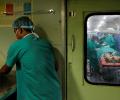
Prof Ajit Kumar Chaturvedi, Vice-Chancellor of Banaras Hindu University, highlighted Artificial Intelligence's transformative potential in healthcare, emphasising its role in augmenting doctors' capabilities and enhancing efficiency. Speaking at PGIMER's Foundation Day, he stressed the need for India to develop AI solutions tailored to its unique healthcare realities, moving beyond being a mere consumer of Western-trained systems. PGIMER Director Vivek Lal also detailed the institute's expansion and commitment to affordable healthcare.

India has secured a spot among the top 10 leading emerging-market performers in artificial intelligence (AI) readiness, with private investment in AI more than tripling to USD 4.1 billion in 2025, according to a new World Bank report.
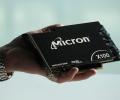
Micron CEO Sanjay Mehrotra announced plans to significantly scale up the company's chip assembly and testing facility in India, moving from "vision to execution" in the nation's semiconductor ambitions. He highlighted the success of the Sanand, Gujarat plant, which is already producing "Made in India" memory chips, and the company's substantial engineering contributions from its Indian centres. Mehrotra also emphasised the critical role of memory chips in the AI era, driving Micron's growth.

Prime Minister Narendra Modi cautioned against the 'weaponisation' of technology and critical minerals at the BRICS summit, advocating for cooperation to foster shared prosperity. Concurrently, Chinese President Xi Jinping announced plans for an open-source AI ecosystem for BRICS nations, positioning Beijing as a key technology partner amid global AI competition.

The National Skill Development Corporation (NSDC), in collaboration with Amazon Web Services (AWS) and Cultus Education, has launched a nationwide initiative to provide cloud and AI skilling to 1.5 lakh learners. This programme aims to equip youth, especially from Tier 2 and Tier 3 cities, with essential technology skills and job-ready training, contributing to India's goal of becoming a global innovation hub.

J R D Tata, chairman of the Tata group from 1938 to 1991, said that whenever he had to make a difficult decision, he would ask himself, what will be good for India, and what will be good for the Tatas. If he had a doubt, he would decide in favour of India. In the long run, it would turn out well for the Tatas too, he said, points out Arun Maira.

Uttar Pradesh Governor Anandiben Patel addressed AI Manthan 2.0, advocating for the comprehensive integration of Artificial Intelligence across all university subjects rather than as a standalone course. She urged universities to develop clear, time-bound AI roadmaps covering education, research, healthcare, and agriculture, emphasising indigenous AI development, employment creation, and the importance of "Safe and Trusted AI." The event also saw the formation of an AI Policy Advisory Group and an AI Implementation Group to drive these initiatives.

In her address to the nation on the eve of the country's 80th Independence Day, the president stressed that just as government and society remain united to ensure national security, everyone must contribute through joint and concerted efforts to safeguard the present and future of students.

Infrastructure major Larsen & Toubro (L&T) has secured a mega order, valued between Rs 10,000 and Rs 15,000 crore, to construct India's largest single-cluster artificial intelligence (AI) infrastructure facility. This strategic move marks L&T's entry into the AI Factory business, aiming to establish an NVIDIA B300-based AI Factory in Chennai to power the AI-native cloud platform of US-based Together AI, thereby strengthening India's AI ecosystem and supporting global innovation.

Ajay Kela, CEO of Wadhwani Foundation, highlights India's significant opportunity to lead in the diffusion of technology, creating national-scale use cases that reach millions of end-users. He also discusses the role of deep-tech startups and SMEs in job creation and the importance of upskilling initiatives.

Union Minister Jitendra Singh inaugurated a new biotechnology facility and dedicated a national facility for recombinant cells and sensors at the Rajiv Gandhi Centre for Biotechnology in Thiruvananthapuram, highlighting India's focus on biotechnology and its potential for economic growth.

During the 18th BRICS Summit in New Delhi, Chinese President Xi Jinping and Prime Minister Narendra Modi held a bilateral meeting, outlining a four-point approach for the steady and long-term development of China-India relations. The leaders stressed strategic understanding, win-win cooperation, mutual respect, and inclusive multilateral engagement, reaffirming their commitment to resolving the boundary question and addressing economic concerns. They also discussed global challenges and strengthening people-to-people ties.

Chinese President Xi Jinping's upcoming visit to India for the BRICS summit is a pivotal diplomatic event poised to significantly impact bilateral ties and global cooperation amidst ongoing international instability.

Prime Minister Narendra Modi celebrated 11 years of the Digital India initiative, highlighting its role in redefining governance, empowering citizens, and accelerating all-round development. He emphasised its impact on digital payments, direct benefit transfers, and expanding digital public infrastructure, making technology a powerful instrument for 'Ease of Living' across India, including tier-2 and tier-3 cities.
HCLTech, India's third-largest IT services company, announced plans to establish a global technology centre and an AI-optimised data centre in Bhubaneswar, Odisha, with a total investment of approximately Rs 15,000 crore, marking its entry into the AI infrastructure business.

Six faculty members from IIT Madras have been awarded the prestigious ANRF J C Bose Grant, recognising their outstanding research contributions in engineering and science. The highly competitive grant provides Rs 25 lakh annually for five years to support frontier research.

The Biotechnology Industry Research Assistance Council (BIRAC) has chosen seven to eight biotechnology startups as the initial group to receive funding from the government's ~1 trillion Research, Development and Innovation (RDI) Fund, with an average investment of approximately ~25 crore per startup.

Indian crypto exchanges and companies have expressed strong support for the Central Board of Direct Taxes' (CBDT) new Crypto Asset Reporting Framework (CARF), which mandates reporting and due-diligence obligations for crypto service providers on all transactions starting 2026.

Delhi LG Taranjit Singh Sandhu addressed the Global Confluence 2026, emphasising the importance of maintaining a human element at the heart of digital nation-building. He highlighted India's digital transformation and the role of technology in improving lives, while urging a focus on inclusive development and national security.

State Bank of India has launched a suite of AI-powered digital innovations on its YONO platform, enhancing both retail and business banking services. These new features include a 3-in-1 digital onboarding process, a sustainability tracker, integrated trade finance, and an AI virtual assistant, aiming to provide intelligent and future-ready banking experiences for its 53 crore customers.

Underlining that students are the "architects of India's future," President Droupadi Murmu on Friday said the government is taking comprehensive steps to reform public examinations to completely curb paper leaks and unfair means, making the system transparent, secure, and trustworthy.
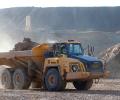
TEXMiN Foundation, IIT (ISM) Dhanbad has signed an agreement with the University of Pretoria, South Africa, for research collaboration in critical minerals, rare earth element processing, recycling, extraction technologies and advanced mining innovation.

The aim is to win over the country's enterprises, developers and startups as AI systems shift from answering questions to autonomously executing tasks.

UN Women has issued a stark warning that the rapid advancement of artificial intelligence (AI) is placing women at a higher risk of discrimination and digital violence, citing studies that reveal significant gender bias in AI systems and large language models.

A readout by the US said the agreement marked a milestone in the strategic partnership between the two nations to ensure that the foundational elements required for advanced technology and energy are available within trusted networks.

The Central Board of Direct Taxes (CBDT) has released a 198-page guidance note to assist crypto-asset service providers in complying with reporting obligations under the Income-tax Act, 2025, aligning India with the OECD's Crypto-Asset Reporting Framework (Carf) for automatic exchange of tax information.
