
India-China border trade via Uttarakhand's Lipulekh Pass is set to resume on August 1 after a gap of more than six years, with the neighbouring country granting permission to 20 Indian traders to visit Purang (Taklakot), according to officials.

Border trade between India and China through the Lipulekh Pass in Uttarakhand's Pithoragarh district is set to resume this year after a six-year hiatus due to the COVID-19 pandemic.

The boundary mess between India and Nepal needs a solution in a manner as mentioned by Nepal's Foreign Minister Shishir Khanal: 'On evidence not emotions', counsels Lieutenant General Shakti Gurung (retd).
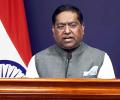
India on Wednesday categorically rejected Nepal's objection to a decision by New Delhi and Beijing to resume border trade through Lipulekh pass, saying Kathmandu's claims on the territory are not justified.
Nepal has reiterated its claim over the Lipulekh territory, stating it is an inseparable part of the country, after India and China agreed to resume border trade through the area. The Nepalese government has incorporated the territory into its official map and Constitution. India has rejected Nepal's claims, asserting they are not based on historical facts or evidence.

Nepal has reiterated its commitment to resolving the border issue with India through diplomatic channels, emphasising historical agreements and understanding.

India has firmly rejected Nepal's objection to the upcoming Kailash Mansarovar Yatra via the Lipulekh Pass in Uttarakhand, dismissing Kathmandu's territorial claims over the region.

The Nepalese foreign minister was speaking to the media a day after holding wide-ranging talks with his Indian counterpart S Jaishankar that focused on ways to further expand ties in diverse sectors, including trade, critical technology, connectivity and energy.

Nepal's Prime Minister Balendra Shah addressed parliament on the ongoing border dispute with India, stating both countries have agreed to seek resolution through diplomatic means and expert consultation. Shah's remarks about Nepal also encroaching on Indian territories have sparked controversy.

India has rejected any role for third parties in resolving its border dispute with Nepal, following comments from Nepal's Prime Minister suggesting involvement of China and the UK.

'Our discussions focused on the India-Nepal development partnership and people-to-people ties.'
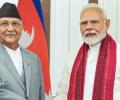
Nepal's claim on Lipulekh and Kalapani reopens a 200-year-old border dispute, while historical maps and treaties show the area belongs to India, asserts Lieutenant General Shakti Gurung (retd).
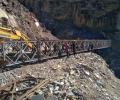
Local land records also say the land at Kalapani and Lipulekh belongs to the residents of two villages on the Indian side of the border, an official recently said.
The Kailash Mansarovar Yatra, a pilgrimage to Mount Kailash and Lake Manasarovar in Tibet, will resume on June 30 after a five-year hiatus due to the COVID-19 pandemic. The yatra will be conducted in five groups of 50 people each, with the first group entering China via Lipulekh Pass on July 10 and the last group departing on August 22. The pilgrimage, which holds great religious significance for Hindus, involves circumambulating Mount Kailash and taking a bath in Lake Manasarovar, believed to be the abode of Lord Shiva.

A profile of veteran Nepali politician K P Sharma Oli, detailing his rise to power, his various stints as prime minister, and his impact on Nepal's political landscape.

A total of 750 pilgrims have been selected through a computerised draw for the upcoming Kailash Manasarovar Yatra in Tibet, marking the resumption of the pilgrimage after a five-year gap. The Yatra's resumption is seen as an attempt to normalize India-China relations, which were strained by the eastern Ladakh border standoff. The pilgrimage will begin in June and continue until August, with pilgrims traveling in five batches via the Lipulekh route and ten batches via the Nathu La route. The selection process was deemed "fair, computer-generated, random, gender-balanced" by the Ministry of External Affairs (MEA), which organized the pilgrimage.
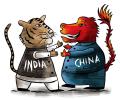
India and China have announced a series of measures aimed at improving their relationship, including maintaining peace along the border, reopening border trade, and resuming direct flights.

India maintains Lipulekh, Kalapani and Limpiyadhura belong to it.
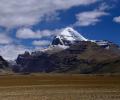
The Ministry of External Affairs (MEA) has announced that India and China have reached an understanding to resume the Kailash Mansarovar Yatra in 2025. While an understanding has been reached, the modalities of the pilgrimage are yet to be firmed up. The Yatra has been suspended since 2020 due to the COVID-19 outbreak and non-renewal of Yatra arrangements by the Chinese side.
Officials said that the Border Roads Organisation (BRO) has started the work on cutting the road from KMVN Huts in Nabhidhang in Pithoragarh district to Lipulekh pass on the India-China border, which will be completed by September.

A six-kilometre-long tunnel will be constructed between Bundi and Garbiyang on the Ghatiabagar-Lipulekh road in Uttarakhand to make the way to the last border post of the Lipulekh pass on the India-China border smoother, a senior BRO official said on Tuesday.
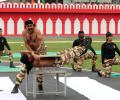
The 62nd Raising Day of the Indo-Tibetan Border Police Force was commemorated with great enthusiasm at the Seema Dwar in Dehradun.
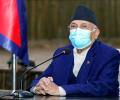
Former Nepalese prime minister KP Sharma Oli claimed that he was removed from power last year after his government published a new map of Nepal that included Kalapani, Limpiyadhura and Lipulekh as its territories.
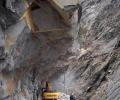
The Lipulekh pass is a far western point near Kalapani, a disputed border area between Nepal and India.
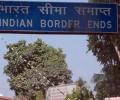
Both India and Nepal claim Kalapani as an integral part of their territory -- India as part of Uttarakhand's Pithoragarh district and Nepal as part of Dharchula district.

The ministry of external affairs said the artificial enlargement of territorial claims by Nepal is not based on historical facts or evidence.
"This unilateral act is not based on historical facts and evidence. It is contrary to the bilateral understanding to resolve the outstanding boundary issues through diplomatic dialogue," External Affairs Ministry Spokesperson Anurag Srivastava said.
The government had registered the amendment proposal in Parliament on May 22 after releasing the new political map of Nepal depicting Kalapani, Lipulekh and Limipiyadhura as its territories on May 18.
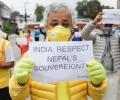
His visit comes ahead of the upcoming official trip of Indian Army chief Gen M M Naravane to Nepal in the first week of November. Goel called on Prime Minister Oli at his official residence at Baluwatar on Wednesday evening, the premier's press advisor Surya Thapa told PTI.

Oli said the territories belong to Nepal 'but India has made it a disputed area by keeping its Army there'. "Nepalis were blocked from going there after India stationed its Army," he said.
"India is open to engaging with all its neighbours on the basis of mutual sensitivity and mutual respect, in an environment of trust and confidence. This is a continuous process and requires constructive and positive efforts," Srivastava said.

Naravane is scheduled to meet Prime Minister K P Sharma Oli on Friday.

Gen Naravane on Tuesday said he was eagerly looking forward to the visit and exuded confidence that it will go a long way in strengthening the "bonds of friendship" between the armies of the two countries.
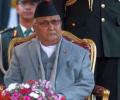
He claimed that India built a Kali temple, created 'an artificial Kali river' and 'encroached the Nepalese territory through deploying the Army' at Kalapani. The river defines the border between the two countries.
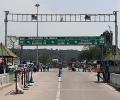
India has already termed as untenable the 'artificial enlargement' of the territorial claims by Nepal after its Parliament unanimously approved the new political map of the country featuring Lipulekh, Kalapani and Limpiyadhura areas which India maintains belongs to it.
Nepal recently released the revised political and administrative map of the country laying claim over the strategically key areas of Lipulekh, Kalapani and Limpiyadhura.

The road network at the Indo-China border will also help locals settle in their villages to run homestay and other tourism-related businesses
Speaking about the COVID-19 pandemic in Parliament on Tuesday, Oli said it has become very difficult for Nepal to contain the spread of the deadly virus due to the flow of people from outside.

In 2017, a retired R&AW officer conveyed that Uttar Pradesh Chief Minister Yogi Adityanath was keen to get monarchy restored in Nepal and suggested that I support these efforts.

The Chief of Army Staff is scheduled to hold extensive talks with the top civilian and military brass of Nepal including his counterpart General Purna Chandra Thapa on a range of key issues such as further boosting the management of the nearly 1,800 km-long border between the two countries.
