
US Senator Lindsey Graham passed away of a cardiac arrest a few hours after these photographs were taken.

The US announced a 60-day pause on sanctions against Russia and tariffs on other countries, including India, to analyse the global economic impact. This decision, made via an executive order by Trump, has drawn significant criticism from both Republicans and Democrats, who had previously passed the Lindsey O. Graham Sanctioning Russia and Iran Act. US officials stated the waiver allows for assessment of global energy pressures and European allies' refusal to impose secondary sanctions on Russian oil buyers.

US Secretary of State Marco Rubio's visit to India this week underscores the complex dynamics of global energy policy, as Washington re-evaluates sanctions on Russian oil buyers amidst India's continued reliance on Russian crude.

US President Donald Trump has issued a waiver from sanctions under the Sanctioning Russia and Iran Act, citing national interest. This move comes after a deal with Russia for diesel supply and ahead of a US official's visit to India, where concerns about the act's impact on India's oil imports were raised.

The US House of Representatives has passed the Lindsey O Graham Sanctioning Russia and Iran Act of 2026, authorising President Trump to impose sanctions on Russia's energy sector and tariffs on countries like India and China that purchase Russian oil and gas. The legislation aims to curb Russia's ability to evade existing sanctions and reduce global dependence on its energy exports, despite some Democratic opposition to increased tariff authority for the President.

Indian-American Congressman Raja Krishnamoorthi voted in favour of a Russia sanctions act in the US House, diverging from his Democratic party and other Indian-American lawmakers. The bill, which passed, imposes tariffs on Russian oil and gas buyers, potentially impacting India and China, and exempts US uranium purchases from Russia.

Trump has enacted a new law imposing significant sanctions on Russia and Iran, which could lead to tariffs of up to 100% on major energy importers like India and China.

US President Donald Trump has defended a controversial diesel deal with Russia, stating it aims to stabilise the global market despite bipartisan criticism from US lawmakers. The deal, which eases sanctions on Russian diesel shipments until April 2027, has been criticised as a "gift to our adversary" that finances Russia's war efforts and offers little relief to Americans.

The US House of Representatives is debating a bill that would authorise the President to impose sanctions on Russia and steep tariffs on its oil and gas trading partners, including India and China. The bill, aimed at pressuring Russia over the Ukraine war, has faced opposition but is expected to be put to a vote.

Prime Minister Narendra Modi and US President Donald Trump held a telephone conversation to review progress in bilateral ties, covering trade, defence, and energy, against the backdrop of heightened trade friction due to the 'Lindsey O. Graham Sanctioning Russia and Iran Act of 2026'.

The US House of Representatives has advanced a bill that would empower President Donald Trump to impose 100 per cent tariffs on countries, including India, that purchase oil and gas from Russia, and also extend sanctions on Iran. The legislation, which previously passed the Senate, aims to curb Russia's energy revenue amidst the Ukraine conflict.

US President Donald Trump is expected to sign the Lindsey O. Graham Sanctioning Russia and Iran Act of 2026 later on Friday (local time). A White House official confirmed the development to ANI without revealing further details.
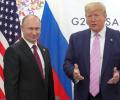
Former President Donald Trump's recent deal with Russia to supply diesel to the US and global markets has ignited a political firestorm, drawing sharp criticism from Ukraine's President Volodymyr Zelenskyy, Democratic leaders, and a segment of Republicans, despite the US Treasury lifting sanctions on Russian diesel supplies.

China has strongly rejected a US bill that would impose tariffs on countries, including India, for purchasing Russian oil and gas. Beijing views the "Lindsey O Graham Sanctioning Russia and Iran Act 2026" as an act of "long-arm jurisdiction" and interference in its sovereign trade relations, asserting that its economic cooperation with other nations is based on equality and mutual benefit.

Indian stock market investors are closely monitoring crude oil prices, geopolitical developments in West Asia, and the implications of the US Sanctioning Russia and Iran Act, which could impose tariffs on countries, including India, that purchase Russian crude.

Lindsey Vonn revealed she nearly had her leg amputated following a crash at the Milano Cortina Olympics, detailing the severity of her injuries and the multiple surgeries she underwent.

'We expect the Indian delegation to flag New Delhi's worries and elaborate on its standpoint on the Russia-linked tariff as well as the Section 301 investigation into overcapacity.'

The US Senate has overwhelmingly approved a bill, the Lindsey O. Graham Sanctioning Russia and Iran Act of 2026, which aims to punish Russia and its major petroleum product buyers, including China and India. The legislation allows the US President to impose 100 per cent tariffs on goods from the top five importers of Russian oil and gas, and also extends sanctions on Iran's energy sector. The bill, championed by the late Senator Lindsey Graham, now moves to the House of Representatives for further approval.

External Affairs Minister S Jaishankar met US Secretary of State Marco Rubio on the sidelines of the UN General Assembly session in New York. India raised its concerns regarding the recently signed "Lindsey O. Graham Sanctioning Russia and Iran Act of 2026," which authorises tariffs on countries buying Russian oil and gas. Both leaders also discussed bilateral relations, regional priorities, and the situations in the Gulf and Ukraine.

India has stated its commitment to protecting its economic interests and ensuring energy security after the US House of Representatives passed a bill allowing the US President to impose tariffs of up to 100 per cent on countries, including India and China, for purchasing Russian crude oil. The Ministry of External Affairs affirmed India's resolve to maintain diversified energy sourcing and has articulated its concerns to US interlocutors regarding the bill's potential implications.

US lawmakers are racing to amend the Russia sanctions bill before recess. One amendment specifically names India, China, and other countries as potential targets for 100% tariffs due to their oil trade with Russia. Another significant amendment proposes to scrap the tariff section entirely, while others address presidential waiver powers and aid to Ukraine.

Chinese President Xi Jinping is set to visit the United States from September 23 to 25 for summit talks with US President Donald Trump, with discussions expected to cover critical economic and trade issues, including AI, and the recently signed US sanctions law targeting countries buying Russian oil and gas.
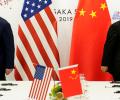
Top US and Chinese officials, including Vice Premier He Lifeng and Treasury Secretary Scott Bessent, held "candid, in-depth and constructive" talks in New York on economic and trade issues, with a specific focus on artificial intelligence. These discussions precede Chinese President Xi Jinping's anticipated visit to Washington and occur amidst new US sanctions targeting countries purchasing Russian oil and gas, and the US unveiling an "AI Force."

A bipartisan group of US Senators has agreed to fast-track a bill allowing the President to impose sanctions on major purchasers of oil from Russia and Iran. This legislation, known as the Lindsey O. Graham Sanctioning Russia and Iran Act of 2026, aims to restrict funding for Russia's war efforts and Iran's energy and weapons sectors, potentially impacting countries like China and India through tariffs and other restrictions.
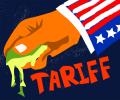
The bill, introduced on Thursday, was conceived by Democrat Senator Richard Blumenthal and late Republican Senator Lindsey Graham and has the support of over 60 lawmakers.

'If you listen to a rowdy in a class, he will keep on bullying you.' 'India can say do whatever you want. We will not compromise on anything.'

US Republican Senator Lindsey Graham, a prominent ally of former President Donald Trump and an influential voice on American foreign policy, has passed away at 71 following a 'brief and sudden illness', leaving a significant void in Washington's political landscape.
A bipartisan group of US senators has introduced a comprehensive bill imposing extensive sanctions on Russia, with India identified as one of five countries that could incur tariffs for its continued purchase of Russian oil.

US Vice President JD Vance and Prime Minister Narendra Modi held a phone call to discuss expanding the India-US comprehensive global strategic partnership, focusing on trade, defence, energy security, emerging technologies, and critical minerals. The discussion comes amidst rising tensions in West Asia and recent regional realignments, with both leaders reaffirming their commitment to strengthening cooperation.

The 2026 FIFA World Cup final sees Argentina, led by Lionel Messi, take on a strong Spanish unit featuring teenage star Lamine Yamal, with Messi aiming for back-to-back titles at a venue holding past painful memories.

Serena Williams is set to make a comeback to competitive tennis after a nearly four-year absence, receiving a wildcard entry into the Queen's Club Championships doubles draw.
It is plain to see that the US senate bill's real objective is to derail India's time-tested strategic partnership with Russia, points out Ambassador M K Bhadrakumar.

US President Donald Trump has rejected Iran's proposal to end the ongoing war, deeming it 'totally unacceptable'. This decision comes amid efforts to negotiate an end to hostilities that began on February 28 and have disrupted global oil supplies.

US President Donald Trump's proposed peace deal with Iran has drawn significant criticism from both Republican and Democrat senators, who express deep concerns that it would legitimise Tehran as a 'dominant force' and potentially allow it to retain control over the Strait of Hormuz and uranium enrichment capabilities.
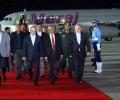
A new report alleges Pakistan shielded Iranian military aircraft from potential US airstrikes, raising questions about its role as a neutral mediator in the ongoing US-Iran tensions.

A US military Apache attack helicopter crashed near the Strait of Hormuz, with its crew successfully rescued, as US President Donald Trump confidently declared an imminent 'total victory' over Iran within two weeks and a new nuclear deal, despite ongoing regional volatility and a recent de-escalation between Iran and Israel.

In a lengthy post on Truth Social, Trump said negotiations with Iran were 'proceeding nicely' and argued that several Muslim and Arab nations should formally recognise Israel and join the Abraham Accords once a deal is reached.

Novak Djokovic and Eileen Gu will co-host this year's Laureus World Sports Awards in Madrid, marking a historic first for the prestigious event.
India is closely monitoring developments related to a proposed American legislation that seeks to impose up to 500 per cent tariff on countries procuring Russian crude oil.
United States Senator Lindsey Graham on Sunday claimed that Indian Ambassador to the US Vinay Mohan Kwatra spoke to him last month about India buying less Russian oil and asked him to tell President Donald Trump to relieve the 25 per cent tariff.
