
Israeli Prime Minister Benjamin Netanyahu made an urgent appeal to right-wing Likud voters on Tuesday, warning of high Arab voter turnout in the ongoing parliamentary election. He claimed Arab voters were "racing to the ballots" and attempting to "steal the election," echoing a controversial tactic from 2015. Netanyahu stressed the importance of every vote for the future of the "Jewish state," as Arab citizens' participation could significantly influence the political balance.

Prime Minister Benjamin Netanyahu's Likud emerged as the largest party in Israel's recent election, but his right-wing bloc secured only 53 seats, falling short of the 61 required for a parliamentary majority. This outcome positions Arab parties, with a combined 19 seats, as crucial powerbrokers in upcoming coalition negotiations.

Israel's parliamentary election results have led to uncertainty in government formation, as Prime Minister Benjamin Netanyahu's bloc failed to secure a majority. The situation is further complicated by allegations of electoral fraud and foreign interference, which have been refuted by election officials and the Shin Bet security agency.

Israel's Election Commission is counting 'double envelope' votes, with Benjamin Netanyahu's Likud projected to be the largest party but his bloc falling short of a majority. The opposition bloc, along with Arab parties, holds a potential majority, leading to calls for a Jewish-Arab coalition to form a government and keep Netanyahu out. Negotiations are set to begin as President Herzog urges against another election.

Israel's crucial general elections witnessed over 16 per cent voter turnout in the first three hours, the highest since 1981, indicating a tight race between Prime Minister Benjamin Netanyahu and challenger Gadi Eisenkot. The election is influenced by the ongoing conflict and demands for accountability over the October 7, 2023, attack, with Arab citizens' participation potentially playing a significant role in the outcome.

Partial results from Israel's general election indicate that Benjamin Netanyahu's bloc remains short of a parliamentary majority with 54 seats, while the opposition bloc led by Gadi Eisenkot has 48 seats, leading to a potential coalition deadlock.

Israeli Prime Minister Benjamin Netanyahu has intensified allegations of election fraud by Arab-led parties, describing suspected foreign interference as an "earthquake". The Central Elections Committee has asked the internal security agency, Shin Bet, to investigate these claims, which come amid an inconclusive election where neither Netanyahu's bloc nor the opposition secured a majority. President Isaac Herzog has called for a thorough investigation while cautioning against general suspicion of the Arab community.

As Israel prepares for parliamentary elections on Tuesday, Prime Minister Benjamin Netanyahu faces a critical test of his leadership amidst the fallout from the October 7, 2023, Hamas attack, the ongoing Gaza war, and significant domestic challenges.
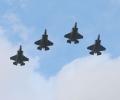
The United States has evacuated American aircraft from an air base in the UK following a threat from Iran, according to people familiar with the matter, raising fresh concerns over the security of US military assets amid the ongoing conflict.

Israeli President Isaac Herzog stated on Thursday evening that it is unclear who has the ability to form a government, despite Gadi Eisenkot receiving 67 recommendations and Benjamin Netanyahu 46. This uncertainty stems from mutual vetoes between and within political blocs, particularly concerning the inclusion of Arab parties due to their stance on Hamas. Herzog plans to hold personal talks with party leaders before tasking someone on Sunday.

Israeli President Isaac Herzog has tasked opposition leader Gadi Eisenkot with forming the country's next government, marking a significant political setback for incumbent Prime Minister Benjamin Netanyahu. Eisenkot secured recommendations from 67 lawmakers, while Netanyahu received 46, highlighting a shift in parliamentary support.
Israel is set to hold parliamentary elections on Tuesday, with Prime Minister Benjamin Netanyahu vying to retain power. The election is a critical test of his leadership, influenced by the government's handling of the October 7, 2023, Hamas attack, subsequent wars, and ongoing legal challenges. Opposition leaders, including Gadi Eisenkot and Naftali Bennett, are challenging his right-wing coalition, but opinion polls suggest a fragmented outcome with no clear majority. Key issues include security, accountability for the October 7 attack, military service exemptions for ultra-Orthodox men, and judicial reforms.

Gadi Eisenkot, a career soldier and leader of the centrist Yashar party, has emerged as Prime Minister Benjamin Netanyahu's principal challenger in the upcoming Israeli general election. His campaign is testing whether a leader from Israel's historically marginalised Mizrahi community can reshape the country's political establishment, which has been dominated by Ashkenazi Jews.

Israel's Mossad and Shin Bet are investigating alleged foreign interference in the recent national election, focusing on claims of efforts to influence Arab voter turnout. While Qatar has been implicated and denied involvement, the probe's scope is limited and does not question the overall election results. High-level briefings have occurred, and final findings will be submitted to the Central Elections Committee.

Modi's cautious response, omitting the public invite from his telephonic conversation summary, suggests India's reluctance to be drawn into Israel's internal politics, points out M R Narayan Swamy.
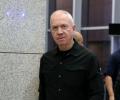
Gallant, who was a longtime rival from within the Likud Party, will be replaced by Israel's Foreign Minister Israel Katz. Minister without Portfolio Gideon Sa'ar will replace Katz, as per Times of Israel.

President Herzog said that he will assign the task to form a new government to Netanyahu, 73, following consultations with leaders of all the political parties that have been elected to Parliament.

Former Prime Minister Benjamin Netanyahu led right-wing bloc has secured an emphatic victory in Israel's general elections by claiming 64 out of the 120 seats in parliament, bringing the country's longest-serving premier back at the helm after a brief gap and also ending prolonged political instability.

Out of 120 members of the Knesset (Israeli parliament), Netanyahu has the support of 64 members

Netanyahu, who has won the backing of 64 Members of the Knesset (Israeli Parliament), has been assigned the task to form the next government, a statement from the Presidency said.

The opinion piece added that the party combines the most striking principles of three major political entities in the world -- the Likud Party of Israel, the Communist Party of China and the Muslim Brotherhood of Egypt.
The two opposition leaders expressed their willingness, but Lapid demanded far-right leaders and ministers, Bezalel Smotrich and Itamar Ben-Gvir, be removed. Gantz agreed to join alongside the two, the report said.

Israel's President Isaac Herzog on Monday appealed to Prime Minister Benjamin Netanyahu to immediately halt his controversial judicial overhaul, warning that the move has put the country's security, economy and society under threat.

With 99 per cent of the ballots counted, Netanyahu-led right-wing bloc has taken a comfortable lead with 64 seats in the 120-member Knesset, paving way for his triumphant return.
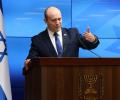
Bennett and Lapid, in a joint statement, said that they had "exhausted options to stabilise" their coalition which has recently come under severe strain over unruly members threatening to dump it.

'In light of the events in Israel, Foreign Minister Cohen decided to cut short his diplomatic visit to India and return to Israel after the meeting with Indian Prime Minister Narendra Modi that will take place today'

Informed sources said Netanyahu spoke to Prime Minister Modi earlier on Tuesday and both of them agreed to cancel their scheduled meeting in New Delhi on September 9 due to the repeat polls in Israel on September 17.
The Central Election Committee (CEC) said that Blue and White party seemed to be taking a lead over Likud after 91 per cent votes were counted.

Netanyahu's right-wing Likud party has claimed a stunning victory in the election.
Israel's parliament is set to vote on Sunday on a new government led by Yamina head Naftali Bennett, ousting Prime Minister Benjamin Netanyahu from power after an uninterrupted 12 years at the helm of affairs.

The prime minister has denied all the allegations, saying they are part of a politically orchestrated "witch-hunt" to oust him from office.
Israeli Prime Minister Benjamin Netanyahu on Monday blamed Iran and its "protege" Hezbollah of carrying out the twin bomb attacks on Israeli diplomats in India and Georgia, accusing Tehran of being the "world's largest terror exporter".
In a setback to the fragile Middle East peace process, Israel's general elections threw up an inconclusive mandate on Wednesday, with both the centrists and the rightists claiming victory and a hawkish anti-Arab leader emerging as the possible kingmaker.

Israelis began voting on Tuesday in a general election following a high-pitched campaign

With nearly 95 per cent of votes counted Thursday, Gantz's Blue and White party stood at 33 seats in Israel's 120-seat Parliament. Netanyahu's Likud stood at 32 seats.

The wife of a senior Israeli politician sparked a row after she posted a racially charged joke about US President Barack Obama on Twitter wherein she referred to him as "black and weak".
Israeli Prime Minister Benjamin Netanyahu has clinched an 11th-hour deal with a right-wing party to form a hardline coalition government that could pose a major challenge to any global initiative to break the logjam in peace talks with the Palestinians.

Former Israeli prime minister Ariel Sharon died on Saturday at a hospital near Tel Aviv after being in a comatose state for the past eight years following a stroke. He was 85.
