
India Inc's first-quarter earnings season was significantly impacted by the West Asia conflict, leading to rising costs, calibrated price increases, and margin pressures across various sectors including FMCG, automotive, steel, and cement. Companies are implementing price hikes to protect profitability, with many anticipating further escalations if input costs remain elevated.

The harsh truth is that the US is no longer a reliable partner, cautions Ramesh Menon.

Reduce your reliance on gas usage and distribute the cooking of your meals between your toaster, microwave, electric kettle or air-fryer.

Food and grocery delivery giant Swiggy has reported a significant narrowing of its net loss in the first quarter, down 34 per cent year-on-year to approximately 791 crore, while revenue from operations surged by 37 per cent to 6,812 crore. The company also achieved contribution margin break-even in its quick commerce segment, Instamart.
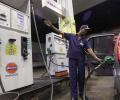
Despite international crude oil prices falling to a four-month low, retail petrol and diesel prices in India are unlikely to be cut immediately because state-run refiners are still processing costlier crude purchased during the peak of the West Asia crisis, Oil Minister Hardeep Singh Puri said.

Police in Maharajganj, Uttar Pradesh, have detained 14 people after a violent clash erupted at an HP gas agency due to a dispute over gas bookings.

Reliance Industries shares rose over 1 per cent after the company reported record quarterly core profit and EBITDA for the June quarter, driven by strong performances in its oil-to-chemicals and telecom businesses.

Tamil Nadu Petroleum Dealers' Association urged people not to panic-buy petrol or diesel, stating that 14 terminals in Tamil Nadu have enough stock to replenish 7,000-plus retail outlets as per their demand.

Quick commerce platforms are experiencing a significant increase in demand for ready-to-eat food items as urban households face disruptions in cooking gas supply and a temporary outflow of migrant domestic help.

The reopening of the Strait of Hormuz, following a ceasefire agreement between the US and Iran, is expected to significantly ease India's crude oil supply risks, lower freight costs, and reduce inflationary pressures, as global oil prices have already dropped.

Reliance Industries (RIL) delivered a better-than-expected operational performance in Q1FY27, driven by a recovery in its oil-to-chemicals (O2C) business and robust gains in the telecom (Jio) segment, though its retail arm missed estimates. Analysts highlight the upcoming Jio Platforms IPO and execution in new energy and consumer businesses as key triggers for the stock's future growth.

Dharmendra Pradhan's political career faced an unexpected jolt as he resigned as Education Minister following nationwide protests over the NEET paper leak, marking a significant departure from the government's initial dismissive response to the agitation.
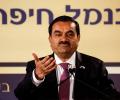
Adani Group has agreed to pay USD 275 million to settle allegations of violating US sanctions on Iran. The U.S. Treasury Department's Office of Foreign Assets Control (OFAC) acknowledged the Indian conglomerate's extensive cooperation and proactive disclosures during the investigation.

India's decision to import LPG from the US helps it to diversify sources as it reduces almost full reliance on West Asian countries for supply of the country's primary cooking fuel.
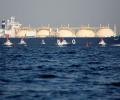
The government has withdrawn most provisions of the emergency natural gas supply regulation order imposed during the West Asia conflict after liquefied natural gas (LNG) shipments through the Strait of Hormuz resumed following a ceasefire.

Prime Minister Narendra Modi flagged off India's first hydrogen-powered train connecting Jind to Sonipat in Haryana, marking a significant milestone in the country's journey towards clean and sustainable railway mobility and showcasing the success of the 'Make in India' initiative.

Following a Memorandum of Understanding between the US and Iran to resolve the West Asia conflict, eleven India-bound vessels have successfully transited the Strait of Hormuz. This development signals a positive shift for maritime trade, with more Indian-flagged ships expected to pass through the crucial waterway soon.

A recently finalised peace deal between the US and Iran, set to be signed on June 19, is expected to significantly benefit India's economy by boosting exports to West Asia, stabilising the rupee, and easing inflationary pressures, according to exporters and experts.

India possesses two months of fuel stockpiles and faces no supply concerns despite global energy disruptions, according to Oil Minister Hardeep Singh Puri. However, state-run fuel retailers are incurring losses of up to Rs 1 lakh crore in a single quarter due to elevated crude prices and unchanged retail fuel prices, raising questions about the sustainability of these losses.
Saudi Arabia's steep cut in LPG benchmark prices has pushed India's household LPG underrecoveries to their lowest level in over two years, slashing oil companies' losses from Rs 200-250 per cylinder last year to about Rs 20-40 now.

India has no plans to ration fuel supplies despite ongoing disruptions in global energy markets, according to a top oil ministry official. The country has maintained adequate inventories of crude products and LPG while diversifying imports to manage supply risks.

Reliance Industries Ltd reported a 22 per cent year-on-year decline in consolidated net profit for the June quarter, primarily because the previous year's earnings were inflated by a one-time gain from the sale of its stake in Asian Paints.

India's wholesale price inflation surged to 8.30 per cent in April, up from 3.88 per cent in March, primarily driven by a significant increase in the prices of fuel, power, and crude petroleum, according to data from the commerce and industry ministry.

Petrol and diesel prices in India have seen their fourth increase in less than two weeks, pushing cumulative hikes to nearly Rs 7.5 per litre since May 15, reaching their highest levels since May 2022. This surge, driven by global crude oil costs and the Iran conflict, is expected to exacerbate inflationary pressures and raise transportation costs across the economy.
Food delivery and e-commerce platform magicpin aims to expand its AI assistant, Vera's, merchant base to over 1 million by the end of 2026. Launched three months ago, Vera already supports over 5 lakh merchants by providing real-time order insights and has facilitated over 50 lakh interactions across various business verticals. The company has invested USD 1 million in its AI stack and plans further enhancements to Vera's capabilities.
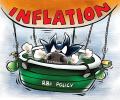
The Reserve Bank of India has increased its retail inflation projection for 2026-27 to 5.1 per cent, up from an earlier estimate of 4.6 per cent. This revision is primarily attributed to mounting input costs, driven by the pass-through of higher global energy prices to domestic petrol and diesel rates, which have seen significant increases since May.

Mumbai Police have arrested three men from Jharkhand for creating and selling fraudulent APK files used to scam people, particularly during a recent shortage of LPG cylinders.

An India-flagged LPG tanker, Jag Vikram, has successfully crossed the Strait of Hormuz following a temporary ceasefire between the United States and Iran, marking a significant development for India's energy security.

'The real shock is going to be from a deficient monsoon.'

In a first, Indian oil public sector undertakings (PSUs) finalised a one-year contract to import around 2.2 million tonnes (mt) of liquefied petroleum gas (LPG) from the US. The LPG import deal comes at a time when negotiations for an India-US bilateral trade agreement (BTA) are gathering steam. Earlier in the month, US President Donald Trump had said Washington and New Delhi were "pretty close" to reaching a fair trade deal.

'The final electoral roll will be published on October 7, 2026.' 'If someone who is otherwise eligible does not find his/her name in that electoral roll, they can fill Form 6 along with other necessary documents to enrol his/her name in the electoral roll after the final publication of the electoral roll also.'

Ahmedabad's Chief Fire Officer, Amit Dongre, reflected on the Air India flight AI-171 crash a year ago, describing the 10-hour rescue operation as the most challenging in his 22-year career, despite the tragic loss of 260 lives.

'OMCs are incurring losses of Rs 1,000 crore per day due to the West Asia crisis.'

The escalating conflict in West Asia has resulted in 19 ships carrying essential energy resources for India being stranded in the Strait of Hormuz, raising concerns about potential disruptions to the country's energy supply.

Petrol and diesel prices have been increased by Rs 3 per litre each, marking the first hike in over four years, as state-run fuel retailers pass on some of the impact from surging global crude prices, which have been exacerbated by the Iran war.

India significantly increased piped natural gas (PNG) connections in March as the government accelerates the expansion of cleaner fuel networks amid global supply disruptions.

Petrol and diesel prices in India have been increased for the second time in a week, following a long freeze on revisions. The increase comes as global crude prices surge and state-run oil firms look to recoup losses.

Residents of Meghaninagar vividly remember the explosion that shook the neighbourhood on the afternoon of June 12, 2025. An Air India Boeing 787 Dreamliner bound for London had crashed into the hostel blocks of B J Medical College. A massive fire broke out, sending clouds of smoke into the sky.

A senior government official confirms that Indian vessels do not require permission to navigate the Strait of Hormuz, despite regional tensions. Several Indian ships, including LPG tankers, have safely crossed the strait, ensuring continued supply of essential commodities to India.

Government sources indicate a potential increase in petrol and diesel prices due to rising global crude oil costs and losses incurred from a prolonged freeze on retail rates.
