
The strategic Karakoram Highway, which links Kashghar in Xinjiang with Gilgit and Abbottabad through the KhunjerabPass, has been damaged at more than 50 places from Gojal to Besham, leaving hundreds of commuters and over 50 foreign tourists stranded.

The sortie had to be executed in good weather and in sub-zero temperatures, which meant it was to be accomplished by mid or third week in May before the earth heated up and the monsoon clouds made things difficult.
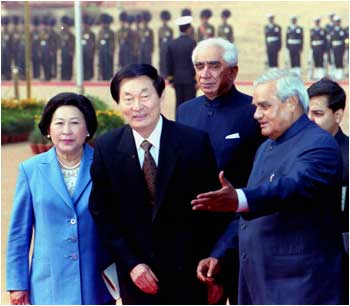
'He knew that a regime which believes that power flows from the barrel of the gun can only be handled from a position of comprehensive strength and not from a position of vulnerability and weakness,' says Rup Narayan Das.

'Intrusions by PLA troops in the Ladakh sector are more in number than elsewhere and this region is now likely to remain an area of enhanced Chinese interest,' warns China expert Jayadeva Ranade.

'India in 2020 is a lot better prepared than in 1962.' 'It is no longer a pushover; and anything other than a crushing Chinese military victory will be a major loss of face for China,' observes Rajeev Srinivasan in the first of a three part column.
'Does the country risk being enclosed in a geographical cocoon if it spurns a multi-continent project for which everyone else has signed up,' asks T N Ninan.
While we have to hiss loudly and do the lunging bit to keep our foes on their toes, that's only a tactical matter. What is the strategic goal? What is the end game? In my opinion, there is only one possible end game: the unwinding of Pakistan into several pieces: Balochistan, Sind, Balawaristan (Gilgit, Baltistan, the rest of PoK), the Pashtun area Khyber Pakhtunwa which will merge with Afghanistan, and the rump Punjab, says Rajeev Srinivasan.

'Captain Haneef-ud-din, pulling his sinewy body forward, crawled, rifle in hand, in the snow on 6 June 1999. He died on this craggy mountainside exactly two years after he had passed out of the IMA...'

Chinese President Xi Jinping arrived in Islamabad on Monday on his first visit to Pakistan where he is expected to sign a deal for an economic corridor worth $46 billion and other agreement.

If the responses of the three persons to the interrogators are to be believed, it was the charm of Bollywood superstars Shah Rukh Khan and Hrithik Roshan that apparently drove them to India. They were detained last month.
'India needs to learn in Kashmir how to spread development.' 'Pakistan needs to learn in Balochistan how to spread development.' 'China needs to learn in Xinjiang and Tibet.' 'And if they can show tangible benefits, there will be less terrorism.' 'No one wakes up in the morning saying 'I want to kill myself', right?'

'Himalayan glaciers are expected to become smaller, and small glaciers will have disappeared, but by no means will all glaciers have melted by the end of the 21st century,' glaciologist Markus Stoffel tells Rashme Sehgal.
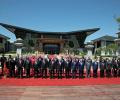
'Whichever option India chooses, it should be clear to the government that the China-Pakistan nexus poses a clear and present danger to national security,' says Brigadier Gurmeet Kanwal (retd).

Brushing aside India's concerns, China on Monday cemented its "all-weather ties" with Pakistan by agreeing to build a strategic $46 billion (Rs 2.9 lakh crore) economic corridor through Pakistan-occupied Kashmir as part of 51 deals signed, expanding the communist giant's influence in the region.

A fleet of eight JF-17 Thunder fighter jets -- jointly made by the two countries -- will escort the Chinese president once his plane enters the Pakistani airspace.
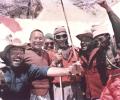
Exactly 50 years ago, the first Indian team, led by Manmohan Singh Kohli, reached the summit of Mount Everest. As Kohli and his team are felicitated to mark the anniversary, he reminisces on the event that continues to inspire generations of Indian mountaineers. Payal Mohanka reports
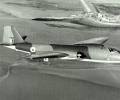
'If we had sent a few airplanes (into Tibet), we could have wiped the Chinese out.' 'And everything could have been different in the 1962 War.' 'They did not believe me there was no Chinese air force.' 'Can you imagine what would have happened if we had used the IAF at that time?' 'The Chinese would have never dared do anything down the line.'

The decision to not attend the forum attended by 28 heads of state and 130 national delegations is a clear break from its usual policy of going along with the crowd.

'Their failure to take Siachen is an embarrassment to the Pakistan army -- and let them live with it. Our army's shoulders are broad enough to endure the challenge.'

Four major political takeaways from Narendra Modi's much-anticipated trip to China
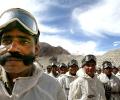
'The Indian military has rightly advised the government not to fall for the rather spurious Pakistani demand to demilitarise Siachen,' says Nitin Gokhale in an interview about his new book Beyond NJ9842: The Siachen Saga.
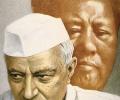
'Delhi was not concerned.' 'It would continue sleeping for several more years, with the result that Indian territory is still occupied by China today,' says Claude Arpi.
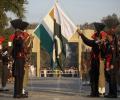
He was replying to a volley of questions about the outcome of Monday's brigade commander's flag meeting in Poonch.
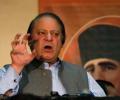
The Sino-Pakistan relationship remains fundamentally asymmetrical: Pakistan wants more out of its ties with China than China is willing to offer. Today, when Pakistan's domestic problems are gargantuan, China would be very cautious in involving itself even more, says Harsh V Pant.

China is spending billions of dollars to improve infrastructure in Tibet and other parts of its border with India. Claude Arpi explains why New Delhi can't afford to ignore Beijing's plans.

The BDCA is yet another dose of insidious placebos administered on the people of India by their own government that has been in perpetual denial over the steady incremental loss of strategic Indian territory, says R N Ravi

'Chinese leaders rarely receive their foreign guests in cities other than Beijing. Such respect for India!' 'Does it mean that Modi could replicate "the warmth and unconventional way" by sending Indian troops into Tibet, as Xi did in Chumur (Ladakh) when he arrived in India? Of course, Indians are far too polite to do so,' says Claude Arpi.
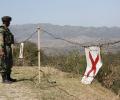
'The response to terror is not always reciprocal terror, nor is launching a conventional response the best response.' 'The best response is to make the sponsor pay a price he cannot afford,' says former RA&W chief Vikram Sood.

'How can Kashmir be demilitarised if the terrorist threat remains and Pakistan continues to incite elements in Kashmir to keep the internal situation unstable?' asks former foreign secretary Kanwal Sibal.

The developments in Af-Pak region, particularly the fall out of Pak political paralysis, would make President Xi Jinping's task a little more complicated, says Colonel R Hariharan.

'It is a pattern of behaviour of the Chinese that whenever a Chinese leader visits India or an Indian leader visits China, some incidents take place.' 'When Modi visits China, we should look out for some similar demonstration by the Chinese.'
