
The Supreme Court has allowed former West Bengal chief minister Mamata Banerjee and others to file fresh applications regarding their claim that victory margins in 31 constituencies in the recent assembly polls were less than the deletion of votes during the Special Intensive Revision (SIR) of electoral rolls.

The Supreme Court Bar Association has expressed deep concern over an Andhra Pradesh High Court judge reportedly sending a young advocate to judicial custody for a procedural lapse, urging the Chief Justice of India to take cognisance of the incident.

The Supreme Court overturned a Delhi High Court order that had suspended the life sentence of former BJP MLA Kuldeep Singh Sengar in the 2017 Unnao rape case, instructing the High Court to reconsider the plea.

The Supreme Court has directed the Madhya Pradesh government to decide on granting sanction to prosecute minister Kunwar Vijay Shah for his remarks targeting Army officer Col Sofiya Qureshi. The court expressed its displeasure over the delay and the nature of Shah's comments.
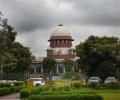
The Supreme Court of India has observed that the practice of excommunicating Parsi women for entering into interfaith marriages is prima facie discriminatory, emphasising that the right of conscience is a birthright.

The Supreme Court has taken exception to AIIMS' plea to set aside its order allowing a 15-year-old rape survivor to terminate her 30-week pregnancy, urging the Centre to amend the law to permit abortion beyond 20 weeks in such cases.

The Supreme Court of India has voiced concerns about the potential consequences of individuals questioning religious practices in constitutional courts, warning it could lead to the fragmentation of religions and civilisation. A nine-judge Constitution bench is hearing petitions related to discrimination against women at religious places and the scope of religious freedom.

The Supreme Court has taken suo motu action in the case of a brutal assault on a woman advocate in Delhi, allegedly by her husband, and has directed the Delhi Police Commissioner to hand over the investigation to a senior police officer.
A court in Ballia, Uttar Pradesh, has sentenced a man to 25 years of rigorous imprisonment under the POCSO Act for abducting a 15-year-old girl under the false pretence of marriage.

The Supreme Court has permitted the NIA to file its charge sheet upon completion of the investigation into the incident in West Bengal where judicial officers were illegally confined by a mob.
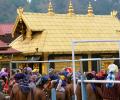
The Travancore Devaswom Board (TDB), managing the Sabarimala temple, argued in the Supreme Court that religious beliefs should be judged subjectively by the community, as the court hears petitions related to discrimination against women at religious places.
The Supreme Court of India has stated that religious institutions must have structure and norms for their functioning, emphasising that the right to manage a religious institution does not imply an absence of order.
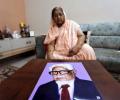
The Supreme Court has disposed of Teesta Setalvad's plea for passport release, advising her to reapply with a travel itinerary. The case relates to alleged fabrication of documents in the 2002 Gujarat riots.
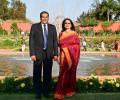
The Supreme Court has appointed former Chief Justice of India Sanjiv Khanna as the sole mediator to resolve a dispute involving businessman Ashokbhai Haribhai Gajera and others in a case linked to textile market projects in Surat. The case involves allegations of siphoning off Rs 1,900 crore and forging documents.
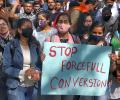
The Supreme Court has agreed to hear a plea challenging the validity of the Rajasthan Prohibition of Unlawful Conversion of Religion Act, 2025, potentially impacting religious freedom and state legislation.

A headmaster in Jharkhand's Hazaribag district has been booked and suspended after allegations of sexually harassing girl students surfaced. An FIR was lodged following a complaint by the mother of a 13-year-old girl. The headmaster is currently on the run.
The Shabari story in the Ramayana found mention before a nine-judge constitution bench of the Supreme Court on Wednesday while hearing petitions related to discrimination against women at religious places, including the Sabarimala temple in Kerala.
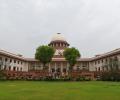
The Supreme Court of India is hearing petitions related to discrimination against women at religious places, including the Sabarimala temple in Kerala, and the scope of religious freedom practised by multiple faiths.
Delhi Police has formed a team to investigate allegations that two government hospitals and a private hospital refused immediate treatment to a woman advocate who was allegedly assaulted by her husband.

The Supreme Court has deferred the hearing on a PIL alleging large-scale banking fraud involving the Anil Dhirubhai Ambani Group and its firms to May 8.

The Supreme Court of India has ruled that a minor child cannot be forced to carry a pregnancy to term, urging the government to amend laws to allow rape survivors to terminate unwanted pregnancies beyond 20 weeks.
The Supreme Court has directed the Delhi Police to investigate the brutal assault on a woman advocate, allegedly by her husband, and has asked for a senior officer to lead the probe. The court also addressed concerns about hospitals refusing the victim admission and directed financial assistance.

Delhi Police have arrested three men for allegedly operating a mule account syndicate that routed over 1.5 crore of cyber fraud proceeds through layered transactions.

Chief Justice of India, Justice Surya Kant, advocates for careful integration of AI in the judicial system, emphasising the importance of human judgement and oversight in delivering justice.
The Supreme Court has stated that roads cannot be blocked for religious activities and that while religious denominations have autonomy in worship, the government can interfere if secular activities are affected.
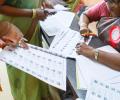
The Supreme Court declined to initiate an inquiry into alleged voter roll irregularities in West Bengal, stating it would amount to a 'fishing inquiry'. The court's decision came after concerns were raised about the addition of a significant number of voters ahead of the state's Assembly elections.
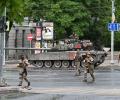
The Centre informed the Supreme Court that ten Indians have died while fighting alongside Russian forces in the Russia-Ukraine war. The court is hearing a plea seeking the repatriation of Indians allegedly forced to fight.

Chief Justice of India, Justice Surya Kant, advocates for the integration of Artificial Intelligence (AI) into the judicial system, emphasising that it should enhance efficiency without compromising core judicial functions and human oversight.
The Supreme Court has directed the Uttar Pradesh DGP to form an all-women SIT to investigate the rape and murder of a four-year-old girl in Ghaziabad, following concerns about the local police's handling of the case and allegations of denial of treatment by private hospitals.
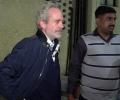
The Supreme Court has referred Christian Michel James' plea for release in the AgustaWestland VVIP chopper scam case to another bench. The Delhi High Court previously dismissed his petition, but James continues to challenge his detention and the India-UAE extradition treaty.

Chief Justice of India expresses concern over the increasing number of digital arrest scams, highlighting a recent case where an elderly woman was defrauded of her retirement benefits.

Delhi Police busted a human trafficking and prostitution racket in central Delhi, rescuing eight women, including a minor. Two men were arrested, and efforts are underway to apprehend other suspects.

The Supreme Court has transferred the investigation of the Malda incident, involving the gherao and attack on judicial officers, to the National Investigation Agency (NIA), citing concerns about the credibility of West Bengal's bureaucracy.
Supreme Court judge Justice B V Nagarathna has cautioned against the over-reliance on Artificial Intelligence (AI) in the judiciary, emphasising the need for judicial independence from algorithmic influence. She stressed that AI should only serve as a tool and not replace human judgement, which is guided by legal reasoning, constitutional values, and a deep sense of justice.

The Supreme Court questioned the chief priest of the Sabarimala Ayyappa Temple regarding the constitutionality of preventing believers from touching the deity, during hearings on discrimination against women at religious sites.
Supreme Court judge Justice B V Nagarathna stated that judicial independence in the modern era includes freedom from algorithmic influence, emphasising that AI should only assist judges, who must ultimately decide based on constitutional values and human judgment.
The Supreme Court has declined to intervene in a petition concerning the deletion of names from voter lists in West Bengal, directing the petitioners to seek redressal through established appellate tribunals.

The Centre has supported the restriction on women of menstruating age entering Kerala's Sabarimala temple, arguing that the Supreme Court's 2018 judgement assumes male superiority.
Supreme Court judge Justice B V Nagarathna stated that judicial independence in the modern era is not just freedom from external power, but also from algorithmic influence, while speaking at a conference in Bengaluru.

Chief Justice of India Surya Kant has recused himself from hearing petitions challenging the constitutional validity of the 2023 law regarding the appointment of election commissioners, citing a potential conflict of interest.
