
'If you yourself don't believe in the product, you will never be able to sell it.' 'If you have got the basics right, if you have understood the consumer needs well, success will always follow.'
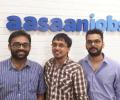
'Each day, while interacting with scores of people, all with demands and expectations of their own, holding one's own fort is of paramount importance. 'One must always have the vision which will guide the journey,' says Dinesh Goel, a chemical engineer from IIT-B, co-founder and CEO, AasaanJobs.com, an online marketplace for entry-level and blue-collar job seekers.

The rules, the first ever for software applications in the country, were recently issued by the patent office and mandate each new software to be 'machine-specific' and packaged with 'new hardware' to qualify for a licence.

US President Barack Obama said there is natural convergence between India and the United States.

Both Obama and Modi have taken bold steps towards laying the groundwork to give a big push to Indo-US trade, and now it's time to execute, says Bikash Mohapatra.

'A bit of marketing, a bit of positioning, and a lot of strategic thinking is required, and all this should be in aid of India's strategic intent: Becoming the third pole in a global G3 and aiming for Numero Uno,' says Rajeev Srinivasan.

'The real test will be in defence-related deals, for instance the Javelin anti-tank missile: Is the US willing to co-develop something with India, on terms that will support the 'Make in India' initiative? Is there defence technology transfer? Or will it dump old junk on India?' asks Rajeev Srinivasan.
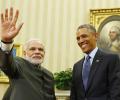
When President Obama lands in New Delhi later this week, this spirit of accommodation must reignite a strategic economic relationship between the two countries.

Ram Sumiran Pal arrested in Delhi; hunt for two others on.

'I will be happy if walls are built between India and China!' 'We are going to nooks and corners of the country to make ordinary people realise the need to buy Indian goods so that our workers get jobs.'
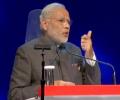
"Reform is not an end in itself. Reform for me is just a way station on the long journey to the destination. The destination is the transformation of India," he said.

'Modi and Obama both had agendas that went beyond the nuclear deal. The threat from the chilly Himalayas had to be tackled in the warm waters of the Indian Ocean.'

Modi's visit to some developed countries such as the US, Japan, China and Australia were sprinkled with humongous investment figures. But do we have the wherewithal to absorb such big investments?
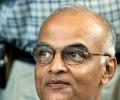
NSA Menon's wisdom says that the idea to be superpower is not really desirable, it is better to be different. Sheela Bhatt reports.

With EU, it is part of the FTA that we will need to negotiate.

Indian scientists who wrote to the PM last week are not entirely rejecting GMOs but instead asking for caution and further testing to establish their safety.

'Any new technology, either before or soon after its release, will face severe criticism by one or the other segment of society. It is only after seeing the benefits of new technology for themselves that our farmers accept it.' 'The arable land in India is not increasing and currently hovers at around 140, 145 million hectares.' 'Today, Indian agriculture has to work towards achieving nutritional security.'

Vandana has been attempting to bring in radical changes in the unhealthy food habits amongst the tribals.

Indian Prime Minister Narendra Modi who envisioned Make In India last September was at his eloquent best as he made a fervent plea to global businesses to come Make In India.

'India is no longer the India of the '70s and the '80s.' 'It's a large country with the fastest growing economy.' 'In working with India, you just can't go and humiliate the nation publicly.' USIBC President Mukesh Aghi tells Aziz Haniffa/Rediff.com about how he advises American companies to do business with India, what he thinks of Modi's government and the way forward for the India-US relationship.

This is the joint statement issued by the ministry of external affairs on the visit of US President Barack Obama to India.
