
Nepal has launched a diplomatic initiative to secure climate-related compensation from major greenhouse gas emitters, asserting that post-disaster assistance for recent deadly flash floods should be viewed as a moral and legal liability, not charity. Foreign Minister Shisir Khanal highlighted Nepal's disproportionate suffering from global warming despite negligible emissions, citing rapid glacier melt and extreme mountain disasters. The country has formally approached the Loss and Damage Fund board for urgent financial aid following a catastrophic flash flood in the Bhotekoshi river basin.

A recent study by scientists indicates that the Hindu Kush-Himalaya region is experiencing increased frequency and intensity of extreme weather events due to climate change, including rapid glacial melting and changing rainfall patterns. However, the research also cautions against solely blaming climate change, highlighting that human factors like population growth, commercial activities, and non-enforcement of regulations contribute significantly to the vulnerability and impact of these disasters. The study points out that many devastating floods originate from small glaciers and rain-fed streams, exacerbated by encroachment on unstable slopes and floodplains.

Nepal's former Forest and Environment Minister Madhav Prasad Chaulagain has expressed concern over the lack of timely information exchange with China ahead of the devastating floods, stating that the disaster's scale could lead to an 'unbelievable' rise in the death toll.

A preliminary government report reveals that devastating flash floods in Nepal have affected over 32,000 people, caused 1,295 deaths, and severely damaged infrastructure including roads, bridges, schools, and healthcare facilities. Senior Nepali Congress leader Arjun Narsing KC has criticised the government's coordination of rescue and relief operations and called for international action on climate justice.
The Indian government has identified 111 districts as 'most vulnerable' to crop damage due to a 43 per cent monsoon deficit, driven by El Nino, which threatens kharif sowing. Agriculture Minister Shivraj Singh Chouhan stated that weak monsoon conditions are expected to persist until July 2, prompting contingency plans and recommendations for alternative, less water-intensive crops.

'When a glacier collapse or a major flood event does occur, the water will simply reclaim its original path, and anything built in that path will be swept away.'

Following devastating flash floods in Nepal, experts are calling for systematic scientific assessments of glaciers to understand and mitigate hazards, alongside the development of a robust land use policy for the Himalayan region. The floods, which killed over 460 people and left thousands missing, are believed to be linked to climate change impacts on glaciers and permafrost.

A senior Geological Survey of India official warns that the Himalayas are vulnerable to cascading disasters, where one high-altitude event can trigger a chain of destructive events downstream, as evidenced by Nepal's recent floods. He stresses the need for integrated monitoring using satellite data and ground investigations to identify high-risk areas and improve preparedness in the Indian Himalayas.

BRICS finance ministers and central bank governors have called for increased representation of emerging-market and developing economies in the IMF and World Bank, while also criticising unilateral tariffs and trade measures, as the expanded bloc aims to bolster financial cooperation amidst global fragmentation.

A proposed Rs 1,200 crore Secretariat-Assembly complex in Pattinapakkam, Chennai, has ignited significant opposition from local fishing communities and various political parties. Residents fear displacement, loss of livelihood, and environmental damage, citing ancestral rights and broken promises. Political leaders across the spectrum are urging Chief Minister C Joseph Vijay to reconsider the site, highlighting concerns about ecological impact, traffic, and financial priorities.


The devastating floods in Nepal have brought back memories of two major disasters in Uttarakhand in recent years, the Rishiganga tragedy of February 2021 and the Dharali disaster of August 2025, which caused extensive loss of life and property and left thousands struggling to rebuild their lives.

As MGNREGA comes to a close, both critics and supporters keenly eye VB G RAM G's performance.
The Indian government has announced the replacement of the Mahatma Gandhi National Rural Employment Guarantee Act (MGNREGA) with the Viksit Bharat Guarantee for Rozgar and Ajeevika Mission (Gramin), or VB-G RAM G Act, 2025, effective July 1. The new scheme aims to expand guaranteed wage employment and link it more closely with infrastructure development and climate resilience, but faces concerns from opposition parties and labour rights activists.

The closure of the Strait of Hormuz has disrupted some 20 per cent of the global flows but even if it opens, damages to production facilities in the region will take time to repair, points out Sunita Narain.

A study by IIT Gandhinagar researchers reveals that urban greening alone is insufficient to reduce heat stress in Indian cities, highlighting the need for climate-responsive planning that considers humidity, ventilation, and urban compactness.

Football's global players' union has renewed concerns about the potential impact of heat on the 2026 World Cup, following a scientific analysis indicating a high likelihood of dangerous temperatures for both players and fans.
India has expressed serious concerns about the West Asia crisis and its potential impact on energy supplies and maritime stability, urging BRICS nations to find practical solutions to geopolitical challenges and unilateral sanctions.

This was perhaps a missed opportunity for India to spotlight a core domestic challenge: The scale of workforce preparation required for a young, populous, rapidly growing country seeking to reach net zero, points out Radha Roy Biswas.
We cannot simply have a 60-65 per cent import dependency in LPG, the bulk of which comes from just one volatile region -- West Asia, points out R Jagannathan.

If TVK MLAs and ministers are perceived as clean, or demonstrably cleaner than their predecessors, the credibility dividend will be enormous. The voter will feel rewarded, points out Ramesh Menon.
Researchers at CSIR-NCL have developed a technology for producing dimethyl ether (DME) as an alternative to liquefied petroleum gas (LPG), potentially reducing India's reliance on imports and enhancing energy security.

A BJP government in Bengal inherits more problems than it might care to admit at its moment of triumph, points out Ramesh Menon

'At COP30, the emphasis will be on unlocking climate finance, reinforcing the principle of common but differentiated responsibilities, and building resilience through inclusive transitions and the mainstreaming of adaptation.'

The question is no longer whether the war will expand. It has. The next few days will tell us whether the war stabilises around Hormuz or whether the Strait itself becomes the trigger for a far larger rupture. What to watch for over the next 48 hours is simple: Any move by the US toward direct naval control of the Strait; any credible Iranian attempt to disrupt or mine shipping lanes and, critically, whether energy infrastructure in the Gulf continues to be targeted.If those lines are crossed in tandem, the war will no longer be containable within the region.

A comprehensive risk assessment warns that Kishtwar district in Jammu and Kashmir faces a serious threat from glacial lake outburst floods (GLOFs), endangering lives, infrastructure, and the ecosystem. The report calls for immediate mitigation measures and long-term strategies to build resilience.

Activists from Himalayan states condemn the arrest of Sonam Wangchuk, demanding his release and supporting the call for statehood and inclusion in the Sixth Schedule of the Constitution. They also warn of a larger crisis unfolding across the Himalayan region due to climate change and poor governance.
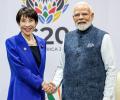
If they act now, they can reshape the strategic map of Asia without firing a shot. If they wait, the next opportunity will come only after a serious Taiwan Strait incident -- by which time the price will be far higher, and the room for boldness far smaller -- the opportunity may well be lost by then. The question is no longer whether this can or should be done, points out Varun Arya.
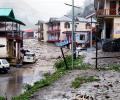
'...they always address problems superficially, never tackling root causes.' 'Currently, the policy response will focus on immediate relief -- getting people to safety, providing facilities, clearing debris.' 'This is necessary, but once immediate relief operations end, everything returns to 'normal' without addressing underlying vulnerabilities.'
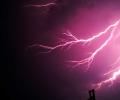
Lightning claims more lives in India annually than any other extreme weather event. Between April and July this year alone, 1,621 people died due to lightning strikes.
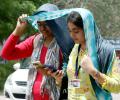
About 57 per cent of Indian districts, home to 76 per cent of the country's population, are currently at high to very high risk from extreme heat.
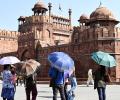
'The intensity and frequency of heatwaves will be much higher than in previous years over Punjab, Haryana, Rajasthan, Gujarat, Madhya Pradesh and Odisha.'

India has for the first time secured a place among the top 100 out of 167 countries ranked for their progress in achieving the Sustainable Development Goals (SDGs), according to a report published on Tuesday. According to the UN Sustainable Development Solutions Network's 10th and latest Sustainable Development Report (SDR), India ranks 99th on the 2025 SDG Index with a score of 67, while China ranks 49th with 74.4 and the US 44th with 75.2 points.
With general government debt now approaching three-quarters of GDP, and only incremental reform efforts visible, Pakistan risks prolonging its economic stagnation unless fundamental governance, regulatory, and industrial overhauls are undertaken.

'Marathwada is the suicide capital of Maharashtra.' 'To stop such man-made disasters, the government should immediately come up with a rightful package, not this charitable approach to compensation.'

More than 80 per cent of Indians live in districts vulnerable to climate risks. Among these, Assam, Andhra Pradesh, Maharashtra, Karnataka, and Bihar are the most vulnerable states to extreme climate events.
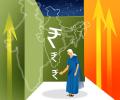
Indian economy to grow at 6.3-6.8 pc in FY26, against 6.4 pc in FY25

As Singapore, New York and Melbourne have shown, cities can mitigate the impact of heatwaves if they have the will to create green infrastructure, explain Amit Kapoor & Bibek Debroy.

President Droupadi Murmu's address to the nation on the eve of the 79th Independence Day.
The experts said that climate change is not only raising temperatures and making India's heatwaves hotter, but also changing weather patterns that further drive dangerous weather extremes.
