
The CJI also said merits of a case may be quite different from what is shown in the media when asked about the delay in hearing on the bail plea of former Jawaharlal Nehru University student Umar Khalid, lodged in jail in a Delhi riots case.

The Supreme Court has directed a Jharkhand-based lawyer to issue an unconditional apology to the High Court in a contempt case stemming from a viral courtroom exchange where he allegedly told a judge, "Don't cross the limit."

The Supreme Court on Tuesday stayed trial proceedings against former Karnataka chief minister BS Yediyurappa in a sexual harassment case filed under the Protection of Children from Sexual Offences Act.

The apex court had decided to hear the pleas related to the IOA and the AIFF together.

It said that when a retiree, who withdraws amounts in the range of Rs 10,000 or Rs 20,000, suddenly withdraws huge amounts, then the bank should issue an alert.
The Supreme Court has expressed serious concerns about the rise in digital fraud, particularly digital arrest scams, and has directed the central government to develop a standard operating procedure to combat these crimes.

The Supreme Court has directed states to consider deploying additional staff to ease the workload on booth level officers (BLOs) engaged in the special revision of electoral rolls, following concerns about extreme work pressure and related issues.

The Supreme Court intervened to protect the Punjab Kesari newspaper from coercive actions by the Punjab government and its pollution control board, ensuring its continued publication.
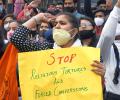
The Supreme Court has sought responses from the Centre and 12 states on a PIL challenging the validity of their anti-conversion laws. The National Council of Churches in India (NCCI) filed the PIL, seeking a stay on the operation of these laws.

Asserting that he prays regularly, the CJI said, "Believe me, if you have faith, God will always find a way."

The Congress party has accused the BJP government of disrespecting opposition leaders Rahul Gandhi and Mallikarjun Kharge by seating them in the third row during the Republic Day parade. BJP leaders have responded by questioning Rahul Gandhi's attendance at other important events.

In his address, CJI Chandrachud recounted his journey, from sitting in the last row of the court as a young law student to his time on the revered corridors of the top court.

According to the CJI, once someone has a sense of faith in his/her intentions and abilities, it is easier not to obsess over outcomes but to value the process and the journey towards those outcomes.

The Delhi High Court agreed to hear a plea regarding mass flight cancellations by IndiGo, while the Supreme Court acknowledged the chaos as a 'serious matter'. IndiGo has cancelled 500 flights, leaving many passengers stranded.

The integration of artificial AI-based judicial assistance tools into the district court management framework has accompanied the shift.

The Supreme Court of India has expressed concern over a growing trend of litigants and lawyers making scandalous allegations against judges when court rulings are unfavorable. The court cautioned against such conduct, emphasizing the duty of lawyers to uphold the integrity of the judicial system.
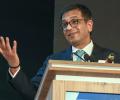
He further opined that though as public functionaries, courts were vested with the responsibility to give effect to equity, these judicial bodies were not directly in charge of the manner in which resources were to be distributed.

Chief Justice of India (CJI) D Y Chandrachud on Monday said there was 'nothing wrong' in Prime Minister Narendra Modi's visit to his residence on Ganpati Puja and underscored the need for a 'sense of maturity in political sphere' on such issues.
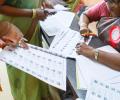
The Supreme Court of India resumed hearing petitions challenging the Special Intensive Revision of electoral rolls in Bihar, addressing the use of Aadhaar and concerns about voter deletions.

The Supreme Court of India has questioned the legal status of Rohingya refugees living in the country, raising concerns about providing resources to illegal entrants while Indian citizens face poverty.

Chief Justice of India Sanjiv Khanna on Tuesday said no oral submissions for urgent listing and hearing of cases will be permitted and urged lawyers to either send emails or written letters for it.
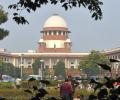
The Supreme Court of India has cautioned against the dangers of unregulated social media, emphasizing that freedom of speech cannot be exercised at the expense of others' dignity and integrity. The court was addressing a plea related to a recent incident where a shoe was thrown at the Chief Justice of India.
Legal experts have lauded Chief Justice of India Sanjiv Khanna's decision to make public crucial documents related to a controversy surrounding the alleged discovery of cash from Delhi High Court judge Yashwant Varma's residence. They also welcomed the formation of an in-house committee to further investigate the matter. While some expressed concerns about the incident's impact on the judiciary's image, others emphasized the need for transparency and a fair inquiry. The Supreme Court released the inquiry report by Delhi High Court Chief Justice D K Upadhyaya, which included photos and videos of the alleged cash discovery. Justice Varma has denied the allegations, calling them a "conspiracy to frame and malign him."

The Supreme Court is examining the validity of the Election Commission's decision to conduct special intensive revisions of electoral rolls in several states, focusing on concerns about democratic participation and the burden on ordinary voters.

Several opposition leaders and some lawyers of the Supreme Court reacted sharply to Modi attending the puja at the CJI's residence.

The Chief Justice of India (CJI) Sanjiv Khanna has ordered an in-house inquiry into allegations against a Delhi High Court judge, Justice Yashwant Varma, after reports of burnt cash being found at his residence. The inquiry will be conducted by a three-member committee headed by Justice Sheel Nagu, Chief Justice of the Punjab and Haryana High Court. The allegations stem from a report by the Delhi High Court Chief Justice Devendra Kumar Upadhyaya, who stated that four to five semi-burnt sacks of Indian currency notes were found at Justice Varma's residence following a fire. Justice Varma has strongly denied the allegations, calling them a conspiracy to frame him.
The Supreme Court has declined to urgently hear pleas seeking a stay on anti-conversion laws enacted by several states, including Uttar Pradesh, Gujarat, and Madhya Pradesh. The matter is now scheduled for hearing in December.
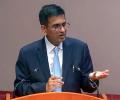
Former chief justice of India D Y Chandrachud on Friday said media reports of him being considered for the National Human Rights Commission chairperson's post were 'untrue'.

The Supreme Court of India has directed the NHAI and MCD to consider relocating or temporarily closing toll plazas at Delhi's borders to alleviate traffic congestion and reduce air pollution. The court also addressed school closures and financial aid for construction workers affected by pollution control measures.

The Supreme Court on Monday took strong note of former Chief Justice of India Ranjan Gogoi being made a party to a PIL and seeking of an in-house inquiry against him for dismissing a plea earlier related to a service dispute.
"The doctrinal error in the Krishna Iyer approach was, postulating a rigid economic theory, which advocates for greater State control over private resources, as the exclusive basis for constitutional governance," the CJI wrote in the 193-page judgment.

The Supreme Court is considering relaxing the ban on firecrackers in Delhi-NCR ahead of Diwali, citing practical concerns and the need to balance environmental and livelihood interests.

The litigant levelled allegations against the former CJI following which a bench comprising Justices Bela M Trivedi and Satish Chandra Sharma asked the security personnel to escort him out of the courtroom

Former Chief Justice of India D Y Chandrachud has expressed concern about the influence of social media on the judiciary, stating that special interest groups are using it to sway court decisions and judges need to be vigilant. He highlighted the dangers of forming opinions based on short social media clips, emphasizing the nuanced nature of judicial decision-making. Chandrachud also defended the collegium system for judicial appointments and clarified that while there is no legal bar on judges entering politics after retirement, their decisions might be scrutinized differently due to their past roles.
"The boy came from a marginalised background, could not pay the admission fees of Rs 17,500. He would have lost his admission had we not granted relief then. This is what has sustained me as a judge all these years," the CJI said.
The Supreme Court has agreed to hear a plea challenging the Election Commission's decision to conduct Special Intensive Revision (SIR) of electoral rolls in Tamil Nadu, Kerala and West Bengal. The court is also addressing concerns about disenfranchisement and citizenship issues related to the revision process.
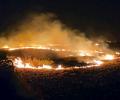
The Supreme Court has expressed concern over the increasing pollution levels during winter and has suggested that the Punjab government arrest farmers who engage in stubble burning. The court believes that this action would send a strong message and help curb air pollution.

In a video, Chandrachud and his wife Kalpana Das were seen welcoming Modi at their house.
The Supreme Court has addressed the issue of reservation quotas in Maharashtra local body elections, stating that the final results of elections in 57 local bodies, where the 50% quota ceiling has been breached, will depend on its judgment in the case.

Terming the plea as a "publicity interest litigation", the Supreme Court on Tuesday dismissed a plea seeking directions to reconstruct and reinstall a seven-foot idol of Lord Vishnu at the Javari Temple, part of the UNESCO World Heritage Khajuraho temple complex in Madhya Pradesh.
