
'People trust India and Indians a lot more than they trust China and the Chinese.'

It has been a slow 2022 thus far for the primary markets. In the last 8 months, only 16 companies have raised Rs 40,311 crore via the initial public offer (IPO) route, data from PRIME Database suggests. In comparison, 63 companies had raised a cumulative Rs 1.18 trillion via the IPO route in 2021. A large part of the funds raised in 2022 were on account of the two IPOs - Life Insurance Corporation of India (LIC) and logistics firm Delhivery - that raised a total of over Rs 26,000 crore between themselves.

'Career paths are no longer linear as professionals look to build a more holistic career portfolio that is true to their professional and financial goals.'

'The pitch for India is flat, the ball for India is old, the sun for India is out, and the bowlers are not bowling too well.' 'I think only we can get ourselves out.'

IT major TCS on Thursday posted a 28.5 per cent increase in consolidated net profit at Rs 9,008 crore for the first quarter ended June 30, 2021. The country's biggest software services firm had posted a consolidated profit of Rs 7,008 crore in the same quarter a year ago. Consolidated revenue from operations increased by 18.5 per cent to Rs 45,411 crore compared to Rs 38,322 crore in the corresponding quarter of 2020-21.

'Such big falls are quite frequent these days, so do not try to time this market.' 'Use big dips to accumulate quality stocks.'

While salary growth may range from a marginally positive to stagnant or even negative, the increment for some of the "super-specialised" profiles can go beyond 15%.

Companies in the small-cap universe are having a dream run - the Nifty Smallcap 100 index has shot up more than 25 per cent on a year-to-date basis, even as the benchmark Nifty is up 7 per cent. This is the best start for the index since 2017 when the Nifty Smallcap 100 index surged 32.3 per cent between January 1 and May 10. However, in terms of outperformance to the Nifty, this year's performance is the best in more than a decade. A combination of sectoral tailwinds and lack of institutional selling pressure has helped small companies escape from the correction triggered by the second wave of Covid-19.

India has been relatively insulated from the severe headwinds in the West. However, with a third of the global economy expected to slip into recession in calendar year 2023, the impact will strongly be felt on India's exports and trade economy, leading economists said in a panel discussion at the Business Standard BFSI Insight Summit in Mumbai on Wednesday. The panel comprised former Reserve Bank of India executive director and former Monetary Policy Committee member Mridul Saggar, State Bank of India Chief Economic Advisor Soumya Kanti Ghosh, Citibank India Chief Economist Samiran Chakraborty, ICRA Chief Economist Aditi Nayar, and IndusInd Bank Chief Economist Gaurav Kapoor. The topic of the panel discussion was No recession in sight: Is India decoupled from developed economies?
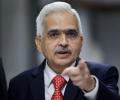
Reserve Bank Governor Shaktikanta Das on Wednesday said underlying economic activity in India continues to be strong, but external factors will cause some "dent" to the economy. Speaking at the BFSI Insight Summit 2022 organised by Business Standard, Das said the RBI tracks 70 fast moving indicators and most of them are in the "green box". It is the external sector, mired by a fear of recession or clear visibility about slowing growth in a large part of the world, where the challenges lie, he said, adding that the impact of external demand will "dent" the economy.

Corporate India is more dependent than before on exporters of IT services such as Tata Consultancy Services (TCS), Infosys, and Wipro for earning foreign exchange. Such companies account for nearly 43 per cent of the forex revenues of listed firms, up from 22 per cent a decade ago. The listed IT services companies earned nearly Rs 4.2 trillion through exports in FY22, up 15 per cent from the Rs 3.65 trillion a year earlier. In comparison, the forex revenues or exports of the rest of the BSE500 companies were down 11.9 per cent to Rs 5.6 trillion last financial year.

Earnings growth in the early-bird sample has been driven by banks and iron & steel companies.

'We are most bullish on all aspects of the financial sector -- private sector banks, even one state-owned bank, insurance, mortgage finance, broking, wealth management, gold finance, etc.'

The Lok Sabha elections in 2024 are not a consideration when it comes to monetary policymaking, said Reserve Bank of India governor Shaktikanta Das to underscore the central bank's commitment to controlling inflation. "It's not possible for me to comment what we do in the next MPC (Monetary Policy Committee), but one thing I can tell and I would like to make it very clear-that the fact of elections coming up in 2024 is not a factor at all so far as monetary policymaking is concerned. "Monetary policymaking is for checking (and) controlling inflation," Das said at the Business Standard, BFSI Insight Summit.
'It is critical that the Covid curve does not have a fat tail and the chain is broken quickly.'

Markets

To begin with, there would be the immediate integration of various technology stacks. This would create more business for global consulting and IT services entities such as KPMG, PwC, EY, Accenture and IBM, among others. Indian service providers - Infosys, Tata Consultancy Services (TCS), and Wipro, for instance - would also cash in.

Tata Steel was the top gainer in the Sensex pack, rising around 5 per cent, followed by Bajaj Finance, Bajaj Auto, HDFC, HCL Tech and Titan. On the other hand, Maruti, ONGC, IndusInd Bank and Tech Mahindra were among the laggards.

'Rather than experimenting with CBDCs, we must come up with a very simple and straight design.' 'Dematerialise your currency/cash and with that dematerialised rupee allow all the transactions digitally.'

'Hacking of an ID or an account will have the same impact on a user in a city and one in a small town.' 'Security is like a railroad, you create it to last for every customer.'

...followed by financial services, IT, and sales and marketing.

RBI Governor Shaktikanta Das kept the red flag on cryptocurrencies flying, warning that the next financial crisis can be triggered by private cryptocurrencies if such speculative instruments are allowed to grow.

'Internet, healthcare and life insurance are a few sectors which offer solid long-term decadal potential.'

Revenue up 15.8% at Rs 34,261 crore over year-ago period.

'The Indian economy and the Indian financial sector today remain resilient and much better placed.'

The fundamental issue between banks and fintech would be who will own the customer and who will be the service provider.

The stellar rise in corporate earnings in financial year 2021-22 (FY21) and FY22 did not result in a corresponding boom in capital expenditure (capex), with listed companies' investment in fixed assets rising just 2.3 per cent year-on-year (YoY) in FY22, growing at the slowest pace in the last six years. In comparison, the firms' combined net profit jumped 63.5 per cent YoY in FY22, while net sales increased 31.1 per cent - the fastest pace in over a decade. The 955 non-financial companies in Business Standard's sample reported combined net profit of Rs 7.18 trillion in FY22, compared with Rs 4.39 trillion in FY21 and Rs 2.59 trillion in FY20.

'Markets are factoring in a good show by India Inc in Q2.'

Jobs in HR, administration and recruitment have seen a substantial rise as per Monster data with a 42% growth in job posting activity.

'In the short term, we may see some disruptions due to Covid, but in the medium-to-long term, we should keep an eye on US inflation and 10-year bond yields.'

'At the moment, it seems to be budgeted at Rs 300 crores with no sign of completion in the immediate future.'

In 2020, retail and e-commerce sector will lead the table and is expected to generate 112,000 jobs followed by IT & ITeS (105,500), FMCG (87,500), manufacturing (68,900), BFSI (59,700) and healthcare (98,300), the survey said.

Hiring demand for the month of October 2021, witnessed a dip of 3 per cent, as compared to September 2021. However, job demand grew 9 per cent sequentially in the past six months showing an optimistic outlook to recovery, said the Monster Employment Index. There has also been a strong year-on-year recovery with a 9 per cent uptick in October 2021 (Oct 2021 vs Oct 2020).

Revenue rises 20.7% to Rs 36,854 crore.

'It is very disturbing to know that even in today's world women are treated differently.'

Panaya drags Q1 profits though revenue improves on the back of large deal wins, good traction in North America.

IT and ITeS companies accounted for $28.1 billion of the total investment pie during the first nine months of 2021.

With economic activities gathering pace post easing of lockdowns across the country, hiring activities in most sectors have shown significant recovery in October over the previous month, says a report. On yearly basis, however, the overall hiring was down by 17 per cent in October, according to the Naukri JobSpeak Index for October' 2020.

Wipro on Friday revised upwards its IT services revenue outlook to 8-10 per cent sequential growth in the June 2021 quarter, following the completion of its $1.45 billion buyout of Capco. While announcing its March quarter results earlier this month, Wipro had said it expects to log a sequential growth of 2-4 per cent in its IT services revenues in the June 2021 quarter without including revenue from Capco and Ampion acquisitions. In March, Wipro had announced the acquisition of London-headquartered Capco in a $1.45 billion (over Rs 10,500 crore) deal - its largest ever till date.

Within two days, the business school had 108 recruiters making 370 domestic and international offers, including 23 new final recruiters with an average salary of Rs 25.08 lakh.
