
A Delhi court has denied anticipatory bail to a university professor accused of raping a former student and threatening to circulate her objectionable videos. The court cited WhatsApp chats indicating coercion and the risk of witness tampering and evidence destruction if bail were granted. The investigation has been assigned to a senior police officer.

An associate professor from Kannur Dental College, accused in the death of a student allegedly harassed over caste, appeared before the investigation team and was subsequently arrested and released on bail.

An associate professor at OP Jindal Global University has been suspended for allegedly comparing Prime Minister Narendra Modi to Adolf Hitler, following a complaint by a student's father to the Haryana Human Rights Commission.
Researchers at IIT (ISM) Dhanbad have secured a patent for a novel temperature-independent optical sensor designed to precisely measure structural tilt in two directions. This lightweight sensor, utilising Fiber Bragg Grating (FBG) technology, offers enhanced monitoring capabilities for various applications including bridges, robotics, aerospace, and geotechnical systems, promising low maintenance and long-term stability checks.
Researchers from Goa Institute of Management (GIM) and Goa Business School conducted a study analysing over 1.31 lakh posts on social media platform X using machine learning models. They found that indirect aggression is most common during major social, financial, sporting, and political events in India. The study classified aggression into overt, covert, and non-aggressive forms, noting that overt aggression remained relatively low but peaked during events like India's T20 World Cup loss. The findings have significant implications for online moderation and communication policies.

'If the temperature remains very high, which is likely to be the case because of El Nino, it may lead to a shortfall in wheat production.' 'If that happens, we will be in a very, very difficult situation as far as food security is concerned.'

An IIT Madras study reveals that financial cybercrime victims in India are often highly educated professionals, challenging the notion that only careless or financially unaware individuals are targeted. The research highlights that digital literacy doesn't guarantee protection, as fraudsters exploit stress and emotional vulnerabilities.

Researchers at IIT Indore have developed HGAST, an AI tool designed to correct gender-specific errors in translations from English to Hindi, Marathi, and Gujarati. The tool acts as a correction layer, identifying and rectifying masculine verb forms often used by AI systems when translating female speech, significantly improving accuracy for female speakers without retraining existing models.
A collaborative study by Indian and South Korean scientists has provided new genetic, anatomical, and ecological insights into the wide-ridged Indo-Pacific finless porpoise. The research, based on a stranded specimen in Kerala, revealed distinct genetic differences from Pacific populations and highlighted significant conservation challenges, including limited protected habitats and anthropogenic pressures.
Researchers have developed a new atomic clock using the element lutetium, which they claim is the most stable and accurate in the world. This clock can measure a trillionth of a second precisely and is highly resilient to environmental changes like temperature and magnetic fields, making it a significant advancement in timekeeping technology.
A new study by the Leibniz Institute for Food Systems Biology reveals that higher atmospheric carbon dioxide levels significantly alter the protein composition of wheat. This change impacts baking quality and the tolerability of wheat products, with increased amylase/trypsin-inhibitors and decreased gluten proteins observed under elevated CO2 conditions. Researchers emphasise the need for crop adaptation focusing on quality characteristics.

Researchers have discovered a method to externally manipulate a cell's automatic waste clearance process, known as autophagy. This breakthrough, involving the protein LC3, could offer new therapeutic targets for diseases like cancer and Parkinson's, where cellular cleansing mechanisms are often impaired.

A new study reveals that past emissions from major oil, gas, coal, and cement producers will continue to impact Earth's environment for centuries, even if emissions cease today. The research highlights that the planet will remain significantly warmer than pre-industrial levels, leading to persistent climate damages and increasing the likelihood of future extreme weather events, forming the basis for accountability lawsuits against these "carbon majors."

A 25-basis-point increase would restore some real monetary restraint when expected inflation has risen, liquidity remains easy and growth is strong, points out Amarendu Nandy.
Researchers from the Indian Institute of Science (IISc) and Technical University of Denmark have developed a recombinant antivenom that provides broad protection against the venom of spectacled cobras, monocled cobras, and Indian king cobra species in mice. This lab-produced antivenom offers a next-generation solution to traditional animal-derived antivenoms, addressing issues like variability and limited species coverage.

'Read the prospectus as a capital allocator deciding whether the business deserves your capital at the offered price.'
Researchers from IIT Guwahati and BHU have devised an eco-friendly biological method to treat textile wastewater, specifically targeting toxic azo dyes. Their novel bacterium, 'Brevundimonas sp. AJZ05', effectively degrades 98.50 per cent of Direct Blue-6 dye, producing non-toxic byproducts, offering a sustainable alternative to conventional chemical treatments.

If a bank sold the policy, complain to its grievance cell and, if necessary, escalate the complaint to the Reserve Bank of India Ombudsman.

Following devastating flash floods in Nepal, experts are calling for systematic scientific assessments of glaciers to understand and mitigate hazards, alongside the development of a robust land use policy for the Himalayan region. The floods, which killed over 460 people and left thousands missing, are believed to be linked to climate change impacts on glaciers and permafrost.
A new study from Stanford University suggests the human brain may have evolved as two independent organs, challenging the long-held belief of a single progenitor cell. Researchers found two parallel nervous systems developing without intersection, which could explain difficulties in growing hindbrain neurons in labs and open new avenues for treating neurological diseases.

The US Geological Survey (USGS) has confirmed that the recent deadly flash floods in Nepal were caused by a glacial collapse and subsequent debris flow, not an earthquake as initially reported. The event, which originated in Tibet, led to 162 deaths and 750 missing persons, including 133 Indian nationals, in Nepal's Rasuwa and Dhading districts. The seismic event's magnitude was also upgraded to 5.2.

The National Council of Educational Research and Training has reconstituted the Textbook Development Team for class 11 and 12 political science with a mandate to integrate cultural rootedness, Indian knowledge systems and inclusion, with at least four of the members having direct or indirect links with the RSS.
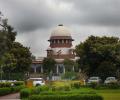
The Supreme Court has directed the Delhi police commissioner to form a Special Investigation Team (SIT) to probe a complaint filed by lawyers who were allegedly assaulted during a protest demanding the resignation of Bar Council of India (BCI) chairman Manan Kumar Mishra. This directive comes after the Delhi High Court had dismissed a similar plea, stating it was not maintainable.
Researchers at Delhi's Indraprastha Institute of Information Technology have developed 'MutAIverse', a generative AI platform designed to decode DNA damage and identify potential causes of cancer. Tested on head and neck cancer patients in Guwahati, the platform successfully traced exposure to smokeless tobacco as a contributing factor. This innovation aims to shift focus from just diagnosis to understanding causative factors, potentially aiding in prevention and protection.
A study suggests that targeting the brain's default mode network (DMN), which becomes active during self-reflection, could be a more effective approach to managing chronic low back pain. Researchers found that DMN activates during chronic pain flares, unlike its deactivation during acute pain, indicating chronic pain is deeply linked to one's sense of self. This finding explains why traditional symptom-based treatments often fail and points towards mind-body and psychedelic therapies.

From superheroes and aliens to witches, ghosts and shape-shifting mutants, these 10 Bollywood women prove that supernatural powers come in all shades of mischief, menace and magic.

Researchers at NIT Rourkela have patented a novel hybrid energy-storage system designed to significantly improve the efficiency and lifespan of electric vehicle batteries. This innovation addresses common issues like low power density and thermal stress by integrating supercapacitors with a simplified architecture, making EVs more reliable, especially in urban driving conditions.

Researchers at IIT-Guwahati have developed an inexpensive and efficient catalyst for producing hydrogen from water, a crucial step for the National Green Hydrogen Mission and the transition to sustainable energy. The catalyst uses nickel salt and an anthracene-based organic molecule, offering a cleaner alternative to fossil fuel-derived hydrogen.
A recent study published in npj Aging reveals that epigenetic clocks, which estimate biological age by measuring DNA methylation, capture various aspects of aging biology, including immune system changes, metabolism, and cell communication. Researchers also developed new gene-expression-based clocks that show stronger predictive power for age-related diseases and mortality.

Researchers at the Indian Institute of Technology Madras (IIT,M) have developed a novel "morphing skin" concept for aircraft wings, inspired by bird flight. This adaptive external skin dynamically reshapes in real time to prevent aerodynamic stalls, enhance lift, reduce drag, and significantly improve aircraft safety and fuel efficiency. The technology holds promise for commercial aviation, unmanned aerial vehicles, and defence applications.

Indian educational institutions are adopting physical modifications like "anti-suicide" fans and barriers to prevent student suicides, drawing parallels with measures taken by foreign universities such as Houston, Cornell, Harvard, and NYU. While these measures are seen as "bandaid solutions" by some, experts suggest restricting access to lethal means is a valid part of a comprehensive suicide prevention strategy, alongside crucial mental health support.
A University of Delhi study has found significant heavy metal contamination in agricultural soil and vegetables grown along the Yamuna river in the capital. The research highlights potential non-carcinogenic and carcinogenic health risks to consumers due to crops irrigated with polluted wastewater, with specific vegetables showing dangerously high levels of metals like nickel, chromium, and molybdenum.
Vigilance officials in Kerala have uncovered a case where a government doctor was allegedly engaged in private practice while also receiving a non-practising allowance. The doctor, an associate professor, was found earning an additional Rs 7 lakh monthly from a private hospital, alongside his Rs 3 lakh government salary. This discovery is part of a wider crackdown, with nearly 200 doctors under surveillance.

'... to see that young people are gainfully employed. After that, it will become very difficult as we will start ageing much more rapidly.' 'We have a huge proportion of Gen Z. After 2030, every year, we will start seeing a gradual shift towards a slightly older society.'
New research published in the European Heart Journal indicates that even low levels of night-time light exposure, as little as 3 lux, are associated with detrimental changes in heart structure and function. A study involving over 11,000 participants found that increased light at night led to thickening of the left ventricular walls and reduced myocardial contraction, suggesting early heart dysfunction and increased risk of heart failure. Researchers highlight night-time light as a modifiable risk factor for cardiovascular disease.

'It could be in IT, it could be in administration, it could be in legal, it could be in technical services, but entry level jobs are rapidly disappearing because AI is taking them over.' 'So, the big question what would happen if the bottom rung of the ladder is removed?'

FIFA's proposal to create a $20 billion subsidiary for the World Cup, offering up to 20% stakes to external investors, aims to democratise global football finance but has been condemned by UEFA as selling the game's "soul."

A new study reveals that approximately 70 per cent of the year-to-year variation in winter air pollution across northern India can be explained by the frequency of western disturbances. These storm systems, originating from the Mediterranean, help clear pollution through precipitation and ventilation. The findings suggest that predicting the frequency of these disturbances could provide advance warning of severe pollution, allowing for better preparedness and implementation of control measures.

Did love make Bhagat Singh a weaker revolutionary? In a heated argument once, Sukhdev accused him of allowing his fascination with a woman to come in the way of revolutionary duty. Bhagat Singh's answer, in a letter days later, was a defence of love as a revolutionary's strength, not a weakness. On Bhagat Singh's 119th birth anniversary, Utkarsh Mishra looks at the friendship, arguments and ideas that bound him and Sukhdev together.
Researchers have developed an AI-based approach to generate detailed maps highlighting differences in how distinct parts of the brain age. This new model reveals that not all brain regions age at the same rate, with frontal and temporal lobes appearing biologically older. The study also links these regional ageing patterns to cognitive function and neurodegeneration, particularly in Alzheimer's disease.
