
On June 21, the United States and Iran started high-level talks at the Burgenstock luxury hotel in Switzerland, with mediation by Qatar and Pakistan, in an effort to build on a fragile ceasefire and launch a 60-day roadmap toward a broader agreement.

Iranian Foreign Minister Abbas Araghchi visited Pakistan for the second time in three days amid uncertainty surrounding potential peace talks with the US. The visit follows discussions in Oman regarding regional security and efforts to resolve the Iran-US conflict.

Iran's Islamic Revolutionary Guard Corps (IRGC) on Saturday (local time) announced the closure of the Strait of Hormuz "until further notice," stating that the strategic waterway would remain shut until the United States ends its "interference" in the West Asia region, Press TV reported.

Pakistan Prime Minister Shehbaz Sharif on Friday said that the US and Iran have agreed on the text of a peace deal, kindling hope of a diplomatic breakthrough in the region.

US President Donald Trump has claimed that Washington has the capability to liquidate the surviving Iranian leadership with "one shot" if it desired, pointing to the congregation of top Iranian officials attending the week-long state funeral for the late Iranian Supreme Leader Ayatollah Ali Khamenei, who lost his life in joint US-Israeli air strikes on February 28.

Pakistan capital Islamabad is emerging as the leading venue for the next round of technical negotiations between the US and Iran, a media report said Sunday.
As Tehran and Washington continue with their engagements following the signing of the MoU earlier this month, sources have told Al Arabiya that the two are set to hold the next round of negotiations in Switzerland on June 28 and 29.
Iranian Foreign Minister Abbas Araghchi said his trip to Islamabad was "very productive" and involved "good consultations" with Pakistan's top leadership amid uncertainty over the second round of peace talks to resolve the war in West Asia.

'Actual implementation of the 14-point agreement is proving hard to achieve let alone striking and sustaining a long-term treaty or deal.'

In a significant diplomatic manoeuvre aimed at de-escalating regional tensions, Iran has reportedly submitted a "new proposal" to the United States through Pakistani intermediaries.
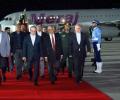
A new report alleges Pakistan shielded Iranian military aircraft from potential US airstrikes, raising questions about its role as a neutral mediator in the ongoing US-Iran tensions.

The Congress party has criticised the Modi government over Pakistan's involvement in US-Iran peace talks, calling it a 'monumental setback' for India's diplomatic efforts.

Pakistan's Chief of Defence Forces Field Marshal Asim Munir held talks with Iranian leaders in Tehran to help resolve the conflict between the US and Iran, following a recent ceasefire agreement.
Doubts are emerging about Pakistan's role in mediating peace negotiations between the US and Iran, with suggestions that Islamabad's efforts are stalling and failing to secure a definitive response from the United States.

Russian President Vladimir Putin has offered his support to help bring peace to West Asia, praising the Iranian people for their resilience. This comes as Iran seeks to resolve the conflict with the US, following discussions with Pakistani and Omani leadership.

Delegations from the US and Iran have arrived in Islamabad for talks aimed at resolving the conflict between the two nations, following a ceasefire brokered by Pakistan. The negotiations are being closely watched due to their potential impact on regional security and global diplomacy.

Pakistan is playing a key role in facilitating talks between the US and Iran, but the future of these negotiations remains uncertain. Despite ongoing diplomatic efforts, no dates have been set for a second round of discussions.
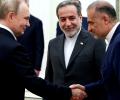
On Monday, June 23, 2025, Russian President Vladimir Putin hosted Iran's Foreign Minister Abbas Araqchi in Moscow.

An Iranian delegation, led by Foreign Minister Abbas Araghchi, concluded high-level meetings in Islamabad, delivering an 'official list of demands' to Pakistani leaders for the US and Israel. This comes as President Trump cancelled his envoys' visit to Islamabad amid ongoing efforts to facilitate peace talks between Iran and the US.

Chaffing under public ridicule in the US as well as internationally for having 'lost' the war, Trump is under immense pressure to do something, cautions Ambassador M K Bhadrakumar.

Trump has made it clear: the US will not lift its blockade of Iranian ports until a deal is signed.
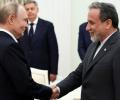
Will Russia's entry deter Trump on his warpath?, asks Ambassador M K Bhadrakumar.

The Biden administration should expect continuity in Iran's policies under Raisi. This may not necessarily mean that strengthening of ties with the West will be Raisi's top priority, observes Ambassador M K Bhadrakumar.

From being on the verge of war and violence, West Asia has actually got a sudden reprieve. Seema Mustafa explains
