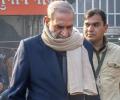
Sajjan Kumar is currently lodged in Tihar jail.

A CBI court in Kerala sentenced 10 individuals to life imprisonment for the murder of two Youth Congress workers in 2019. Four others, including a former CPI(M) MLA, received five years in prison. The court found the accused guilty of murder and criminal conspiracy, citing political rivalry as the motive. The case involved the deaths of Kripesh and Sarath Lal P K, who were allegedly killed by CPI(M) workers in Kasaragod district. The verdict sparked reactions from both the Congress and CPI(M), with the Congress calling it a blow to the CPI(M)'s violent political culture and the CPI(M) challenging the verdict and claiming political motives in the CBI investigation.

The Central Bureau of Investigation (CBI) has filed an appeal in the Calcutta High Court seeking the death penalty for Sanjay Roy, who was sentenced to "life imprisonment until death" for the rape and murder of a trainee doctor at RG Kar Medical College and Hospital. The CBI argued that the crime falls under the "rarest of rare" category deserving capital punishment, while the trial court had ruled otherwise. The West Bengal government has also appealed for the death penalty, but the CBI opposed the state's right to file an appeal, claiming it was the prosecuting agency and therefore had the right to appeal on the grounds of inadequacy of the sentence. The high court will hear the appeals from the CBI, the victim's family, and the convict on January 27.

The Supreme Court has quashed a chargesheet against a retired Army officer in an alleged rape case, calling it an "abuse of process of law". The court found that the complainant's testimony showed no offense and the FIR deserved to be quashed. The court also noted that the Delhi High Court erred in its decision of not quashing the chargesheet. The complainant, a woman, had filed multiple FIRs against different persons, allegedly blackmailing them for money. The court concluded that the former Army officer was a "victim of an unscrupulous abuser" of law whose modus operandi was to extort money by misusing the rape and molestation laws.

The Supreme Court of India will examine the jurisdiction of the Lokpal, India's anti-corruption ombudsman, in entertaining complaints against sitting high court judges. The court is considering a suo motu proceeding initiated over the Lokpal's January 27 order on the issue. The case involves two complaints filed against a sitting additional judge of a high court, alleging that he influenced a judge of the subordinate judiciary and a judge of the same high court set to deal with a suit filed against the complainant by a private company.

The Bangladesh Supreme Court has stayed a High Court verdict that declared 'Joy Bangla' as the country's national slogan, effectively reversing the decision. The government, which had moved to suspend the High Court's ruling, argued that the national slogan is a matter of policy and not subject to judicial interference. This decision comes amid political turmoil in the country, with the recent change of government and a focus on revising national symbols and holidays.
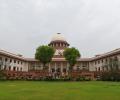
The Supreme Court of India has laid down guidelines for courts when ordering DNA tests to ascertain paternity. The court emphasized the need to balance the interests of all parties involved, including the child, parents, and other stakeholders. It also recognized the potential for infringement of privacy and the social stigma associated with illegitimate children. The court stressed that DNA tests should only be ordered when existing evidence is insufficient and when such tests are in the best interests of all parties involved.

Blatter and Platini were suspended from football in 2015 by FIFA for ethics breaches, originally for eight years, although their exclusions were later reduced.
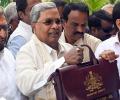
The Karnataka High Court has quashed the Enforcement Directorate's summons to Chief Minister Siddaramaiah's wife Parvathi B M and Urban Development Minister B S Suresh in connection with the MUDA site allotment case. The court ruled that the ED was conducting a parallel investigation despite the case already being probed by the Lokayukta police and a Special Investigation Team (SIT). The ED had alleged that Siddaramaiah and other accused were involved in attempted money laundering in the MUDA site allotment case and that the fourteen sites (plots) allotted to Parvathi in Mysuru upmarket were illegally allotted.

The Supreme Court of India has refused to halt the redevelopment project of Dharavi in Mumbai, allowing the Adani Group to proceed with their project. The court rejected a plea from Seclink Technologies Corporation, the original highest bidder for the project in 2018, which challenged the tender process and the award to Adani Properties Pvt Ltd in 2022. The court directed Adani Properties to make payments through a single bank account and ordered Seclink Technologies to file an affidavit detailing their increased offer for the project. The project work has already commenced, with constructions underway and 2,000 people employed on the site.
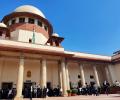
On Monday, Attorney General R Venkataramani, appearing for the Centre, mentioned an interim application before a bench of Chief Justice D Y Chandrachud and Justice J B Pardiwala.
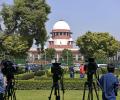
MPs and MLAs taking bribes to vote or make a speech in the house are not immune from prosecution, the Supreme Court said on Monday in a landmark, unanimous verdict that overrules its 1998 judgment protecting such lawmakers.

The Supreme Court of India is set to rule on the case of a pastor whose body has been lying in a mortuary for 15 days due to a dispute over his burial site in a Chhattisgarh village. The court expressed concern over the delay and urged for an amicable settlement, while the Chhattisgarh government insisted on the designated burial area for Christian tribals being 20-30 kilometers away from the family's village. The court will deliver its verdict after hearing arguments from both sides.

The decision follows a legal challenge by Manchester City against the league's Associated Party Transaction (APT) rules, which regulate commercial deals between clubs and companies linked to their owners if considered above fair market value.

A three-member panel led by the Chief Justice of India (CJI) Sanjiv Khanna has been formed to probe the discovery of "four to five semi-burnt sacks" of Indian currency notes found after a fire at the residence of Delhi High Court judge Yashwant Varma. The incident, which occurred on March 14, has triggered an in-house inquiry, with the findings determining the judge's fate. The panel, consisting of Chief Justices Sheel Nagu (Punjab and Haryana), G S Sandhawalia (Himachal Pradesh), and Karnataka High Court judge Anu Sivaraman, will conduct a "deeper probe" into the allegations. Justice Varma has denied any knowledge of the cash being stored in the storeroom. The inquiry follows the Delhi High Court Chief Justice Devendra Kumar Upadhyaya's report that recommended a deeper investigation. The top court's 2014 guidelines for in-house procedures for probing allegations against judges will be followed during the inquiry. The panel's findings could lead to either the removal of the judge, if the misconduct is deemed serious, or a reprimand. The inquiry will also determine if the fire was indeed a short-circuit as initially reported.
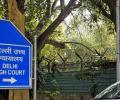
The Central Bureau of Investigation on Friday informed the Delhi high court that its appeal against the acquittal of former telecom minister A Raja and 16 others in the 2G spectrum allocation case was 'ripe for hearing'.

The Delhi high court granted bail to alleged middleman Christian Michel James in the Rs 3,600-crore AgustaWestland money laundering case on Tuesday. Justice Swarana Kanta Sharma, while granting the reprieve to James, said it was an "exceptional situation" where the accused was in custody for over 6.2 years but the trial had not yet commenced due to incomplete investigation. James, who was extradited from Dubai in December 2018, can now walk out of prison subject to compliance with the conditions.

The Aligarh Muslim University's minority status issue will have to wait to reach a logical end after the Supreme Court majority verdict on Friday asked a regular bench to decide the issue.

What should be made out of the Madras high court order involving non-Hindus' entry into Hindu temples, when many non-Hindus are among the hundreds of thousands that have been worshipping at these temples for generations, asks N Sathiya Moorthy.
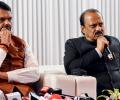
'Let Fadnavisji prove to the people of Maharashtra that he acts fairly against one and all.'

Instant 'triple talaq', also known as 'talaq-e-biddat', is an instant divorce whereby a Muslim man can legally divorce his wife by pronouncing 'talaq' three times in one go.
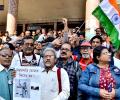
Sanjoy Roy, the accused in the rape and murder of a doctor at R G Kar hospital in Kolkata, was sentenced to life imprisonment till death on Monday. His mother, Malati Roy, who had previously expressed support for the punishment, shut herself in her home and refused to speak to reporters. Neighbors and family members of Roy have questioned whether he acted alone in the crime, suggesting others may have been involved.
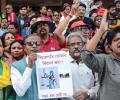
Claiming that the investigation was done half-heartedly and several other culprits involved in the crime were shielded, they said they would move to the higher court seeking justice.

The Supreme Court of India has ruled that informing an accused of the grounds for their arrest is not a formality but a mandatory constitutional requirement. The court declared the arrest of Vihaan Kumar, who was accused of financial fraud, as unconstitutional and ordered his immediate release. The ruling emphasizes the importance of procedural safeguards in criminal law and highlights the fundamental rights of arrested individuals. The court also expressed disapproval of the police's treatment of Kumar, including handcuffing and chaining him while he was in the hospital.
The court also directed the state to pay a compensation of Rs 17 lakh to the family of the deceased doctor.

A Delhi court sentenced former Congress MP Sajjan Kumar to life imprisonment for his role in the murder of two Sikhs during the 1984 anti-Sikh riots. The court cited Kumar's age and illness as mitigating factors in its decision to impose a lesser sentence than the death penalty. Kumar was convicted for being part of a mob that set fire to the victims' home and killed them. This is the second life imprisonment sentence for Kumar in connection with the 1984 riots. He is also facing other charges related to the riots.
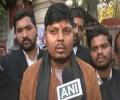
A special NIA court in Lucknow has sentenced 28 people to life imprisonment for the 2018 killing of a 22-year-old youth in clashes during a 'Tiranga rally' on Republic Day in Kasganj district of Uttar Pradesh. The case drew significant attention as the killing of Chandan Gupta sparked widespread riots in Kasganj for three days. The prosecution demanded the severest punishment while the defence counsel pleaded for leniency. The court awarded life sentences and imposed a fine of Rs 80,000 on each of the convicts. Gupta's family expressed satisfaction at the verdict but vowed to continue its fight for harsher penalties for the main accused and those acquitted.
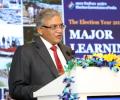
Kumar, who played a key role in implementing decisions following the abrogation of Article 370 of the Constitution in Jammu and Kashmir during his stint in the Union home ministry, took charge as an election commissioner on March 15, 2024.

The Supreme Court of India has emphasized the importance of individual liberty, setting aside a Himachal Pradesh High Court order that cancelled bail for an accused in an attempt-to-murder case. The Supreme Court found no material to support the cancellation, stating that courts should be cautious about interfering with an individual's freedom.
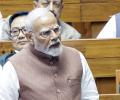
Besides the not-so-hidden unease between Modi and Adityanath, Modi chose to address the Lok Sabha to ensure that he could personally claim all the kudos, observes Nilanjan Mukhopadhyay.
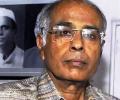
Additional sessions judge A A Jadhav of the special court for cases under the Unlawful Activities (Prevention) Act is likely to pronounce the judgement on Friday, said special public prosecutor Prakash Suryawanshi.

A bench comprising Justices J B Pardiwala and R Mahadevan said, "He (the governor) seems to have adopted his own procedure. He says, 'I withhold assent, but I will not ask you to reconsider the bill'. It does not make sense to keep withholding assent and not send it to the legislature, thereby frustrating the provision of Article 200."

Luis Rubiales told a court on Tuesday that player Jenni Hermoso had given her consent for him kiss her in the aftermath of the Spain women's World Cup victory in 2023.

The capital punishment handed to Indian nurse Nimisha Priya by a Yemeni court has not been ratified by President Rashad al-Alimi, the West Asian nation's embassy said on Monday.
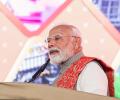
Delhi University (DU) has informed the Delhi High Court that it is willing to show its records on Prime Minister Narendra Modi's degree to the court, but not disclose it to "strangers" under the Right to Information (RTI) Act. The university's solicitor general, Tushar Mehta, argued that the "right to privacy" superseded the "right to know" in this case, and that allowing disclosure would expose the university to RTI applications for information about lakhs of its students. The court has reserved its verdict on the matter.

The Supreme Court on Friday deferred the question of Aligarh Muslim University's minority status to a fresh bench and overruled the 1967 judgment that said the university cannot be considered a minority institution since it was created by a central law.
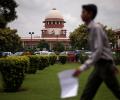
The Supreme Court of India has ordered the burial of a pastor whose body has been lying in a mortuary since January 7th, after a dispute arose regarding the location of his burial. The court issued a split verdict, with one judge ruling for burial on the family's private land and the other for a designated place away from the village. The decision was made due to the prolonged delay in the burial and the potential for unrest. The court ordered the state government to provide security to prevent any further incidents.

The Court of Arbitration for Sport (CAS) has ruled that athletes will have to ensure that they remain below their weight limit and no exception can be provided under any circumstance
Former Congress MP Sajjan Kumar now faces a maximum of death penalty and a minimum of life term in prison after being convicted on Wednesday by a Delhi court in a murder case stemming from 1984 anti-Sikh riots.

She also pointed out that the poor from villages are afraid to go to court.
 © 2026 Rediff.com - Investor Information - Advertise with us - Disclaimer - Privacy Policy - Sitemap - Feedback - About us - Terms of use - Grievances