
If the stories are food for the mind then our digestive system has changed. If they are a piece of art, our gaze has altered. This calls for a change not in stories, but in the grammar of storytelling so that it can cut through the deluge and gluttony and force people to savour, appreciate and re-visit it. That is what the creators of Taskaree or Dhurandhar are trying, points out Vanita Kohli-Khandekar.

'We hope we will have created a world where music for films appeals to fans across the country, across languages and genres.'

Only firms that have scale in content and a technology engine that drives its discovery and monetisation can compete,' explains Vanita Kohli Khandekar.

'As a nation, we create beautiful content and a high volume of it (films) but we are limited by the number of theatres and screen density.' 'You now have a living-room large screen available to showcase that.'

'We don't make films for profit and that's exactly why profit follows.'

More screens, more films, and longer windows will convert to more people watching, assuming they know a film is releasing, points out Vanita Kohli-Khandekar.

'As you're watching the IPL live, there's a conscious effort to showcase the entertainment portfolio.'

Writers and creators are telling more authentic stories based in states and cities that we may not have seen much of in mainstream media, such as Nagaland, Arunachal Pradesh, and Madhya Pradesh. Or ones that we have some mistaken notions about like Punjab, Delhi, Haryana, Bihar, Tamil Nadu, highlights Vanita Kohli-Khandekar.

'Our analysis of success, like failure, is so reductive and so one dimensional that we don't look at the bigger picture.'

While super hits like Jawaan are missing this year, it has been filled with a range of medium-range hits such as Crew, Teri Baaton Ne Uljhaa Diya and Guntur Kaaram, observes Vanita Kohli-Khandekar.
'There is simply too much to watch, read and absorb.' 'Just online consumption (news, entertainment, social media) in India was 2.5 hours a day in November 2024.' 'Add TV (just under 4 hours), other media, and the figure is closer to 7 to 8 hours a day for over one-third of Indians,' points out Vanita Kohli Khandekar.

'What scares me is the fact that there is so much content that people have content indigestion.' 'How do you entice people who have indigestion of content?'

A non-strategic investor like Poonawalla brings in not only capital but also creative freedom. Indian cinema needs more investors like him, reports Vanita Kohli Khandekar.
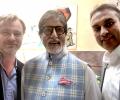
'When I started to step into the West in 2006, I believed India was not going to be the back end.' 'I understood that no film-maker wants to believe that they are outsourcing their creativity to a low-end place.' 'The application of technology in the hands of our Indian artistes is identical to any of our artists in the West.' 'Nobody in the world can say this shot was done in India and that in London.'

'In the audience's mind there is no urgency to go see a film in the theatre.' 'If you pay for social media buzz it does not convert into bums on seats.'

'India has the largest slate of local original content outside the US.'

Online media is changing the status quo within the Rs 83,000-crore media and entertainment industry, and becoming critical for growth.
For more than a hundred years, media companies have been started and owned by corporates, in the US, Europe and in India as well.
The alleged sexual assault of a junior colleague by one of India's best-known activist-editors brings out not just Mr Tejpal's infirmities but those of an entire industry.

According to Paris-based RECMA, GroupM controls over 40 per cent of the Rs 30,000 crore (Rs 300 billion) that marketers spent on print, TV, and other mass media and below-the-line activities, in India.

The story of media regulation is India would be funny if it was not so pathetic.

Can the television industry's new generation work at solving its old problems?
It is critical that media brands that don't sell their editorial, and there are dozens of those, get together to shame the brands doing it, writes Vanita Kohli-Khandekar

'The formula now is even if there is no profit there should be break-even.' 'We green-light a film only if we can see break-even in it.'

'It has never happened that all Top 5 songs on Spotify are from one film. On the Ormax list, the Top 9 are from Animal.' 'The music is good, sure. But everything has taken off with Animal the film.'

'Our research shows that 60 per cent of the growth and interest in anime will come from India for the next few years.'

On January 24, when the Academy of Motion Picture Arts and Sciences announces the Oscar nominees for 2023, it would be a surprise if RRR doesn't make the cut, declares Vanita Kohli-Khandekar.

Five of the ten most popular shows such as Bard of Blood, Delhi Crime, and Typewriter are Indian.

In spite of its flaws, I enjoyed reading the book, says Vanita Kohli-Khandekar. Simply for the joy of digging into the life, in pictures and words, of one of the most enduring stars of Indian cinema.

'Today, the risks have risen.' 'So stars need good content and good content needs stars.' 'It is now X+Y (star + content) not that X is greater than Y or Y is greater than X.'

'Even Aaradhya watches KBC,' Amitabh Bachchan tells us.
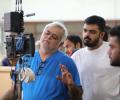
'...you start running after the star.' 'If the star says yes to the film, the ecosystem supports it.' 'The biggest cog in the wheel of the ecosystem is the audience and we forget that.'

'I didn't want to do a highlight reel with greatest hits of Yash Raj Films.' 'I wanted to do an actual story.'

'Streaming will get to 100-200 million subscribers, but the journey is not as rose-tinted.'

Shah Rukh had outgrown the roles that made him a star -- the menacing, obsessive lover in Darr, the regular guy in Kabhi Haan Kabhi Na or the new age boyfriend in Dilwale Dulhania Le Jayenge. By the time he entered his 50s, he was struggling to find his feet, explains Vanita Kohli-Khandekar.

News, as a business, faces its biggest crisis ever, globally. To fight it needs investment in feet-on-the-ground journalism, tech tools like artificial intelligence among other things.
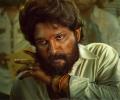
'Just the fact that the biggest language at the box office was Telugu and not Hindi is startling.'

Audiences are missing theatres desperately and will go back to them within two-three weeks of them reopening. All those hours of films on television and OTT have not reduced the audience's need for the theatrical experience.

'This kind of love from our audience shows that our music is working.'

Bengaluru, Delhi, Mumbai, and Hyderabad account for 33% of the total active paid subscriptions.
 © 2026 Rediff.com - Advertise with us - Disclaimer - Privacy Policy - Sitemap - Feedback - About us - Terms of use - Grievances