
Passenger vehicle majors like Hyundai, Tata Motors, M&M, Toyota Kirloskar and Honda on Wednesday reported growth in domestic sales in August riding on festive sentiments, although market leader Maruti Suzuki posted a decline amid a semiconductor shortage affecting the industry. The country's largest carmaker Maruti Suzuki India Ltd (MSIL) reported domestic sales at 110,080 units, as compared to 116,704 units in the same month last year, down 6 per cent. "Sales volume of the company in August 2021 was affected due to electronic components shortage.

Recently, South Korean Foreign Minister, Chung Eui-yong, dialled his Indian counterpart, S Jaishankar, in New Delhi. His government, he said, "regretted the offence caused to the people of India". A day earlier, India had summoned the South Korean ambassador to express its "strong displeasure" over "an unacceptable social media post".

The country's largest carmaker Maruti Suzuki India (MSI) on Thursday reported a 30.8 per cent increase in total sales at 1,60,442 units in September. The company had sold 1,22,640 units in September last year, MSI said in a statement.
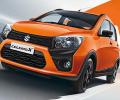
The country's largest carmaker Maruti Suzuki India (MSI) on Tuesday reported 6.14 per cent decline in consolidated net profit at Rs 1,241.1 crore for the fourth quarter ended March 31, 2021. The auto major had posted a net profit of Rs 1,322.3 crore in January-March quarter of 2019-20, MSI said in a regulatory filing. However, revenue from sale of products stood at Rs 22,959.8 crore as compared with Rs 17,187.3 crore earlier, up 33.58 per cent.

Most of the engines used by Suzuki's two-wheelers in India are manufactured by Maruti at its Manesar plant.

Rajesh Alva brings you the details of the first maxi-scooter from the Suzuki stable.

First-time buyers of cars and sport utility vehicles (SUVs) have made a comeback, shows last year's data from top passenger vehicle (PV) makers. If the trend persists, it may move the needle on the overall car penetration ratio. India's car penetration ratio is 32 per 1,000 people - one of the lowest, compared to mature car markets like the US and Europe.

Recently, Suzuki Motor Corp (SMC) in an investor presentation expressed strong intent to enter the electric vehicle (EV) space. This is part of a larger strategy the Hamamatsu-based firm has drawn up in developing electrification of technologies as it seeks to achieve carbon neutrality. The significance of this presentation is that it marked the first time that the Japanese carmaker spelt out its EV strategy with well-defined timelines. SMC plans to develop electrification technologies by 2025, fully implement them in products from the same year, and make a full-scale quantitative increase from 2030.

Several carmakers, including car market leader Maruti Suzuki India pulled the plug on diesel models citing higher costs for BSVI variants leaving buyers with limited options.

With the dizzying rise in the number of Covid-19 cases in the country, India Inc has transitioned from a wait-and-watch policy to full-on emergency mode, bringing back remote and flexi work, stringent safety protocols, and allowing only essential travel. Companies - especially in metros like Delhi, Mumbai and Kolkata - that had adopted a hybrid work model during the last few months when the caseload remained low, are either switching back entirely to work-from-home (WFH), or calling skeletal staff to office on select days. Take the case of cigarettes-to-hotels major, ITC, which had been on a hybrid work model over the last few months.
The strike, however, had no impact on production of auto majors Maruti Suzuki India, Hero MotoCorp, Honda Cars India, Mahindra & Mahindra, Tata Motors and Hyundai Motors India as their plants in various parts of the country functioned normally.

The global semiconductor shortage hit passenger vehicle sales in September, with major manufacturers like Maruti Suzuki, Hyundai and Mahindra & Mahindra reporting a decline in sales on Friday. Kia India and Honda Cars also reported a dip in wholesales last month as compared with the year-ago period. Carmakers like Tata Motors, Toyota Kirloskar Motor, Nissan and Skoda, however, reported an increase in passenger vehicle dispatches last month despite supply chain issues.
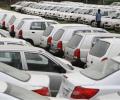
Reeling under severe slowdown, the auto major had reduced its production by 33.99 per cent in August, making it the seventh straight month of reduction.

The first leg of the 35-day festive period, which ended with Dussehra, failed to bring any cheer for auto companies. While makers of passenger vehicles struggled to meet demand due to the persistent shortage of semiconductors, a recovery in demand remained elusive for two-wheeler manufacturers despite offers and schemes. The overall season, which ends two days after Diwali, is unlikely to bring any turnaround in either the supply or the demand scenario, said dealers and officials at auto companies.
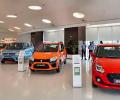
Passenger vehicle market leaders Maruti Suzuki and Hyundai on Saturday reported a decline in wholesales in December 2021, although homegrown majors Tata Motors and Mahindra & Mahindra reported growth, amid semiconductor shortage continuing to impact production. Other manufacturers Nissan and Skoda also reported an increase in December 2021 sales although Honda Cars India witnessed a decline last month. The country's largest carmaker Maruti Suzuki India (MSI) reported a 4 per cent fall in wholesales to 153,149 units in December 2021 as against 160,226 units a year ago.
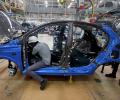
While sales of compact cars, including models such as Swift, Celerio, Ignis, Baleno and Dzire declined, sales of utility vehicles, including Vitara Brezza, S-Cross and Ertiga, increased 26.3 per cent to 19,177 units as compared to 15,178 in the year-ago month.

Maruti Suzuki India (MSI) plans to drive in CNG trims across its product range as it remains bullish over long-term prospects of the segment amid increase in fuel prices and drop in diesel car sales, according to a senior company official. The company, which sold around 1.62 lakh CNG cars last fiscal year, is also counting on the rapid expansion of CNG dispensing outlets across the country to bring in more CNG products. Bullish on the expansion of the sales network, the automaker expects its CNG car sales to almost double this fiscal year over 2020-21.

India Inc has weathered many a storm during Covid-19: from supply chain disruptions to demand dips, steep increase in input costs to shortage of key raw materials. As most companies navigated unprecedented challenges on multiple fronts, realisation dawned also about the criticality of employee welfare in the survival of the business. And it was the human resources (HR) department that faced the greatest test on this front.

It is currently working out the details of the quantum of price increase, which will vary depending on the model.

Market leader Maruti Suzuki is putting finishing touches to its plan of finding its feet in what is being hailed as a battle of epic proportions in India's fastest-growing passenger vehicle segment, reports Arindam Majumder.

The country's top carmaker Maruti Suzuki India (MSI) on Wednesday said it has decided to advance maintenance shutdown at its two Haryana-based manufacturing plants by a month amid a surge in the COVID-19 cases across the country. The auto major was supposed to take the shutdown at its two plants in Gurugram and Manesar in June, but due to the tsunami of COVID-19 cases, it decided to take it one month earlier to save oxygen for medical needs. MSI noted that as part of the car manufacturing process, it uses a small amount of oxygen in its factories, while relatively much larger quantities are used by the manufacturers of components.

The e-SURVIVOR symbolises Maruti Suzuki's commitment to help develop the entire life cycle of EVs in India

Net sales, however, rose marginally to Rs 21,551.9 crore for the quarter under review

The country's largest carmaker, Maruti Suzuki India (MSI) on Friday reported a 4.5 per cent increase in total sales at 1,53,435 units in October.

While compact SUV Vitara Brezza will cost Rs 20K more, Baleno will be constlier by Rs 10K

Around 75 per cent, or 372 stocks, that are part of the BSE500 are trading at least 10 per cent below their all-time high levels, despite the index hitting a record high 20,515 points on the BSE in intra-day trade on Wednesday, surpassing its previous high of 20,390 touched in March 12. The index, which accounts for 93 per cent of BSE listed companies' market capitalisation, has gained 8 per cent from its recent low of 18,983, touched on April 19. In comparison, the benchmark S&P BSE Sensex gained 6 per cent over the same period, but is still nearly 4.5 per cent away from its all-time high of 52,517 that it hit on February 16.

These cars were most appreciated on India s roads.

India's electric mobility goal, which has so far been riding on two wheels, is all set to graduate to four wheels. At least, the journey has begun. Hyundai Motor India said it would invest Rs 4,000 crore till 2028 to launch half-a-dozen electric vehicles (EVs) in India. It would eventually straddle premium and mass segments. The first of these - the electrified version of an internal combustion engine (ICE)-powered model - will go on sale as early as next year.

On a standalone basis, the company reported a net loss of Rs 249.4 crore for the first quarter ended June 30. Net sales declined to Rs 3,679 crore in the first quarter as against Rs 18,738.8 crore in the year-ago period.

While Tata Consultancy Services, HUL, ITC and Infosys saw a rise in their market capitalisation (m-cap) for the week ended Friday, RIL, HDFC Bank, HDFC, Maruti Suzuki India, SBI and Kotak Mahindra Bank suffered losses.

Indian auto industry's dependence on China is high and it will continue to be so in the BS-VI era and as the country moves towards electric mobility. Domestic players lack both technological competence and the sheer pricing advantage that support Chinese imports.

The figures are encouraging for the auto industry amid apprehension that due to higher cost and lack of fuel availability, cars with stricter emission standards may not be popular in initial stages. Automakers had even cited this confusion as one of the reasons for dwindling car sales in India, reports Arindam Majumder.
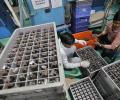
Auto component makers in India are bracing for a tough time. High absenteeism among workers owing to Covid-19, shortages of critical parts, and temporary closures of plants by automobile manufacturers have thrown a spanner in the works for the Rs 3.2-trillion sector, which derives 60 per cent of its revenues from automobile original equipment manufacturers (OEMs), with the balance split equally between replacement demand and exports. Car market leader Maruti Suzuki India on Saturday said it was extending the maintenance shutdown, which was from May 1 to 9, till May 16, "keeping in view the current pandemic situation". Some activities will continue in the plants.

Passenger vehicle wholesales in India increased by 12.73 per cent to 285,367 units in November as against 253,139 units in the same month last year riding on the back of festive demand, auto industry body SIAM said on Friday. According to the latest data by the Society of Indian Automobile Manufacturers (SIAM), two-wheeler sales rose 13.43 per cent to 16,00,379 units, compared with 14,10,939 units in the same month last year.
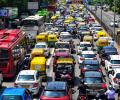
If the court order is implemented, it will lead to an increase in the insurance outgo for car owners by a minimum Rs 50,000 for car and a minimum of Rs 7,000 for two-wheeler owners.

Maruti's compact segment comprising New WagonR, Swift, Celerio, Ignis, Baleno, Dzire, and utility vehicles, including Gypsy, Ertiga, XL6, S-Cross and Vitara Brezza saw robust sales, while the mini segment comprising Alto, S-Presso and Old WagonR saw negative growth.
There is a possibility of fuel smell and in extreme condition there may be some fuel leakage.

The country's largest carmaker Maruti Suzuki India on Tuesday reported 17.8 per cent increase in net profit at Rs 802.2 crore (Rs 8.02 billion) for the third quarter ended December 31, 2014
In February, Maruti cut vehicle prices by between Rs 8,502 and Rs 30,984 across models after the excise duty reduction was announced.
Sales of mini cars comprising Alto and WagonR were at 11,577 units as compared to 37,710 units in July last year, down 69.3 per cent.
 © 2026 Rediff.com - Investor Information - Advertise with us - Disclaimer - Privacy Policy - Sitemap - Feedback - About us - Terms of use - Grievances